
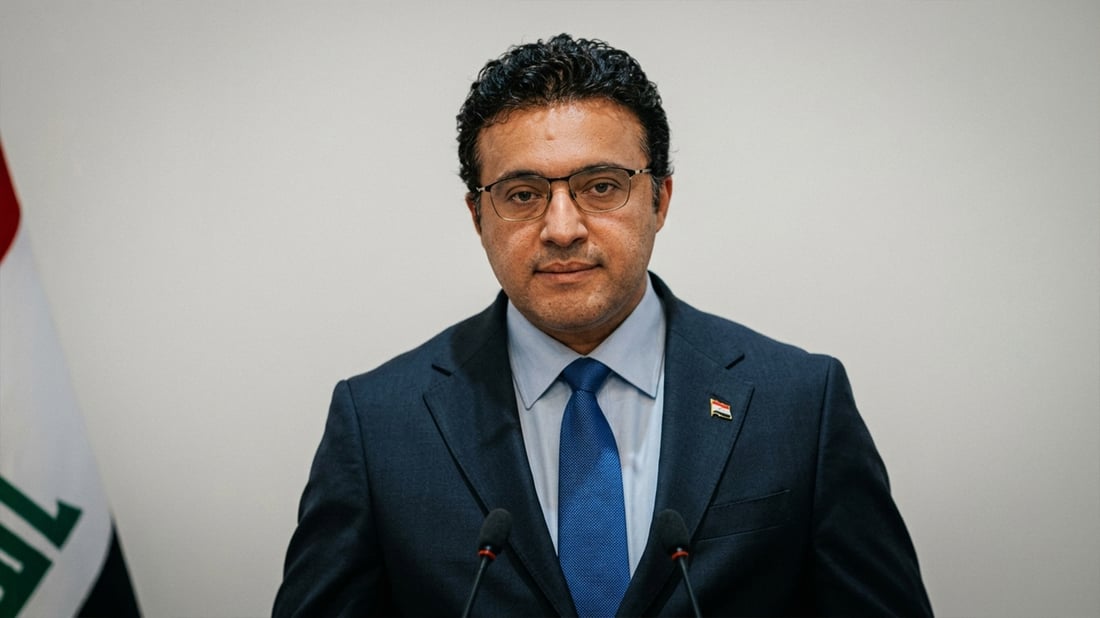
Iraqi government spokesman Haider al-Aboudi
Media Monitor
Iraq has requested new dollar shipment from Federal Reserve, spox says
BAGHDAD — Iraq has asked the U.S. Federal Reserve for another shipment of dollars while seeking to deepen economic ties with Washington following Prime Minister Ali al-Zaidi’s meetings with President Donald Trump and senior U.S. officials, government spokesperson Haider al-Aboudi said Tuesday.
Aboudi said deliveries of U.S. currency had resumed after transport disruptions delayed earlier shipments. “As everyone knows, the Central Bank of Iraq has an account with the U.S. Federal Reserve,” he told Al Jazeera. “Air transport conditions over the past few months delayed the arrival of dollar shipments to the country. These shipments have now resumed, and according to the information we have received, the Central Bank has submitted a request for another shipment of dollars.”
Iraq’s oil export revenues are held in an account at the Federal Reserve Bank of New York, from which the Central Bank of Iraq receives periodic shipments of physical U.S. currency to meet domestic cash demand. In April, the Trump administration suspended some dollar shipments as it pressed Baghdad to curb the influence of Iran-backed armed groups and tighten controls over illicit financial flows. The shipments resumed in early July after Iraqi officials said the government had taken steps to strengthen financial oversight.
Aboudi said the Iraqi delegation had “put the dots on the letters” in defining the relationship with the United States. “The meeting between al-Zaidi and Trump, and the framework of the discussions and understandings as a strategic relationship based on the economy, clearly confirms that Iraq possesses strategic weight at the regional level,” he said.
Zaidi met Trump at the White House on Tuesday during his first official visit to Washington since taking office. Iraqi officials also held separate meetings with U.S. defense and treasury officials on the future of security cooperation after the planned end of the U.S.-led coalition mission on Sept. 30.
Aboudi said the decision to restrict weapons to state control was Iraq’s alone. “The decision to restrict arms to the authority of the state is a decision of the Iraqi government alone and of Prime Minister Ali al-Zaidi,” he said.
Zaidi’s government is pursuing that plan, a policy dividing the Iran-aligned factions. Asaib Ahl al-Haq, Saraya al-Salam and the Imam Ali Battalions have moved to comply, while Kataib Hezbollah, Harakat al-Nujaba and Kataib Sayyid al-Shuhada have rejected disarmament, arguing their weapons remain necessary as long as U.S. forces are in Iraq. On Monday, the coalition known as the Islamic Resistance in Iraq rejected the visit, warning the government against signing agreements during the trip.
Aboudi also said the reasons for the presence of foreign troops in Iraq had ended. “The circumstances that led to the presence of international forces in Iraq in 2014 were based on a request from the Iraqi government, which sought assistance from its international partners. Today, the reasons that justified the presence of these forces in Iraq no longer exist,” he said.
Iraq and the United States announced in September 2024 that the Global Coalition to Defeat ISIS would end its military mission in Iraq by Sept. 30, 2026. The coalition was formed in 2014 after ISIS seized large areas of the country, though ISIS cells continue to carry out attacks.
Iraq depends heavily on oil exports to finance government spending, with oil accounting for more than 90% of federal revenue, leaving the economy exposed to swings in crude prices and export disruptions.