
Diyala farmers turn to hand-pollination and hormone solutions
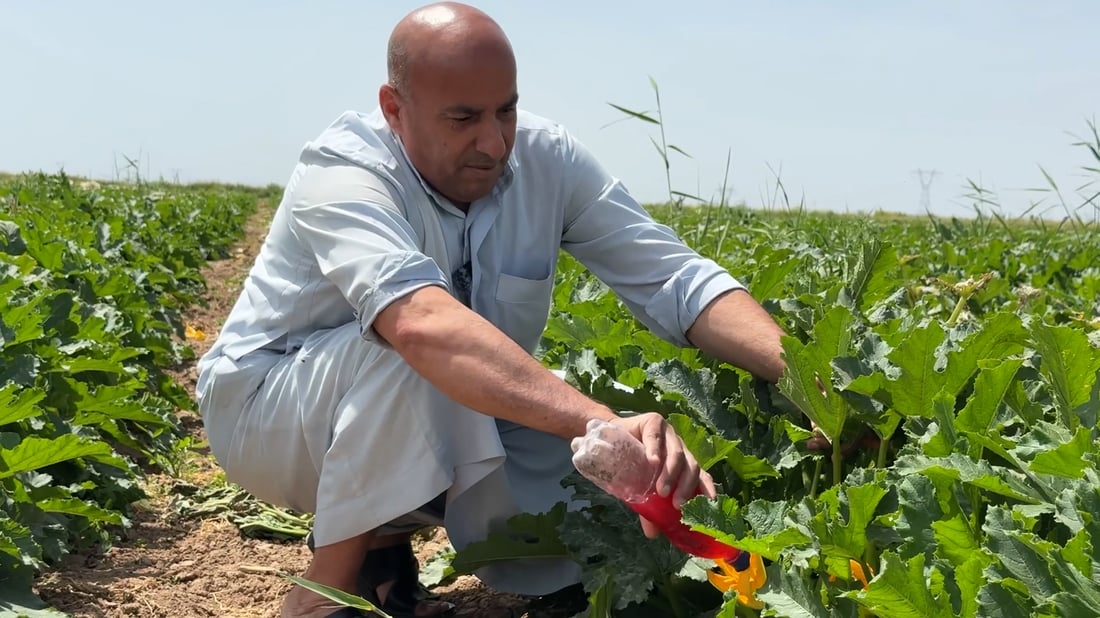
DIYALA — In his farm in Khan Bani Saad west of Diyala, farmer Qahtan Rashid demonstrated to 964media how he pollinates zucchini flowers using both traditional and artificial methods, as growers across the area adapt to declining natural pollination and cope with low market prices.
Using the traditional technique, Rashid transfers pollen manually from male to female flowers. The artificial method relies on a plant hormone solution available in the market. “Two drops are enough to turn the flower into a complete fruit within three days,” he said. He has already sent ripe produce to Baghdad markets from the same farm.
The zucchini crop, used in a popular Iraqi stew sometimes known as Haji Ahmed, requires intensive care throughout its growth stages, including pollination, plastic covering during colder periods and harvesting. Declining bee activity has pushed agricultural experts to develop alternative pollination methods for growers in the area. Production can reach between 8 and 10 tons per dunam, according to farmers.
Total zucchini production in Diyala this season is expected to reach around 13,000 tons, with Khan Bani Saad alone forecast to produce 5,600 tons, a source at the Diyala Agriculture Directorate told 964media.
Despite those volumes, farmer Mashhan Shneid said prices at the Khan Bani Saad wholesale market fell to 150 dinars per kilogram (about $0.10) at the end of April. “We suffer losses because of the lack of support and the entry of imported products,” he said. The crop demands year-round effort, from plowing and installing wire supports to cover plants during winter to daily hand-pollination. “The fruit cannot ripen unless it is pollinated through daily campaigns carried out by my children from morning until late hours,” he said.