
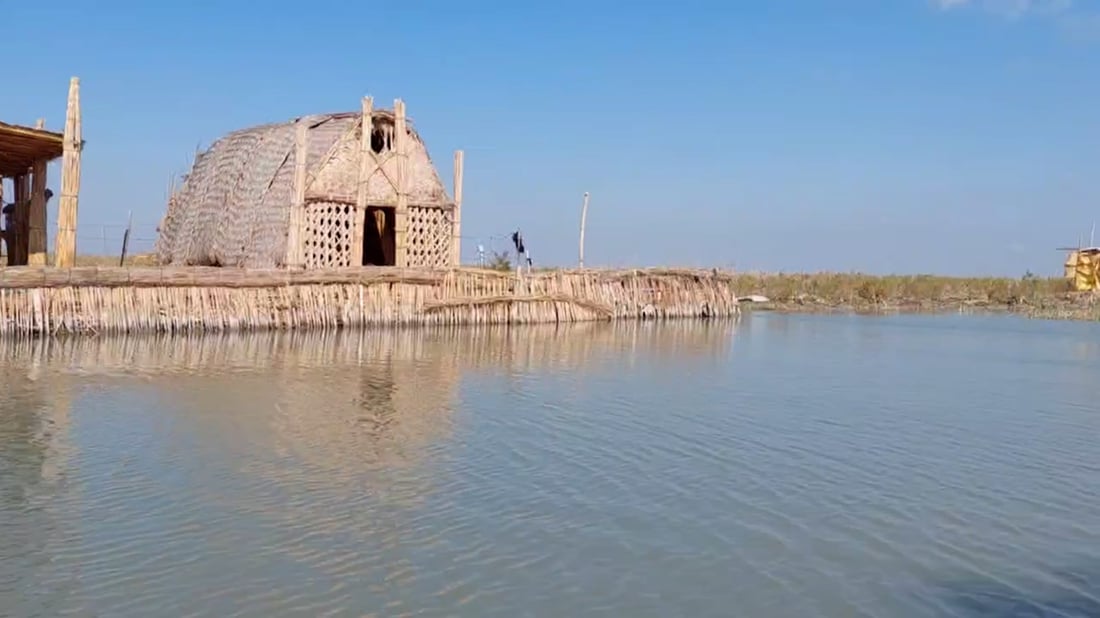
Iraq’s water minister orders new measures to protect and restore marshlands
BAGHDAD — Iraq’s Water Resources Minister Muthanna al-Tamimi issued a series of directives Wednesday on managing and protecting the country’s marshlands, including wider use of phytotechnology for wastewater treatment and more support for residents and farmers in marsh areas.
Al-Tamimi chaired the 22nd meeting of the National Committee for the Management of the Marshes, a World Heritage-listed site, in his first such meeting since taking over the ministry. He described the marshes as “a national issue with environmental, civilizational and international dimensions,” stressing that protection is a shared responsibility across ministries, local administrations and marshland communities, and called for better services to improve living conditions and encourage stability in local communities.
The meeting emphasized balancing Iraq’s international commitments with economic development in marsh areas. Tamimi ordered the wider adoption of phytotechnology for wastewater treatment, citing its environmental benefits, to be implemented with the Environment Ministry.
He voiced support for farmers operating outside the World Heritage boundaries, encouraging drip irrigation to cut water use, and directed the committee to meet quarterly to monitor projects and submit regular progress reports.
The meeting comes as parts of Iraq’s southern and central marshlands have shown marked recovery following improved water supplies. In May, officials reported that flows into Abu Zirig Marsh in Dhi Qar had risen from zero to an average of 18 cubic meters per second, while Euphrates water levels rose about 55 centimeters compared with recent years. Authorities said families had returned to previously abandoned areas, tourism had expanded and fishing and water buffalo breeding had resumed. Officials in Diwaniyah reported large sections of the Dalmaj Marsh flooded “for the first time in many years,” and earlier this year Iraq’s Department of Animal Resources released about 7.2 million common carp fingerlings into the marshes and waterways of Maysan to help restore fish stocks.