
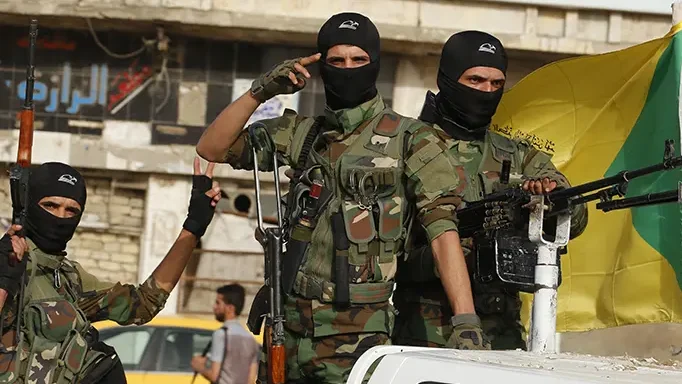
Kataib Hezbollah leader vows to keep arms, warns of future conflict despite US-Iran deal
BAGHDAD — Kataib Hezbollah Secretary-General Ahmad al-Hamidawi, known as Abu Hussein, said Wednesday the Iraqi armed faction had emerged victorious from a completed round of conflict, while warning that future confrontations remain possible despite a recent memorandum of understanding between the United States and Iran.
In a statement at the start of Muharram, al-Hamidawi said the group remained prepared for further conflict and would not give up its weapons. “We are concluding another round of war and emerging from it with a decisive victory,” he said. “We fully realize that the battle has not ended and that more dangerous and intense rounds and stages lie ahead. Therefore, duty and awareness require us to remain prepared for any emergency, holding firmly to our weapons and keeping our fingers on the trigger.”
The statement came after a memorandum of understanding between the United States, led by President Donald Trump, and Iran, led by Supreme Leader Mojtaba Khamenei, that formally ended months of hostilities and set a framework for reducing tensions and opening negotiations. Hamidawi rejected the idea that the broader conflict had been resolved. Referring to the killing of former Iranian Supreme Leader Ali Khamenei, former Lebanese Hezbollah Secretary-General Hassan Nasrallah and others, he asked: “Which page has been turned? Which crime has been forgotten? Which criminal has been forgiven?”
He criticized those he said had sided with the group’s opponents and dismissed efforts to promote a “new page” in relations with them. The statement closed with thanks to Hezbollah in Lebanon, Iran’s armed forces, fighters in Yemen and what he called resistance movements in Palestine, Iraq, Bahrain and Syria.
Kataib Hezbollah is one of Iraq’s most powerful Iran-backed factions and a key part of the Islamic Resistance in Iraq. Hamidawi’s emphasis on retaining weapons comes as the government presses a June initiative to restrict weapons to state control. Since the Coordination Framework endorsed the plan on June 1, Saraya al-Salam, Asaib Ahl al-Haq and the Imam Ali Battalions have begun procedures to integrate into state institutions or transfer weapons to government control. Kataib Hezbollah, along with Harakat al-Nujaba and Kataib Sayyid al-Shuhada, has rejected disarmament, arguing its weapons remain essential for Iraq’s security. In late May, a Kataib Hezbollah official said the group was prepared to buy and store specialized weapons from factions choosing to give up their arsenals.