
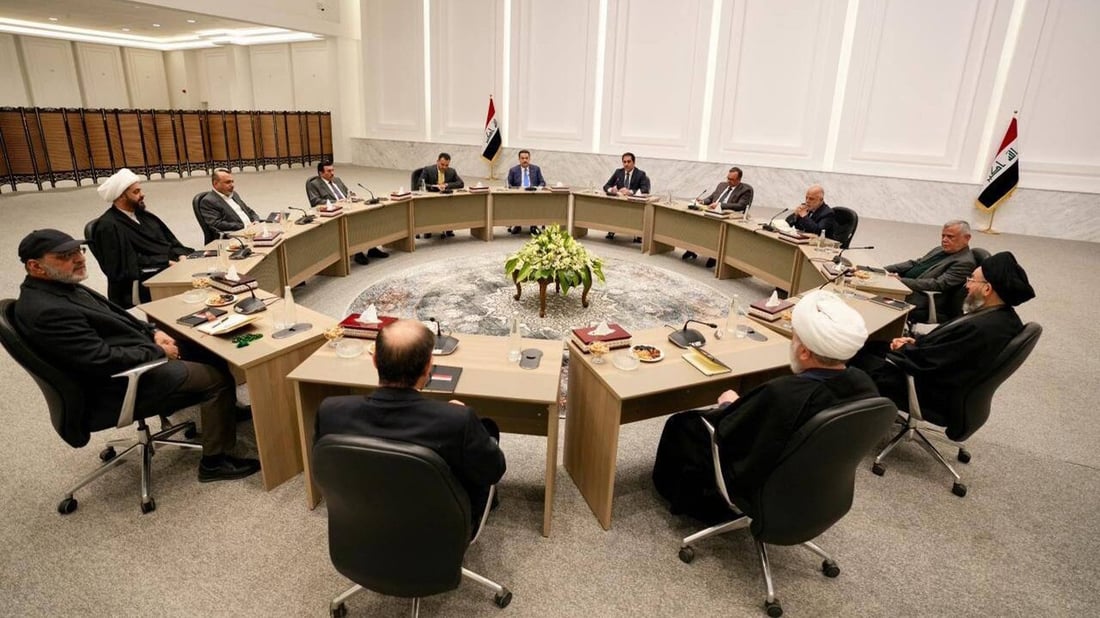
Iraq’s Coordination Framework meeting
Coordination Framework rejects KRG statement on oil dispute, calls for ‘cooperation’
BAGHDAD — The Coordination Framework said Monday it rejects the Kurdistan Regional Government’s statement on crude oil exports through the northern pipeline, calling the accusations it contained unhelpful to resolving the dispute.
The Shiite political alliance said oil and gas management must follow the Iraqi constitution and existing laws. “The Coordination Framework affirms that the management of the oil and gas file and their export must be carried out in accordance with the constitution and the applicable laws, in a manner that preserves the unity of the sovereign decision of the Iraqi state and the rights of all Iraqis,” it said.
It called on both sides to prioritize “the supreme national interest” and resume exports through the Ceyhan port “in this decisive moment.” “The Coordination Framework calls for prioritizing the supreme national interest and for serious cooperation between the federal government and the Kurdistan Regional Government to resume oil exports through the port of Ceyhan and to adhere to the policies and decisions of the federal government in a way that serves the supreme interest of the Iraqi state,” the statement said.
“The Coordination Framework expresses its rejection of what was stated in the statement of the Ministry of Natural Resources in the Kurdistan Regional Government regarding the oil export file through the port of Ceyhan, and the accusations it contained that do not contribute to finding real solutions.” It urged that disputes instead be addressed “in a spirit of national partnership and shared responsibility.”
The statement stops short of engaging with the KRG’s specific grievances. The KRG’s Ministry of Natural Resources had accused Baghdad of distorting the reasons behind the export halt, pointing to the dollar embargo on Kurdistan Region traders, the federal government’s failure to stop militia attacks on energy infrastructure that it said have brought production to a standstill, and chronic delays in salary payments — a detailed list of accusations the Coordination Framework dismissed without addressing any of them on their merits.
Kurdish leader Masoud Barzani separately called Monday for direct Baghdad-Erbil talks, warning that Iraq faces “multiple crises amid increasing polarization” and urging both governments to meet and resolve their disputes before opportunists deepen the divisions further.
Iraq’s parliament is expected to host federal and KRG oil ministers Tuesday evening in an effort to break the deadlock — a session that will test whether the competing narratives can be reconciled as the country’s finances come under mounting pressure from the near-total loss of southern export revenues through the Strait of Hormuz.
Sonnet 4.6