
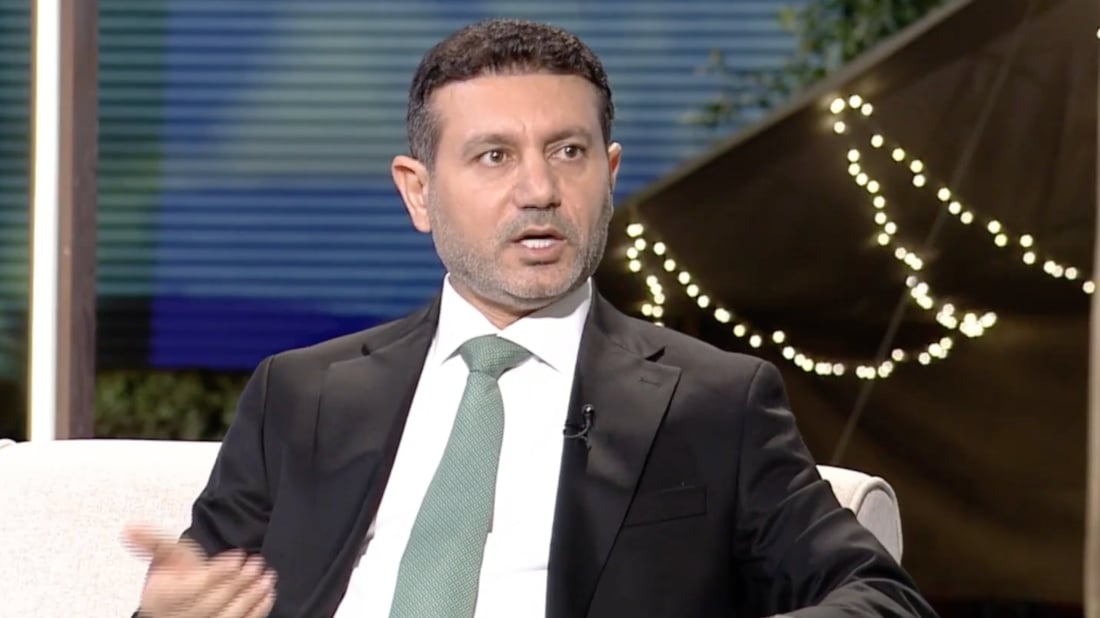
MP from the Reconstruction and Development Coalition, led by current Prime Minister Mohammed Shia al-Sudani, Bahaa al-Nouri, in an interview on Al-Iraqiya News
Media Monitor
US pressing Iraq to form government, pro-Sudani lawmaker says
BAGHDAD — A lawmaker from Prime Minister Mohammed Shia al-Sudani’s coalition said Tuesday that the United States is pressing Iraqi political forces to complete the government formation process, predicting movement next week that could produce nominees for prime minister and president.
“The Americans are pressing toward forming the government,” Bahaa al-Nouri, a member of the Reconstruction and Development Coalition, told Al-Iraqiya News. “The region is volatile and there may be a war soon. The current government has no full powers, so the Americans are pushing to complete the constitutional entitlements.”
Al-Nouri said U.S. Ambassador Tom Barrack “visited four Iraqi figures and urged them to form the Iraqi government” but has not set fixed deadlines. “They are saying to shorten the time and form the government in the near future. However, they have not given precise dates.”
While his coalition is part of the Coordination Framework, which nominated former Prime Minister Nouri al-Maliki after November’s elections, al-Nouri was candid about the nomination’s prospects. “Under the current circumstances, I can tell you it will be difficult for Mr. al-Maliki to pass, given the existing dynamics,” he said.
He said Sudani told him personally why he withdrew in favor of Maliki — citing his “political and administrative experience” — but al-Nouri made clear his own preference lies elsewhere. “We do not need a weak candidate to experiment with, especially in this tense regional and international environment,” he said, pointing to Sudani’s record of attracting foreign investment and keeping Iraq out of regional conflicts.
“Iraq needs someone with experience,” al-Nouri said. “Al-Sudani brought more than $100 billion in investments into Iraq, something unprecedented in the country’s history.”
The Coordination Framework has been deadlocked since the November elections. Maliki’s nomination drew a public warning from President Donald Trump, who said Washington would “no longer help” Iraq if Maliki returned to office. Barrack has since visited Baghdad, telling political figures that “a government installed by Iran will not be successful.”
Excerpts from Al-Nouri’s interview on Al-Iraqiya News:
The Americans are pressing toward forming the government. As you know, the region is volatile and there may be a war soon. The current government has no full powers, so the Americans are pushing to complete the constitutional entitlements. Regarding deadlines, they are not giving a specific timeframe in terms of exact days, but they are saying to shorten the time and form the government in the near future. However, they have not given precise dates.
Tom Barrack visited four Iraqi figures and urged them to form the Iraqi government. I believe there will be real movement next week, which may result in a nominee for prime minister and a president of the republic.
At the beginning, the Coordination Framework wanted a compromise candidate. But when the matter narrowed to two candidates — Mr. al-Sudani and Mr. al-Maliki — those two were adopted by political blocs, while the others were not. Therefore, Iraq today cannot be governed by a compromise candidate.
Iraq needs someone with experience. When I asked Mr. al-Sudani why he withdrew in favor of al-Maliki, he said the man has political and administrative experience and that he saw him as the best candidate, so he stepped aside for him. But under the current circumstances, I can tell you it will be difficult for Mr. al-Maliki to pass, given the existing dynamics.
My view on re-evaluating Mr. al-Maliki’s nomination was personal. However, we asked the Coordination Framework, of which we are a part, to take into account all existing challenges and to spare Iraq from sanctions.
Al-Sudani brought more than $100 billion in investments into Iraq, something unprecedented in the country’s history. He succeeded in advancing investment and attracting companies. The Chevron contract signed yesterday was evidence of al-Sudani’s success in bringing foreign oil companies to work in Iraqi fields to increase oil production levels.
Over the past three years, al-Sudani has shifted Iraq from the mindset of a government official to that of a statesman and institution-building. For example, the ASYCUDA system, which generated much controversy, prevented currency smuggling and returned millions of dollars to the state treasury.
So I say, today we do not need a weak candidate to experiment with, especially in this tense regional and international environment. U.S. warships are present in the Middle East, and this potential war requires someone who can steer Iraq through this phase. Mr. al-Sudani succeeded during his previous administration in keeping the country out of this conflict.