
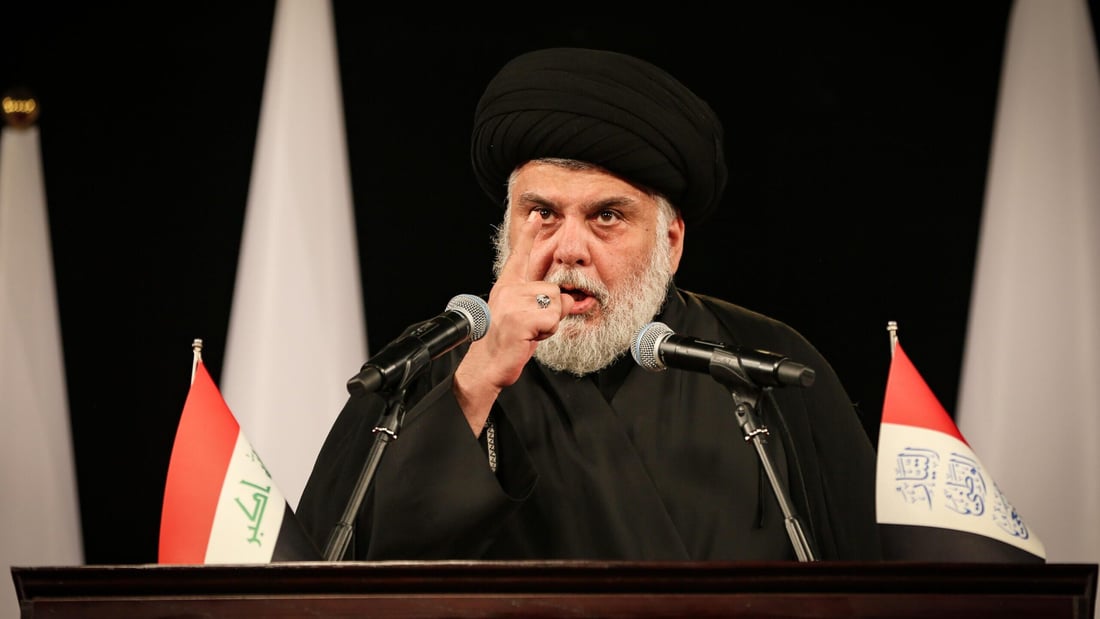
Sadrist movement leader Muqtada Al-Sadr
Monitor
Sadr urges unity and restraint amid Syria escalation
NAJAF — Influential Shiite cleric Muqtada al-Sadr issued a public message addressing multiple segments of Iraqi society, calling for unity, discipline and rejection of extremism amid escalating violence in northeastern Syria.
In a statement released in Najaf, Sadr first addressed members of the Sadrist movement, urging them to act only after consultation with religious and organizational leadership. “Do not say a word or do a deed except after consulting your seminary and leadership,” he wrote. “Be courageous and disciplined, and be fully prepared to carry out orders as we have known you.”
Turning to Iraqi tribes, Sadr described them as “Iraq’s shield” and called on them to set aside internal disputes. “Unite your ranks and leave your differences behind,” he said, proposing the formation of a “non-armed tribal security council,” adding, “We are with you.”
Addressing the broader Iraqi public, Sadr sought to reassure citizens and called for cohesion. “You are our trust before God, His Messenger, and the Prophet’s household,” he said. “Do not fear or worry. Turn to your religious authorities and unify your ranks. We will not abandon you.”
Sadr also addressed members of the security forces and the Popular Mobilization Forces, urging them to remain outside political disputes. “Avoid politics and politicians,” he said. “Protect your country under the banner of the homeland, the religious authority and the leaders.”
In a separate message to Iraqi Sunnis, Sadr rejected sectarian narratives. “Do not think that terrorism is Sunni,” he said. “It is the enemy of God, peace and nations, and a creation of global arrogance. You are the banner of moderation, and we will not allow any aggression against you.”
The statement comes as Syrian government forces and allied armed groups continue operations against Kurdish-held areas in northeastern Syria, including Rojava, raising regional fears of wider instability and the possible resurgence of the Islamic State group.
Syrian forces have advanced into territory long controlled by the Syrian Democratic Forces, entering parts of Raqqa and Deir ez-Zor governorates and effectively ending Kurdish self-rule in much of the northeast.
The fighting and rapid territorial shifts have renewed international concern over prisons and camps holding thousands of Islamic State detainees and their families. Clashes near several detention sites have led to reported escapes, heightening fears among observers that ongoing instability could enable the extremist group to regroup and pose renewed security threats across the region.