
'There is no plan'
Local officials suspect ‘intentional’ drying of Najaf Sea
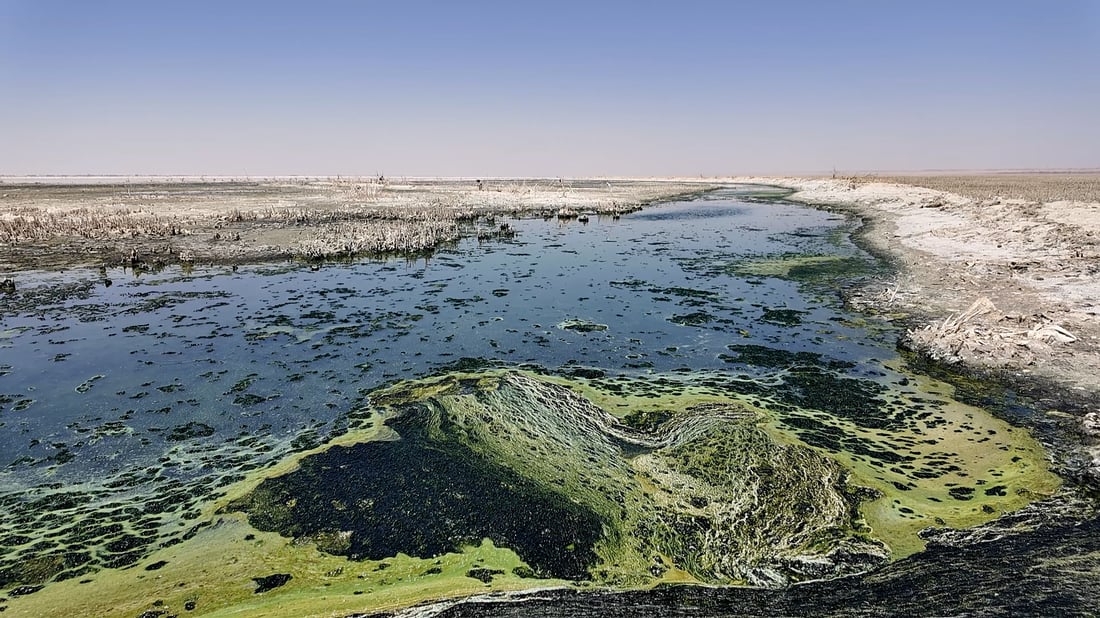
NAJAF — Officials in Najaf say the shrinking of the Najaf Sea, a historic inland lake in southern Iraq, may be ‘intentional’, citing the lack of intervention by the central government and the Ministry of Water Resources.
Akram Sharbah, a member of the Najaf Provincial Council, told 964media that only 18,000 dunams (4,447 acres) of the lake remain covered this summer, compared with 20,000 to 26,000 dunams (4,942 to 6,424 acres) in previous years.
Sharbah said the decline stems in part from the closure of wells that once fed the area and pointed to the government’s investment map, which he argued shows a plan to dry it. “There is no plan in the governorate to address this issue,” he said, calling for a special committee to oversee the sea as both a tourism site and part of Najaf’s history. “I believe there is an intention to get rid of it.”
He said the provincial council convened to discuss water scarcity and the lake. During the session, the provincial water director confirmed that the sea once spanned its entire 40,000 dunam (9,884 acres) area in peak seasons. Sharbah said today’s figures fall well short, reinforcing his view that the drying is deliberate.
Activist Aqil Al-Hidrawi warned that proposed housing projects on the site could undermine religious tourism tied to the Imam Ali shrine. “The investment plan is being shaped to serve powerful political parties,” he said, adding that Najaf needs infrastructure to support religious visitors rather than more residential projects.
Earlier, the Najaf Environment Directorate attributed the drying to reduced flows from tributaries including the Ghazi, Abu Jathou and Bdeiria rivers, as well as the Najaf South Drain. The closure of more than 20 active wells that once supplied large volumes of water has also worsened the crisis.
Nationally, the Ministry of Water Resources said reserves have fallen to just 8% of capacity, the lowest level in nearly a century. Officials cited climate change, low rainfall and declining inflows from upstream countries, warning that the shortfall is straining water supplies in all governorates, especially in central and southern Iraq.