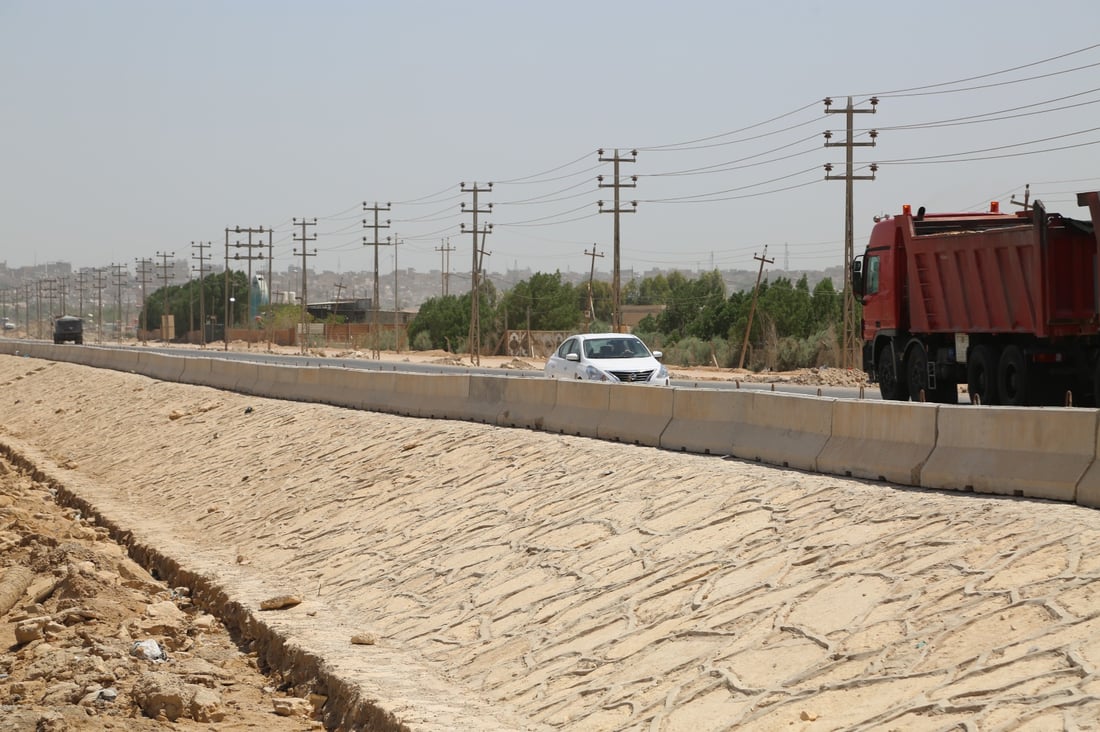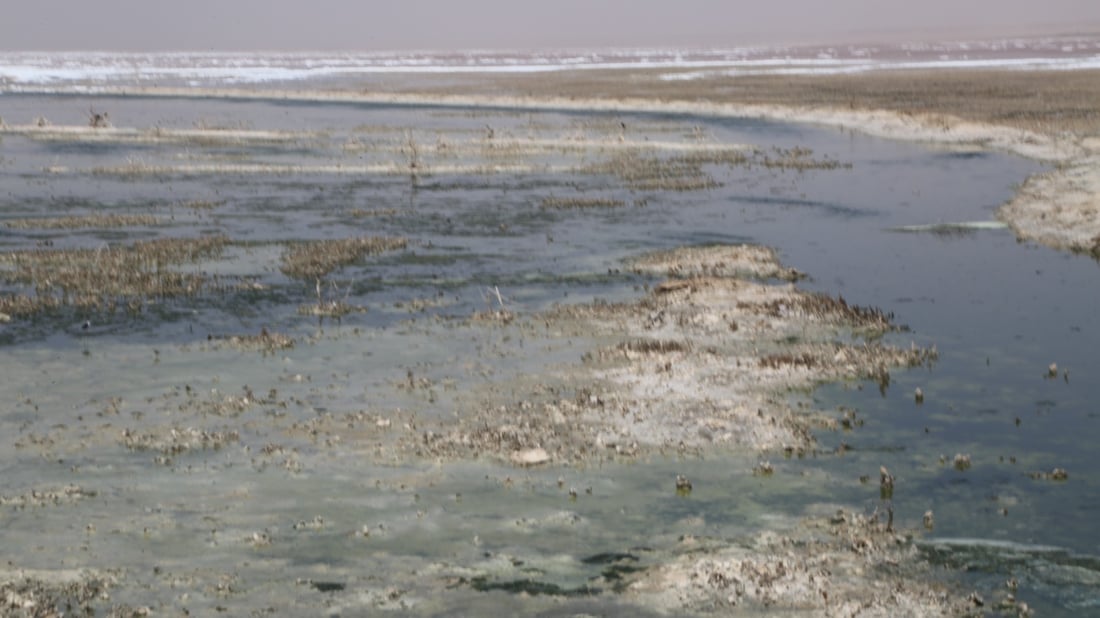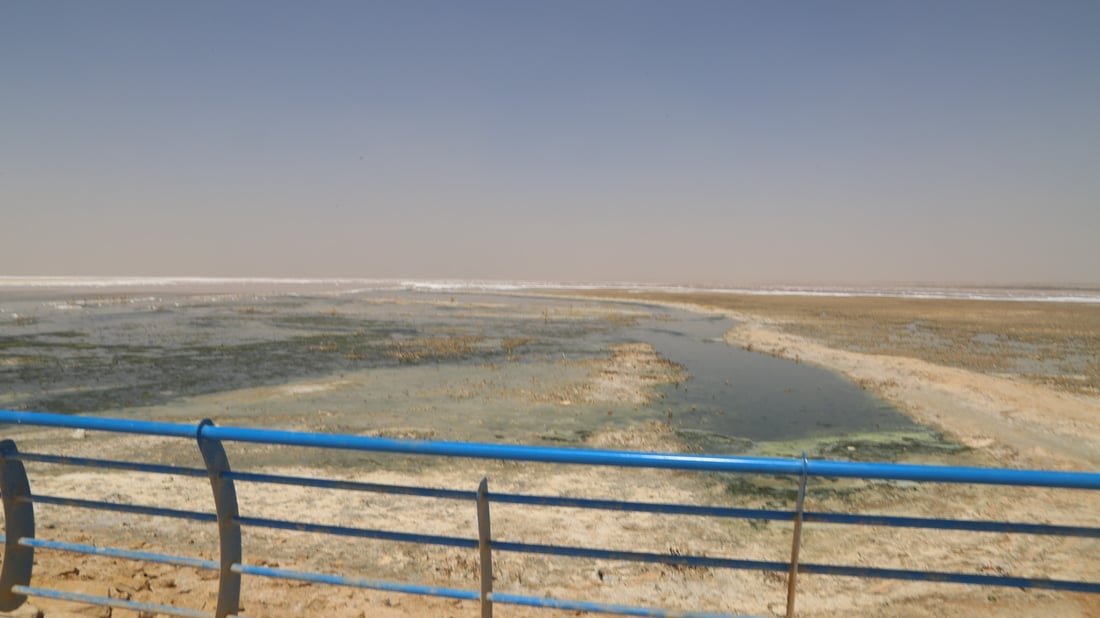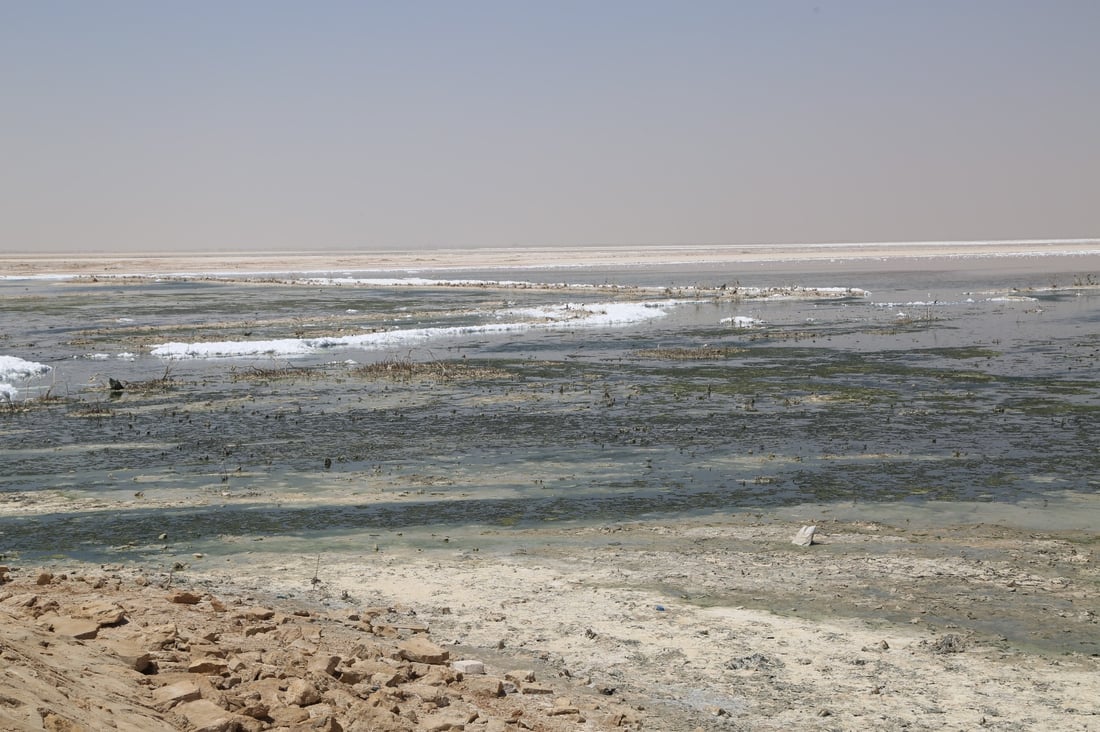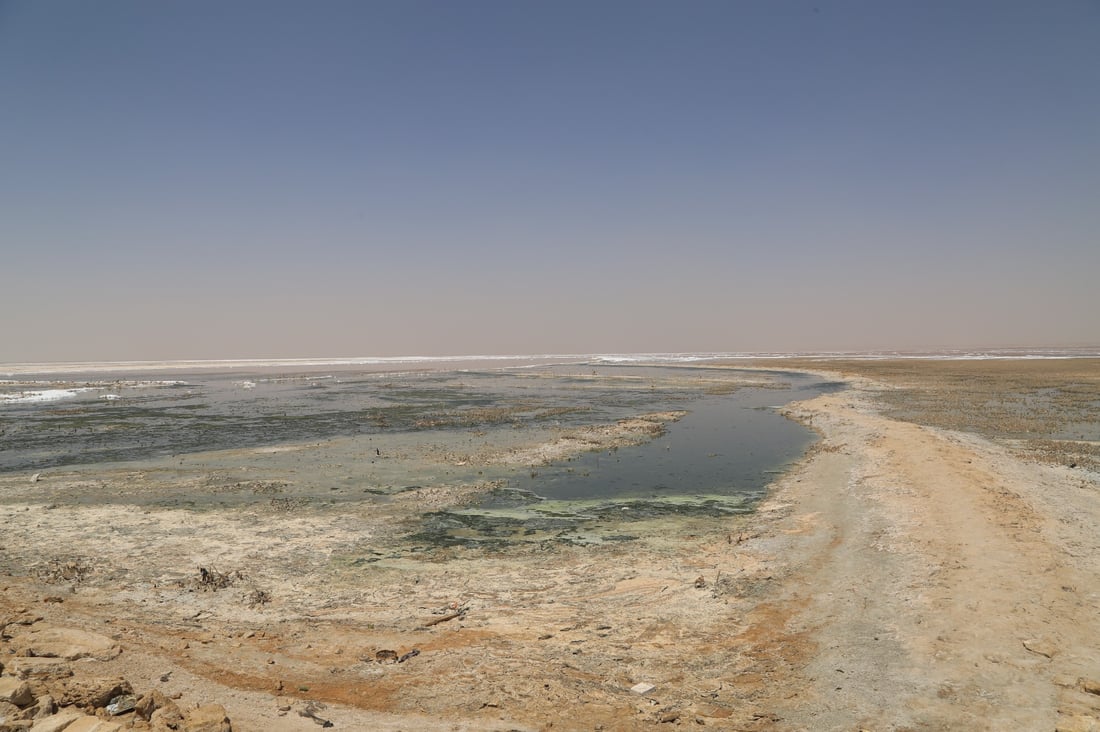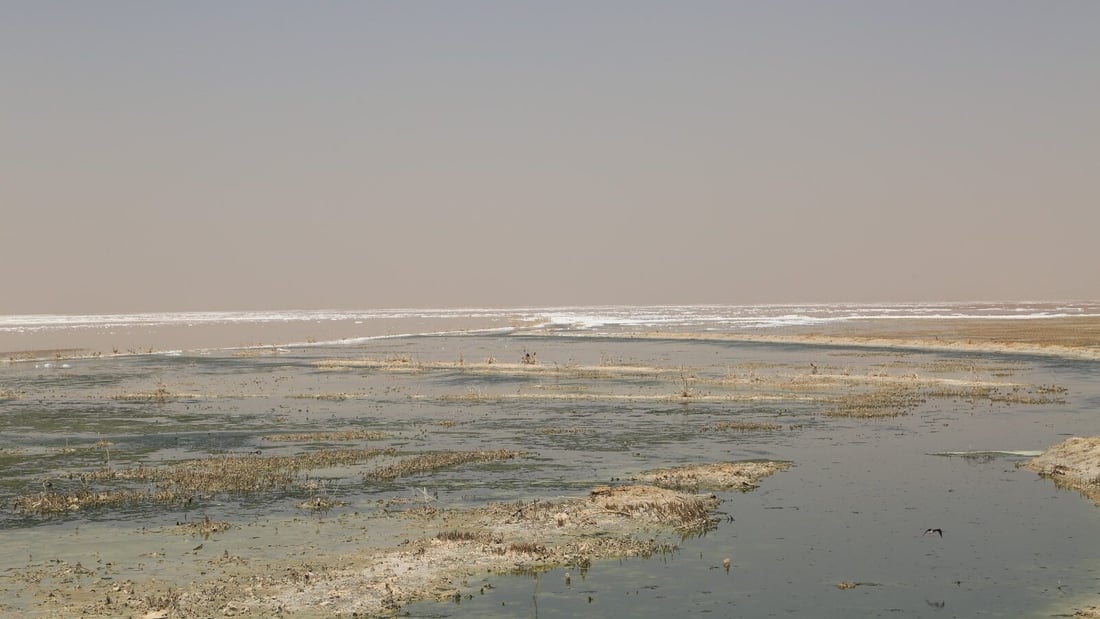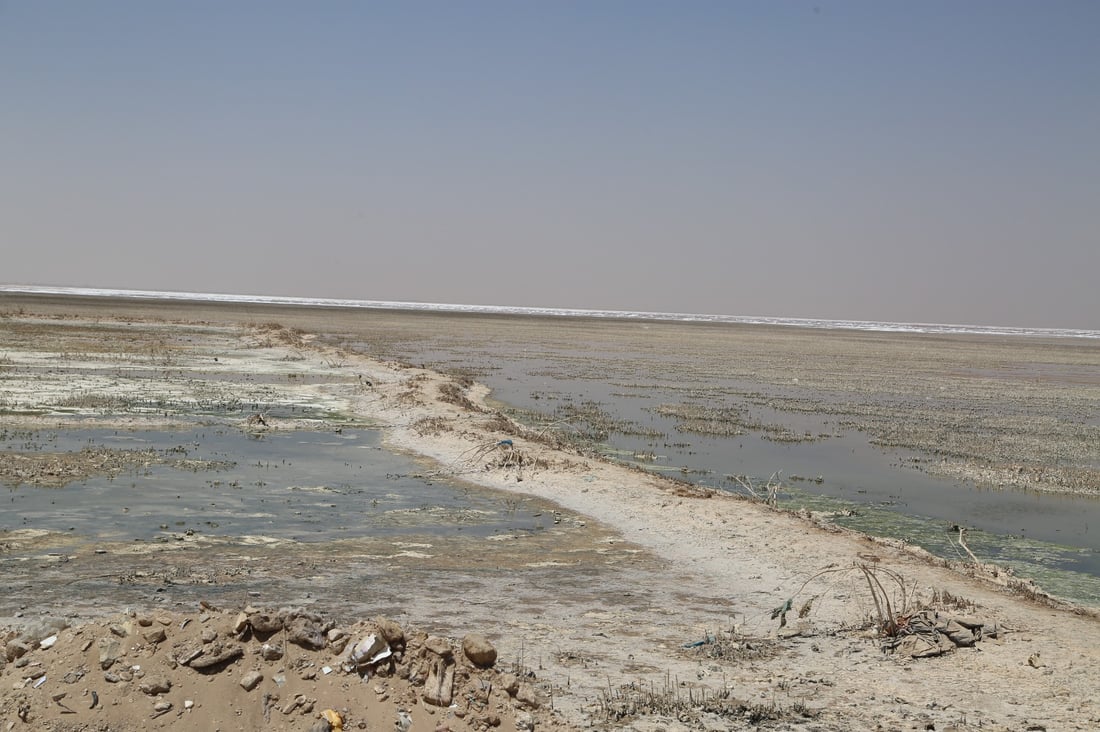
A view of the partially dried Najaf Sea, where environmental officials say more than 40,000 dunams of water surface have disappeared due to reduced tributary flows, closed wells, and severe climate conditions.
'Natural disaster'
Najaf’s shrinking lake loses 10,000 acres as drought continues
NAJAF — The once-sprawling Najaf Sea, an inland lake in southern Iraq, has lost more than 10,000 acres of its surface water, raising alarm among environmental officials who warn of an unprecedented ecological crisis in the governorate.
The Najaf Environment Directorate said the drying is the result of reduced water allocations from small tributaries that feed the basin, including the Ghazi, Abu Jathou, and Bdeiria rivers, along with the Najaf South Drain. The closure of more than 20 flowing wells that once supplied large volumes of water has also deepened the crisis.
Jamal Abdul Zaid, director of the Najaf Environment Directorate, called the situation “the first of its kind in many years.” He said in a statement that a specialized team visited the area on Tuesday to assess the damage. “The environmental and natural disaster that has struck the Najaf Sea after the drying of most of its 40,000 dunams is the first of its kind in a very long time,” he said.
According to Abdul Zaid, the main reasons are the reduced water share for the lake’s tributaries, the shutdown of about 20 flowing wells, and severe climate changes in recent years. “These changes have caused record-high temperatures and a near-zero rainfall season,” he said.
The directorate urged immediate action from provincial authorities. “We call on the government in Najaf to hold an emergency session of the Environmental Protection and Improvement Council to look urgently and effectively into this disaster that has struck the lake, which citizens of Najaf consider a vital environmental, economic, and touristic resource,” Abdul Zaid said.
Iraq’s Ministry of Water Resources said national reserves have dropped to just 8% of total storage capacity, the lowest level recorded in nearly a century. The ministry attributed the decline to climate change, low rainfall, and reduced inflows from upstream countries, warning that the situation is straining water availability across all governorates, with central and southern regions hardest hit.