
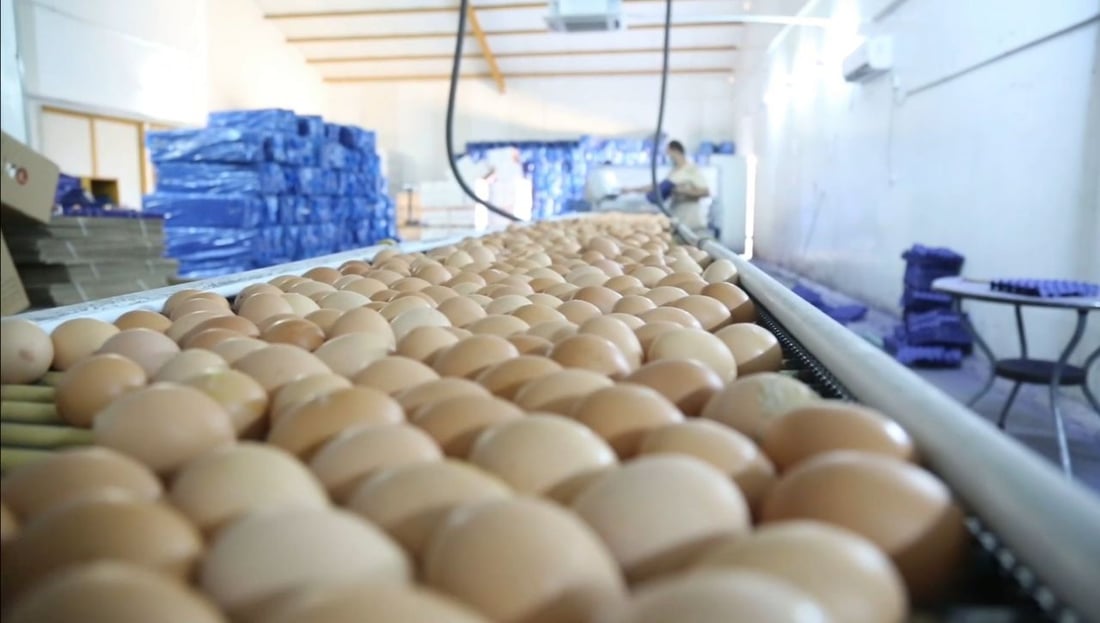
Eggs move along a conveyor belt at a poultry production facility in Iraq
Iraq insists egg output exceeds demand but lifts import ban as prices spike
BAGHDAD — Iraq’s Ministry of Agriculture said local table egg production exceeded domestic demand by 1.2 billion eggs annually, while calling for lower customs tariffs on agricultural inputs — even as the government moved to authorize imports after prices spiked, reversing a ban introduced only months earlier.
The ministry said Iraq requires 12 billion eggs annually and that total production reached 13.2 billion eggs last year. Despite the ostensible surplus, box prices reached 80,000 dinars (about $52.6) in recent months, with the ministry attributing the increase to “trader speculation” rather than any production shortfall.
Mahdi Sahar al-Jubouri, the ministry’s administrative deputy, told state-run newspaper Al-Sabah that reducing or removing customs tariffs on livestock and agricultural inputs would “greatly support the local product” and encourage producers to expand. He said a ban on egg imports had helped restart 291 previously idle production projects, but acknowledged the ministry had authorized imports once box prices climbed to 70,000 dinars (about $46.1). Security agencies have been conducting daily market inspections to limit hoarding, and major producers were required to sell directly to citizens.
Table eggs are currently sold through Ministry of Trade hypermarkets for 60,000 to 65,000 dinars per box (about $39.5 to $42.8).
The episode follows a recurring pattern. Iraq has banned and selectively reopened imports multiple times since 2019, part of a broader push across multiple food categories. Economists have warned that bans imposed before domestic supply can fully compensate tend to create price pressure.