
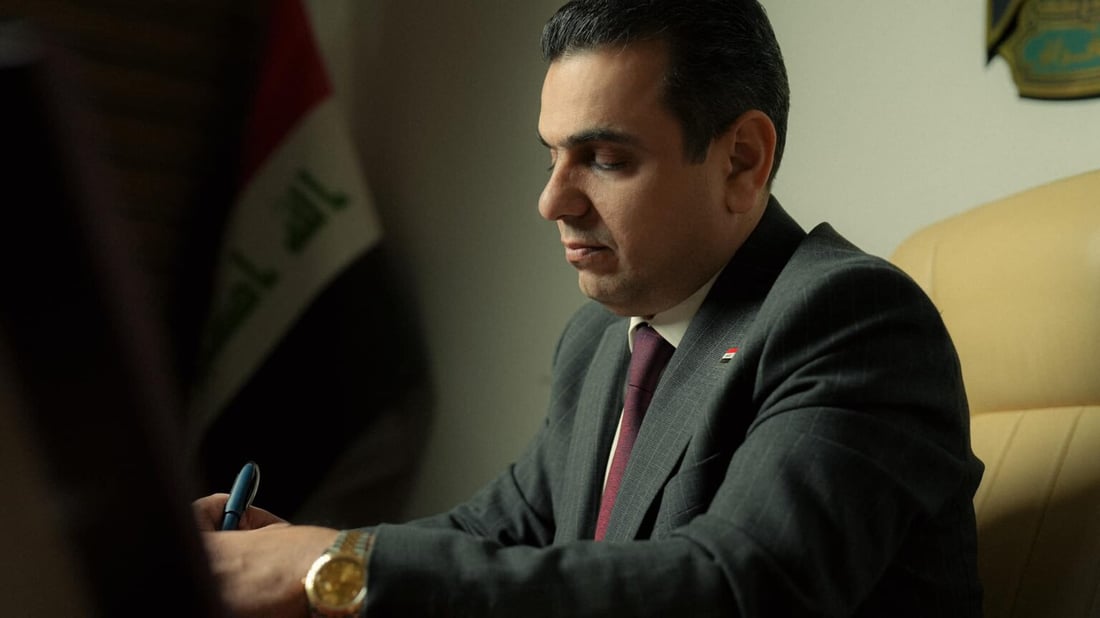
MP Hussein Arab
Media Monitor
Iraqi lawmaker warns of US sanctions over PMF legislation
BAGHDAD — Iraqi lawmaker Hussein Arab has warned that the country could face U.S. sanctions if officials proceed with new legislation governing the Popular Mobilization Forces without addressing concerns raised by international partners.
“There are international parties that have objections to the legislation,” Arab said in an interview with 1 News. “Although the issue is internal, Iraq is part of an international system and is a signatory to global treaties and agreements, and it is economically tied to the United States.”
He cautioned against ignoring U.S. objections, warning of serious financial consequences. “Whoever wants to confront the Americans over the PMF law must first secure enough funds to pay the salaries of millions of employees and retirees… After that, they can go ahead with the confrontation,” he said.
In mid-July, Iraq’s parliament completed the second reading of the draft PMF law, despite a walkout by many Sunni and Kurdish lawmakers who objected to its inclusion on the session’s agenda without prior consensus.
In a recent call with Iraqi Prime Minister Mohammed Shia al-Sudani, U.S. Secretary of State Marco Rubio raised concerns that the law would “institutionalize Iranian influence and armed terrorist groups undermining Iraq’s sovereignty.”
The PMF, or Hashd al-Shaabi, was established in 2014 in response to the rise of the Islamic State. While officially part of Iraq’s security forces, it includes factions with close ties to Iran and varying levels of independence from the Iraqi government.
Arab also predicted that parliamentary elections scheduled for Nov. 11 may be delayed due to rising tensions in the region.
“I still believe the elections will be postponed due to regional events that will affect Iraq,” he said. “The 12-day war may lead to another war.”
Excerpts from Hussein Arab’s interview with 1 News:
There are international parties that have objections to the legislation of the Popular Mobilization Forces law. Although the issue is internal, Iraq is part of an international system and is a signatory to global treaties and agreements, and it is economically tied to the United States.
Whoever wants to confront the Americans over the PMF law must first secure enough funds to pay the salaries of millions of employees and retirees, and enough to cover projects and services. After that, they can go ahead with the confrontation. This is exactly what happened in the 1990s when we faced economic sanctions because of anti-American rhetoric. We are not against this in principle, but we say that a state is not built on emotions.
The problems revolve around the PMF structural law, not its retirement. The U.S. Embassy has objections, and there are questions from the British Embassy and also from Gulf Arab states.
We should not proceed with stubbornness or continue to challenge these international parties, because this will lead to a reaction from them.
It is very difficult to integrate the PMF into the Ministry of Defense because it is an ideological body that cannot be easily dissolved. However, it is possible to eliminate the factions operating outside the PMF structure. Many entities have brigades within the PMF and separate factions outside it. This is confirmed by American reports, the Iraqi government, and the Security and Defense Committee.
It is also possible to enforce stricter military regulations within the PMF and align them more closely with those of the Ministry of Defense to reduce violations.
I still believe the elections will be postponed due to regional events that will affect Iraq. I am not certain of this, but I expect it. The 12-day war may lead to another war—in fact, the war has not stopped, and both sides are trying to regain strength to wage another war. Some brothers have told me that elections were previously held during the ISIS invasion, but I say that what is to come will delay the elections. The simplest example is Ukraine, which could not conduct elections.