
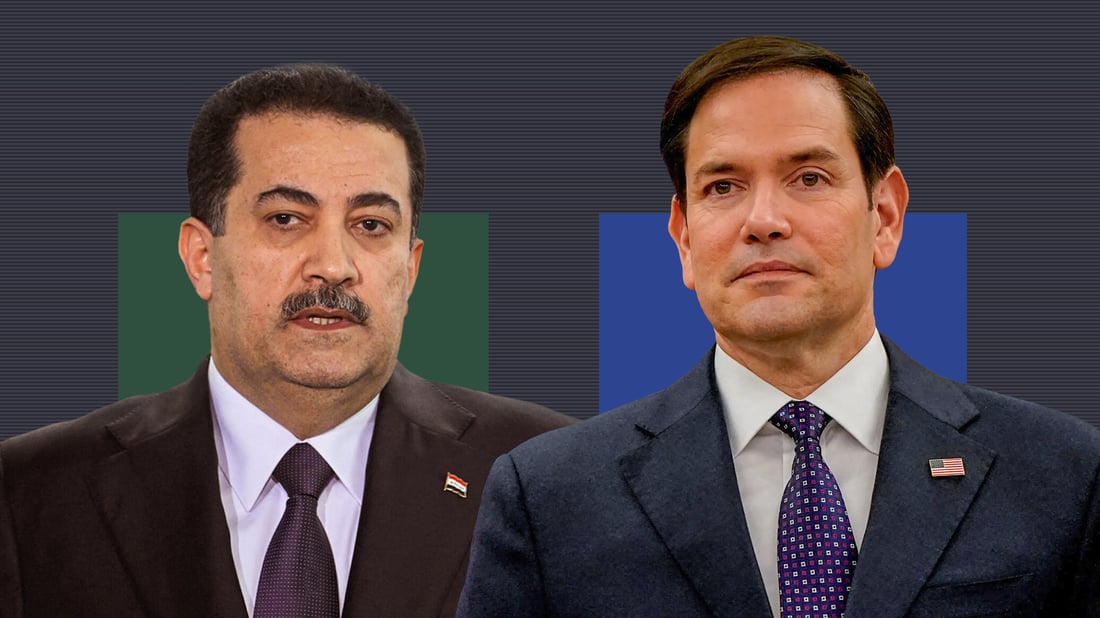
A collage photo of U.S. Secretary of State Marco Rubio (right) and Iraqi Prime Minister Mohammed Shiaa al-Sudani (left)
Monitor
Sudani, Rubio discuss drone strikes, Kurdish oil deal, and PMF bill in phone call
BAGHDAD — Prime Minister Mohammed Shia al-Sudani and U.S. Secretary of State Marco Rubio spoke by phone this week to discuss recent attacks on Kurdistan Region energy infrastructure, ongoing disputes over Kurdish oil revenues, and controversial legislation regarding the Popular Mobilization Forces, according to official readouts from both governments.
The call, confirmed in statements released Tuesday and Wednesday, comes amid a surge in drone strikes on oil installations in Duhok, Erbil, Salah al-Din and Kirkuk governorates, prompting temporary shutdowns of sites operated by local and international companies, including U.S.-based Hunt Oil.
Rubio, through State Department spokesperson Tammy Bruce, “stressed the importance of the Iraqi government holding the perpetrators accountable and preventing future attacks.” Sudani described the strikes as “deliberate attempts to undermine Iraq’s national economy,” and said Iraqi security agencies are investigating the origin of the drones in coordination with the international anti-ISIS coalition.
Sudani added the timing was suspect, noting the attacks coincided with the signing of a new Memorandum of Principles between Iraq’s Oil Ministry and American companies to develop oil fields in Kirkuk and Salah al-Din.
KRG Deputy Chief of Staff Aziz Ahmed has previously blamed the attacks on factions operating in Kirkuk’s Dibis district, an area known for its Popular Mobilization Forces presence. “We know exactly who’s behind these attacks and where they’re coming from,” he said.
Rubio also urged Baghdad to maintain regular salary payments to Kurdistan Region public servants and to resume oil exports via the Iraq-Turkey Pipeline, frozen since March 2023.
The prime minister said a Cabinet decision last week had removed legal and financial obstacles to implementation of the federal budget law and Federal Supreme Court ruling that obligates the KRG to deliver oil and non-oil revenues. He said the government’s approach was guided by “constitutional and national responsibility toward all Iraqis.”
The July 17 Cabinet resolution, following months of deadlock, requires the KRG to deliver 220,000 barrels of oil per day to Iraq’s State Organization for Marketing of Oil, allocate 50,000 barrels for local use, and transfer 120 billion dinars in non-oil revenue each month to Baghdad. The federal government began releasing salaries this week, with funds expected to reach Erbil today.
Rubio also raised concerns over the proposed Popular Mobilization Commission bill, warning it would “institutionalize Iranian influence and armed terrorist groups undermining Iraq’s sovereignty.”
Sudani defended the legislation as part of a broader security reform project passed by parliament. He said the PMF remains under the authority of the commander-in-chief and is part of Iraq’s formal security structure.
The bill, referred to in some quarters as the amended PMF Authority Law, would elevate the Popular Mobilization Forces into a permanent, independent military institution with sweeping operational, political, and financial powers. Critics say it resembles Iran’s Islamic Revolutionary Guard Corps in both structure and influence. The current draft would expand the PMF’s legal authority beyond its original 2016 framework, which governed wartime mobilization, and formally embed it in Iraq’s national security doctrine as a guarantor of the political order.