
Heritage
Najaf Old City craftsmen retreat into alleys as tourism reshapes locale
NAJAF — Traditional craftsmen in Najaf’s Old City say rising commercial rents and the spread of hotels, restaurants and modern markets near the Imam Ali shrine have pushed many workshops out of the area’s main commercial streets and deeper into residential alleys.
Artisans specializing in copper engraving, silverwork, stone carving and the handwoven Najafi abaya — regarded by craftsmen as among the finest and most expensive in the Middle East — say they have relocated their workshops away from traditional customer routes as commercial expansion reshapes historic neighborhoods such as Al-Mishraq.
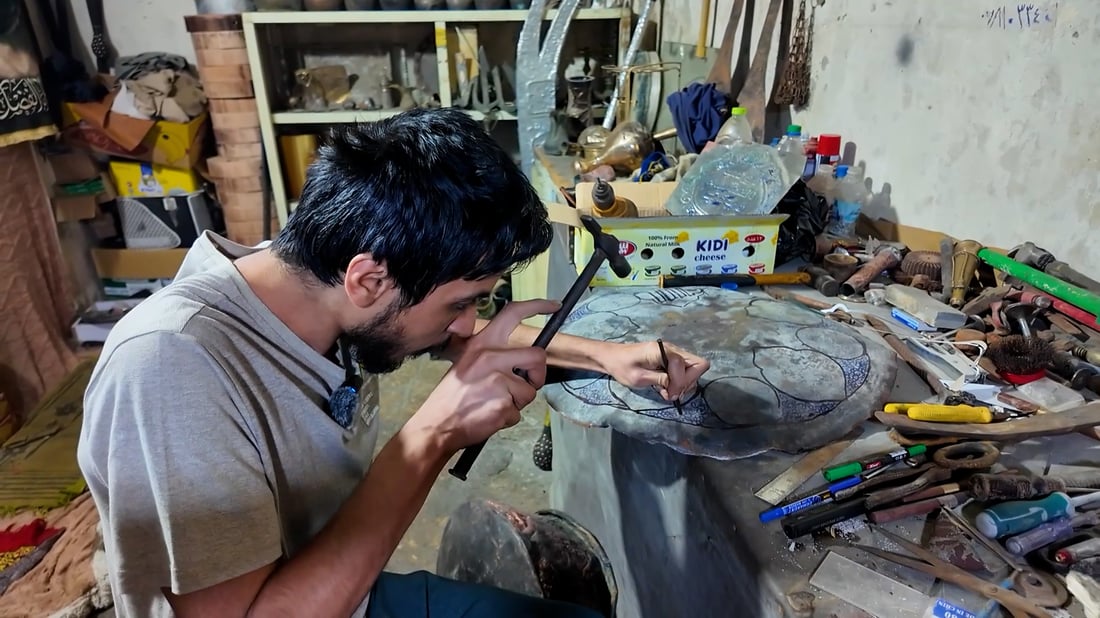
In the narrow alleys of Al-Mishraq, craftsman Haider Najah, who specializes in copper engraving and antique restoration, linked his trade to the Sumerian era. He told 964media he “learned the secrets of the craft from his father,” adding that “the crazy rise in rents and urban expansion are factors forcing craftsmen to retreat into the alleys and move away from the primary commercial lines.”
Inside Souq Al-Abaya in the Grand Market, Hossam Al-Antaki continues weaving handmade Najafi abayas. He told 964media that “completing one luxury abaya takes a full month of hard work,” with prices starting from 100,000 Iraqi dinars ($65) and rising depending on thread quality and materials.
Despite moving farther from the shrine area, many workshop owners said loyal customers still make the effort to find them. Craftsmen say the migration into residential neighborhoods has also helped preserve social ties with local residents who continue to visit despite difficult access routes.
To keep the trades alive, veteran craftsmen have increasingly relied on their sons, including university graduates and government employees, to continue the professions in a market they describe as increasingly dominated by imported and mass-produced goods.
A 964media tour of Al-Mishraq and neighborhoods near Zain Al-Abideen Street found small workshops still operating in the narrow alleys, including appliance repair, basket weaving, fishing net manufacturing, copper engraving and Najafi abaya tailoring. Workers use small carts to transport goods and raw materials through streets too narrow for large vehicles, preserving the district’s traditional character.
Repair shop owner Hadi Obeid said “the repair profession has declined compared to the past because of the lower quality of modern devices and the high cost of maintenance,” which often pushes consumers toward replacements. He said he continues operating through “a network of regular customers from the neighborhood.”
Ahmed Jahim, who sells fishing nets and makes traditional baskets known locally as “salliya,” said “manual production has declined under the pressure of imported and ready-made goods,” while noting that “Najaf still represents a main center for basket manufacturing and exporting to the rest of the governorates.”