
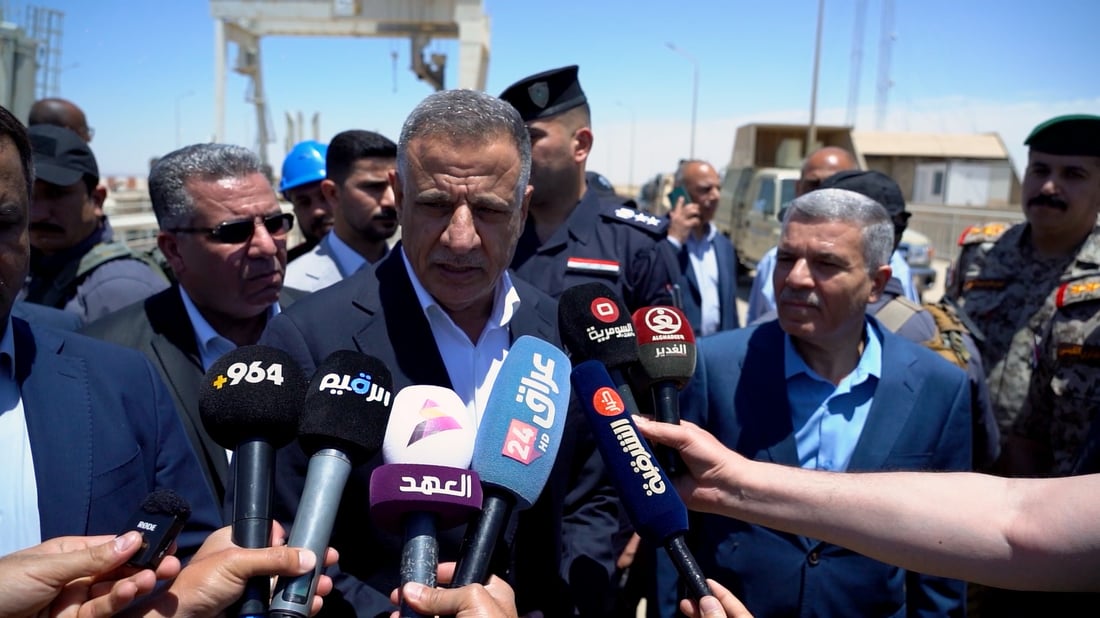
Iraqi Minister of Water Resources Muthanna Al-Tamimi addresses reporters at Haditha Dam on Friday, May 29, 2026, to discuss incoming water volumes from Syria. Photo by 964media
Water
Iraq reassures Euphrates communities as flood wave approaches from Syria
HADITHA — Iraq’s Water Resources Minister Muthanna al-Tamimi reassured residents along the Euphrates River on Friday that a flood wave originating from the Syrian border remains within normal levels, with digital data indicating no cause for concern.
Speaking during an inspection visit to Haditha Dam in Anbar governorate, al-Tamimi said the ministry was fully prepared to absorb any incoming water volumes. Current releases of 700 cubic meters per second are within reasonable limits, he said, and will help boost water reserves and secure the summer agricultural plan after years of severe scarcity at the dam.
“We reassure our people on the banks of the Euphrates River that this wave will be normal according to digital data,” al-Tamimi told 964media. “Haditha Dam is operational, its status is reassuring, and we aspire for it to achieve a pleasing water storage after years of scarcity.”
Coordination is underway “at the highest levels” with Anbar governorate officials, security forces, the Operations Command and the ground forces commander to handle any emergencies, the minister said. Ministry policy focuses on securing the summer plan, enhancing vital projects such as Lake Habbaniyah and building agreements with upstream countries. “We are working to harness shared interests in service of Iraq’s water reserves,” he said.
The situation upstream in Syria has been far more severe, according to Syrian and regional media reports. An unusually heavy rainy season prompted Turkish authorities to open the spillway gates at the Ataturk Dam for the first time in seven years, releasing up to 2,000 cubic meters per second downstream. The influx filled Syria’s Euphrates Dam in Raqqa governorate to capacity, forcing Syrian water authorities to open several spillway gates for the first time in decades, with discharge rates rising to between 1,500 and 1,800 cubic meters per second.
On Monday, Syria’s Ministry of Emergency and Disaster Management issued urgent evacuation orders for Raqqa and Deir ez-Zor governorates, warning that water levels could spike more than two meters above normal. The resulting surge caused widespread flooding across northern and eastern Syria, submerging agricultural fields, washing away homes and knocking out multiple water pumping stations. Syrian authorities declared a state of emergency, and interim President Ahmed al-Sharaa toured disaster zones in Deir ez-Zor on Friday as military units and civil defense teams worked to evacuate affected families.
As the floodwaters move downstream into Iraq, the Anbar Water Resources Directorate has placed technical teams on alert to monitor the wave as it crosses the border at Al-Qaim. The Anbar Police Command deployed river patrol boats along the Euphrates on Friday to enforce a swimming ban, and civil defense teams urged residents to avoid small bridges, boats and informal crossings until water levels subside.