
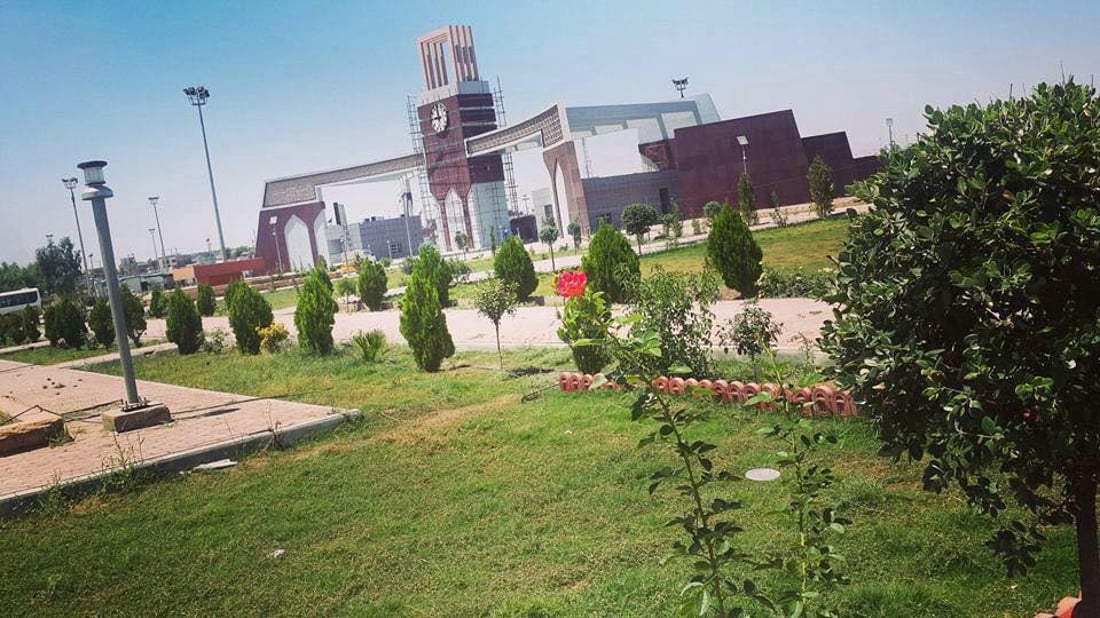
A view of the main entrance at the University of Kirkuk, one of the institutions affected by the now-reversed directive banning Kurdish-language exams.
Swift U-turn
Ministry reverses Kurdish exam ban after backlash from lawmakers, cultural institutions
BAGHDAD — Iraq’s Ministry of Higher Education has reversed a directive banning Kurdish exams in disputed territories, Deputy Speaker of Parliament Shakhawan Abdullah said Sunday, following strong condemnation from Kurdish officials, academics, and cultural institutions who described the order as unconstitutional.
The original directive, dated July 23, instructed universities in Kirkuk, Mosul, and Diyala to administer exams only in Arabic or English, barring responses in Kurdish. The letter, issued by the University of Kirkuk’s Planning Division, warned institutions that allowing Kurdish-language exams would result in legal consequences.
Critics argued the measure violated Article 4 of Iraq’s Constitution, which designates both Arabic and Kurdish as official state languages and guarantees education rights in other native languages.
Abdullah said he spoke with Minister of Higher Education Naeem Aboud, who acknowledged the order had no legal foundation and confirmed it would be withdrawn. “I also contacted the president of the University of Kirkuk, who confirmed the issue has been resolved and new instructions have been sent to cancel enforcement of the letter,” Abdullah said in a statement.
He noted that a similar attempt to restrict Kurdish-language responses in exams occurred last year but was reversed after protest. “We rejected this before, and now the matter has been resolved again. I respect the Kurdish language, and I assure students they can answer in their mother tongue,” he said.
Justice Minister Khalid Shwani also intervened yesterday, saying he received assurances from Aboud that previous procedures allowing the use of Kurdish in relevant courses and exam responses would continue.
The initial order prompted swift condemnation from lawmakers and institutions. Dr. Nahla Afandi, a Kurdish member of Parliament’s Higher Education Committee, called the directive “a clear violation of the constitution and multiple rulings by Iraq’s Federal Supreme Court.”
As of Sunday, the federal Ministry of Higher Education had not issued a formal statement addressing the reversal. Ministry spokesperson Haider Al-Aboudi did not respond to a request for comment.
The Kurdistan Regional Government’s Ministry of Higher Education and Scientific Research also criticized the move, describing it as “a violation of the Iraqi Constitution and the foundations of coexistence.” In a statement, the ministry said marginalizing Kurdish undermines national unity and urged the federal ministry to ensure academic institutions remain inclusive. “We are in contact with the relevant parties in the Iraqi government to resolve this issue and prevent any recurrence of such discriminatory actions,” the statement said.
In a separate statement, Kurdistan Region Minister of Higher Education Dr. Aram Mohammed Qadir criticized the federal ministry’s directive banning the translation of exam questions and lectures, calling it “a violation of the principles of coexistence and a disregard for the culture and identity of Iraq’s non-Arab communities.”
He warned the decision signaled “a dangerous return to Baathist cultural centralism, a mentality that the people of Iraq thought had been archived in history.”
“Everyone must understand clearly: if any party shows disrespect for our language and culture, we will respond with the same principle, eye for an eye, tooth for a tooth,” he added.
The General Committee for Kurdistani Areas Outside the KRG also warned that the July 23 directive was part of a troubling trend. “These steps threaten peaceful coexistence and question the government’s commitment to constitutional values,” it said.