Maysan
Shannun Café preserves Amarah’s heritage as last vestige of old market life
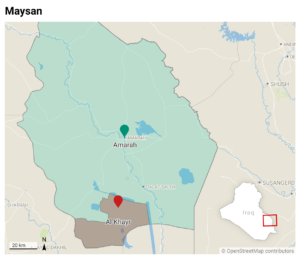
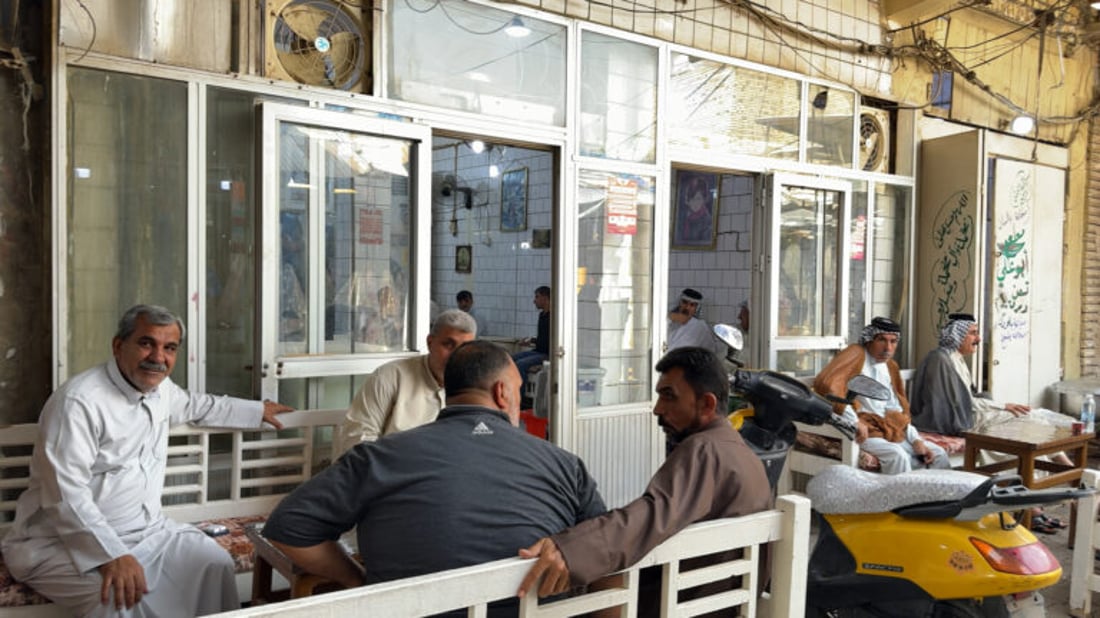
MAYSAN — In the heart of Amarah’s main market, Shannun Café continues to serve customers as one of the city’s oldest surviving landmarks, preserving the social memory and identity of Maysan’s capital for more than 50 years.
Established in the early 1970s by Haj Shannun and originally named Al-Sharq Café, the venue quickly became a gathering place for local elders and residents. It later adopted its founder’s name and has remained under family ownership ever since.
“The café was established by my father in the seventies and was managed by him,” said Muhammad Shannun, son of the founder. “After his passing, we took over the management while preserving its identity and way of operating. The old regulars still come to spend their time here.”
Shannun said the café has long held a special place in the community and beyond. “Our café is known across the city and nearby governorates because it was a meeting place for Amarah’s sheikhs or tribal leaders. Some of them still visit, along with retirees, elderly residents, poets, and market vendors.”
Kazem Al-Zubaidi, a long-time patron, said the café has always been a central part of Amarah’s cultural life. “Most of our sheikhs used to meet in this café. It represents a part of Amarah’s heritage, and we value it greatly. We come here to spend time and meet the people of the city.”
He emphasized the café’s continuity through generations. “Shannun Café dates back to the seventies and has been inherited by Shannun’s sons. Locals love it because the tea is flavorful and its owners are from the city’s original residents.”
Al-Zubaidi also recalled how the café has outlasted others in the once-thriving market. “This café is the last remaining part of the city’s old market. This street used to be filled with cafés and restaurants, but many closed due to the owners’ passing or forced displacements during the former regime in the late 1970s.”
During the 1970s and 1980s, Iraq’s Baathist regime carried out mass displacements targeting ethnic and sectarian groups, including Feyli Kurds and Iraqis with perceived Persian ties.
To preserve its traditional atmosphere, Shannun Café has intentionally avoided internet access, hookahs, and games — fostering an environment centered on conversation, local memory, and social connection.