
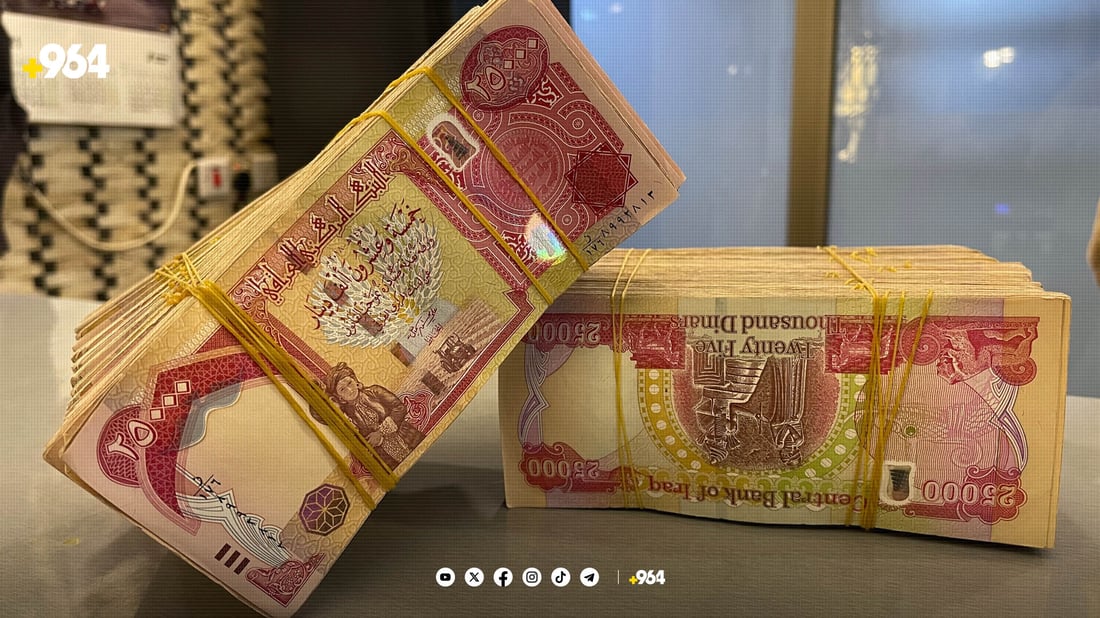
Bundles of Iraqi dinars. (Photo by 964media)
Media Monitor
Dinar stability requires economic diversification, says adviser to PM
BAGHDAD — Iraqi Prime Minister Ali Al-Zaidi’s financial adviser said Saturday that strengthening the Iraqi dinar requires long-term economic reforms rather than rapid administrative measures.
Mazhar Mohammed Saleh told the state-run Iraqi News Agency that the government’s exchange-rate policy is based on “a fundamental objective of protecting the external value of the national currency and preserving the stability of the general price level.”
“Exchange-rate stability has helped strengthen confidence in the Iraqi dinar and support citizens’ purchasing power,” Saleh said. He said stable exchange rates and stable prices for goods and services remain closely linked, adding that the impact of the parallel currency market on prices has remained limited.
The official exchange rate is the rate set by the Central Bank of Iraq, currently 1,320 dinars per U.S. dollar, and is used for government transactions and official banking operations. The parallel or market rate is the rate at which dollars are traded outside the official banking system, currently around 1,540 dinars per dollar, reflecting supply and demand in the local currency market.
Saleh said financing imports through the official banking system using Iraq’s foreign currency reserves has helped ensure that imported goods remain available at “stable and regulated prices.”
Saleh identified declining official reserves, uncontrolled monetary expansion and heavy dependence on oil revenues as among the main factors that could place pressure on the dinar.
He said oil revenues are currently affected by “geopolitical restrictions imposed on the freedom of energy markets,” while regional political tensions can affect foreign currency inflows and economic confidence.
“Raising the value of the Iraqi dinar cannot be achieved through quick administrative decisions,” Saleh said. Instead, he said, it requires “a long-term reform path based on stable monetary and fiscal policies, diversification of national income sources and strengthening confidence in the local currency.”
Iraq remains one of the world’s most oil-dependent economies. Oil exports typically account for more than 90% of federal revenue. This reliance makes public finances, foreign reserves and the value of the dinar highly sensitive to fluctuations in oil prices, production levels and export disruptions.
Iraq’s oil sector remains under severe strain. The country exported fewer than 10 million barrels in April, generating just over $1 billion, against roughly 100 million barrels and $7 billion in monthly revenues before US-Israeli strikes on Iran disrupted shipping through the Strait of Hormuz. Production fell from around 4.3 million barrels per day to as low as 800,000 to 1.3 million bpd as the strait’s closure cut off Iraq’s main southern export route.