
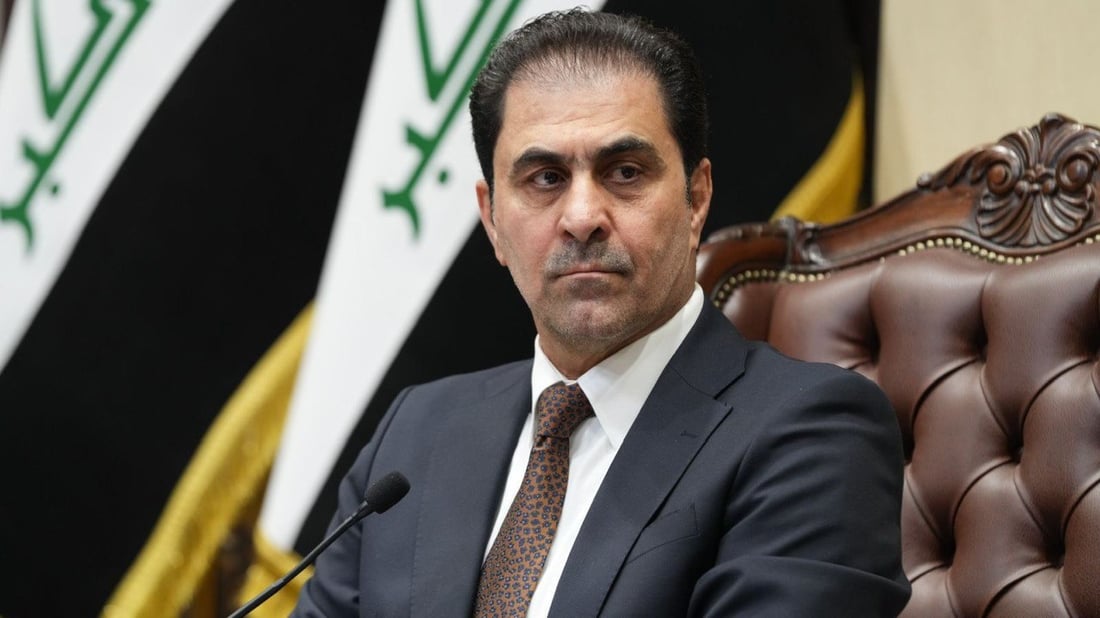
Deputy Prime Minister for Energy Affairs Mohsen al-Mandalawi
Reform begins with protecting oil wealth, Iraq’s energy deputy PM says
BAGHDAD — Mohsen al-Mandalawi, Iraq’s deputy prime minister for energy affairs, said Monday that real reform begins with protecting the country’s oil wealth, as the government moved against Kataib Hezbollah over suspected oil smuggling in Jurf al-Sakhar.
“Real reform begins with protecting oil wealth, as one of the most important pillars of building the state, strengthening its resources, safeguarding public funds and ensuring that oil revenues reach the state treasury,” Mandalawi said in a statement carried by the state-run Iraqi News Agency.
Protecting that wealth is a national responsibility that allows no complacency, he said, because it belongs to all Iraqis and is a main source of the national economy’s strength. He called for an end to all operations and practices that drain the country’s resources and seriously damage its economy.
The statement did not identify any specific operations or the people behind them.
Parliament approved Mandalawi as one of three deputy prime ministers on Oct. 15. He had been first deputy speaker of parliament. On Oct. 19, he said the government would tighten oversight and security measures to pursue oil smugglers across the country.
Government spokesperson Haider al-Aboudi told INA on Monday that Prime Minister Ali al-Zaidi had ordered the armed forces into Jurf al-Sakhar, an area of northern Babil, and had given the armed faction there a short deadline to leave. He did not say when the deadline expires.
On Sunday, Aboudi named Kataib Hezbollah as the party behind the smuggling. “The party involved in the smuggling is the party that holds the ground, and that is Kataib Hezbollah,” he told presenter Yasser Amer on Al-Rasheed TV.
Zaidi relieved nine security and oil officials of their duties on Saturday, after the inquiry he ordered into the smuggling presented its findings. Kataib Hezbollah has denied smuggling oil from the area and accused Zaidi’s office of spreading “fabricated reports.”
Former Prime Minister Mustafa al-Kadhimi on Sunday backed Zaidi’s decisions and said oil wealth belongs to Iraqis. “We support the decisions of Prime Minister Ali Falih al-Zaidi as part of entrenching the logic of the state, activating the principle of accountability and applying the law to everyone without exception,” Kadhimi said in a statement from his media office. The statement did not say which decisions he meant.
Earlier Sunday, Humam Hammoudi, head of the Islamic Supreme Council of Iraq, said any infringement on Iraq’s oil was an infringement on public wealth. His party belongs to the Coordination Framework, the ruling alliance of Shiite parties.
Former lawmaker Izzat al-Shabandar on Monday faulted the “paralysis” of the Framework over Jurf al-Sakhar. He said neither the government nor the factions had found a solution that would spare Iraq the fallout.
Kataib Hezbollah, an Iran-aligned faction, has brigades in the Popular Mobilization Forces, the state-sanctioned umbrella of mostly Shiite armed groups formed in 2014 to fight the Islamic State group. The United States designated Kataib Hezbollah a terrorist organization in 2009.
Jurf al-Sakhar was officially renamed Jurf al-Nasr in 2014 after Iraqi forces and allied armed groups recaptured it from Isis. It has been closed since then, and many of its displaced residents still cannot return.