
Gas shortages persist
Iraq electricity minister cites regional crises for delayed power grid links
BAGHDAD — Iraq’s electricity minister blamed regional crises Saturday for delays to the cross-border grid connections his ministry said in April would be operating before summer, as parliament pressed him on deepening outages and continued dependence on Iranian gas.
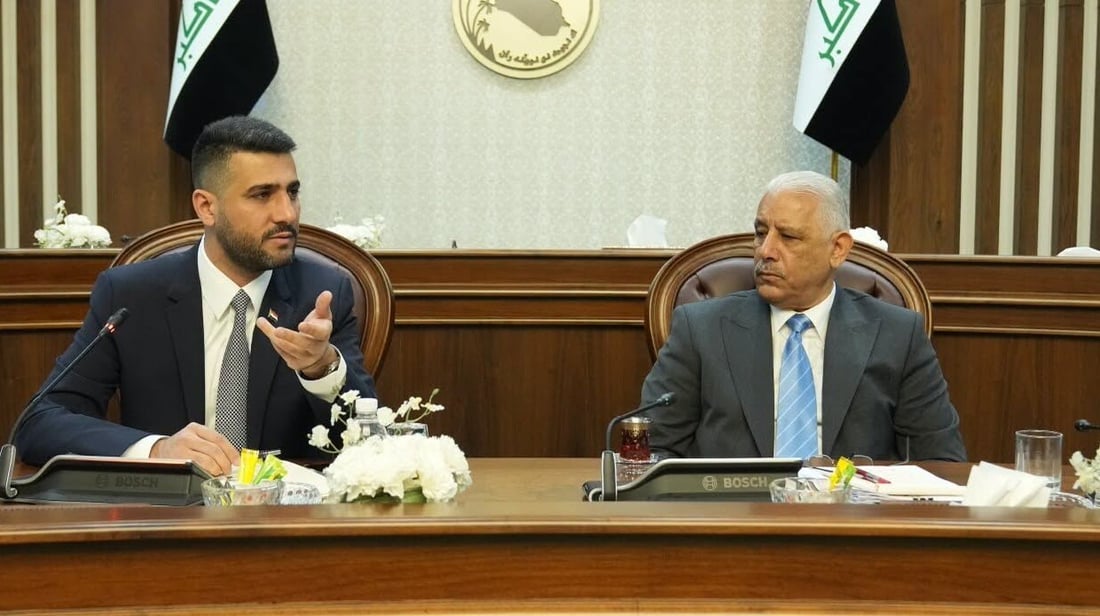
Ali Saadi Wahib appeared before parliament’s Electricity and Energy Committee with senior ministry officials. He said the ministry still needs additional gas to increase supply hours and is carrying financial obligations and debts on fuel purchases, according to a statement from parliament’s media office. He said the interconnection projects remain a commitment because of their importance to the national grid, and that completing them and cutting network losses would improve supply hours.
The ministry announced in April that links with Turkey, Gulf states and Jordan would begin operating before summer, adding a combined 1,250 MW: 600 MW from Turkey, 500 MW through the Gulf link and 150 MW from Jordan. None is running.
The committee questioned Wahib on his visits to Washington and Tehran, including talks on Iranian gas supplies and a new contract with U.S. energy company General Electric. Parliament’s statement gave no details of the contract or of anything agreed on either trip. Lawmakers also reviewed plans for this summer, summer 2027 and the four years after, along with existing contracts, financial allocations, recent administrative changes, maintenance programs, projects to ease grid bottlenecks and a proposed rollout of smart meters.
Iraq entered the summer with a wide gap between supply and demand. The ministry said in April it aimed to generate 30,000 MW at peak against projected demand of 55,000 to 60,000 MW, making scheduled outages unavoidable. Generation has since fallen to about 21,000 MW while Iraq requires roughly 62,000 MW for round-the-clock summer service, former ministry spokesperson Ahmed Mousa al-Abadi said this week. He said 55% to 59% of generated electricity is lost before reaching consumers because of transmission and distribution failures.
Iraq’s power plants remain heavily dependent on imported Iranian gas, which supplies between 33% and 40% of generation needs. Iranian deliveries fell sharply this year after attacks on Iran’s South Pars gas field, and lower Iraqi oil production cut the domestic associated gas available to power stations.
Falling supply has driven protests through the summer. Hundreds of residents demonstrated across several parts of Basra in June, reporting outages of up to eight hours and demanding longer schedules. Protesters in Wasit later clashed with security forces while demanding a written federal guarantee of 1,500 MW for the governorate. Many households fall back on private neighborhood generators, and Prime Minister Ali al-Zaidi ordered authorities in June to ease fuel-supply procedures for generator operators as shortages and protests spread.
The committee said it would continue monitoring the ministry’s performance and the implementation of its projects.