
Basra’s main water pipeline passes two-thirds completion, directorate says
BASRA — The first phase of the Greater Basra Water Project has passed 86.5% completion, with engineering teams having laid about 26.5 kilometers of its planned 37-kilometer main transmission pipeline, Iraq’s General Directorate of Water said Saturday.
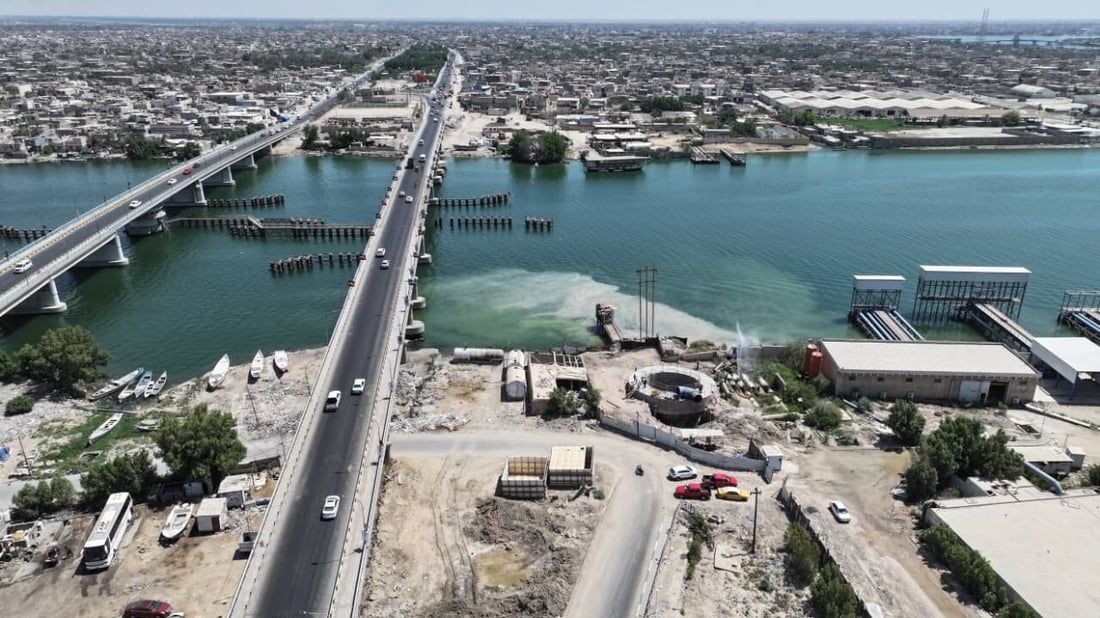
The directorate, part of the Ministry of Construction, Housing and Public Municipalities, said work on the pipeline in the Taabeera Military Overpass area is running on day and night shifts to speed completion.
Director General Ammar Adel Hussein said work on the first-phase pipeline is progressing at an increasing pace, with crews operating around the clock. He said engineering and technical teams had completed a large number of underground crossing works as part of the plan to finish the remaining sections of the 37-kilometer line.
Resident engineer Mortada Mohammed said crews had laid about 26.5 kilometers of the pipeline, with current work including transporting reinforced concrete jacking pipes and preparing tunnel excavation using tunnel boring machines.
The ministry said the Greater Basra Water Project is one of the government’s strategic infrastructure projects in the governorate. The first phase is the transmission pipeline that will supply the governorate center, complementing the project’s third and fourth phases at the Hartha station, which has a design capacity of 200,000 cubic meters per hour.
Basra has struggled for years with recurring water shortages, poor water quality and high salinity that have fueled repeated protests over access to safe drinking water. The 2018 crisis, when tens of thousands were hospitalized after drinking contaminated water, remains the starkest example of a problem successive governments have failed to resolve, and summer shortages have become an annual trigger for unrest across the governorate.
More recently, parts of Basra, including the Zubair district, have faced renewed disruptions tied to the aging Badaa Canal, a main source feeding treatment plants in North Rumaila. The structure collapsed in mid-June, roughly 10 days after repair work was completed, cutting supplies to Zubair by about half, and failed again around July 1, leaving the district receiving a fraction of the water it needs.
Authorities have kept parts of the area on a rotational pumping schedule and leaned on emergency tanker deliveries, some districts served by only a handful of trucks, while a replacement pipeline for the canal is built. Officials say that project is about 75% complete and expected to finish within two months.
The ministry said the project is intended to improve Basra’s water network and provide usable water to the center of Basra city.