
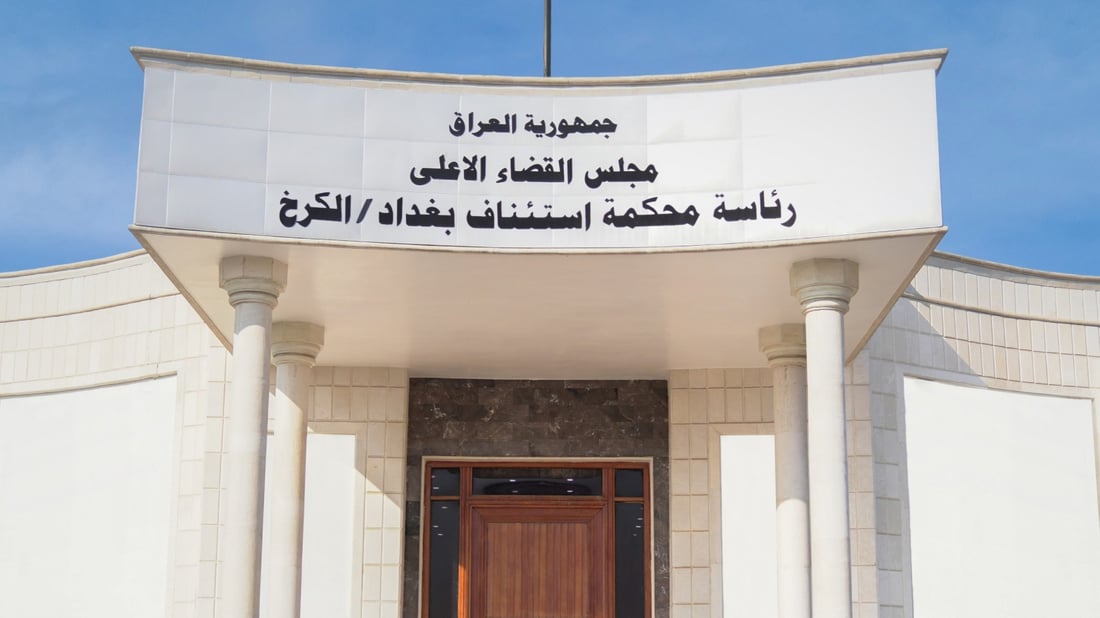
The building of the Supreme Judicial Council and the Presidency of the Baghdad/Karkh Court of Appeal in Baghdad, Iraq.
Top court backs Zaidi’s control of Kurdistan Region borders and crossings
BAGHDAD — Iraq’s Federal Supreme Court ruled on Wednesday that federal powers over borders and border crossings reach into the Kurdistan Region, and that the Region’s authorities have no jurisdiction outside the areas they ran in March 2003.
The court gave the ruling, an interpretation of the constitution, at the request of Prime Minister Ali al-Zaidi. It came a day after Zaidi ordered the federal government to take over every border crossing in the Region. In its statement, the court’s media office said the ruling upheld the prime minister’s measures. The seven points of the ruling interpret articles of the constitution and do not name the orders.
A majority of the court backed the ruling and two members dissented, the statement said. It did not name the two judges or give their reasons. The ruling is final and binding on all authorities.
Protecting and securing Iraq’s international borders is an exclusive federal power under Articles 109 and 110 of the constitution, the court said. The federal government may deploy and command federal armed forces to secure all of Iraq’s borders with its neighbors, including borders in areas the Kurdistan Region administers.
Federal authorities may also supervise and control the agencies working at every border crossing in Iraq, including those in the Region, under the 2016 Border Ports Authority Law, the court said. That power is subject to Article 114, which says customs are run in coordination with the regions and with governorates that are not part of a region.
Under federal power over fiscal and customs policy, Baghdad may set up a single national system that automates border crossings and customs and links them electronically to federal ministries, including at the Region’s crossings, the court said. Federal authorities may also set one customs tariff for the whole country and oversee fees, taxes and other non-oil revenue across Iraq, including the Region. That revenue is to be audited and paid into the federal treasury.
On oil and gas, the court repeated that Article 112 has the federal government manage fields together with the producing regions and governorates, and that Article 111 makes oil and gas the property of all Iraqis. The federal Oil Ministry and federal oversight bodies may supervise, inspect and audit fields, operations and contracts for producing, marketing and exporting oil and gas, it said. It cited its February 2022 ruling that struck down the Kurdistan Region’s 2007 oil and gas law, and a February 2024 ruling on the Region’s salaries and revenue.
The last two points of the ruling define where the Region’s powers apply. They cover the territory the Kurdistan Regional Government ran on March 19, 2003, the eve of the U.S.-led invasion, in Duhok, Erbil, Sulaymaniyah, Kirkuk, Diyala and Nineveh governorates, the court said. That line comes from Article 53 of the Transitional Administrative Law, Iraq’s 2004 interim constitution. The 2005 constitution kept that article in force.
The Region’s powers may not extend beyond that territory, the court said. This is subject to the rules on the areas disputed between Baghdad and Erbil in Article 58 of the 2004 law and Article 140 of the constitution. Article 140 called for a census and referendum in Kirkuk and the other disputed areas by the end of 2007, and neither has been held.
The court said federal authorities run the land outside that territory, each within its own powers. “The de facto administrative practice of the Region’s authorities outside that scope does not create a constitutional jurisdiction for them,” the ruling said.
Zaidi’s orders on Tuesday followed an inquiry into suspected oil smuggling at the North Oil Company, the Kirkuk-based state company that runs oil fields across northern Iraq. They told the Oil Ministry to take over the federal oil fields in Diyala, Kirkuk, Salah al-Din and Nineveh governorates that are under the KRG’s security control. They also barred the KRG from issuing oil export permits without the ministry’s approval and ordered the Border Forces Command to close unofficial crossings on Iraq’s international borders, including those in the Region. The orders gave no timetable for the handover of the crossings.
The Kurdistan Democratic Party and the Patriotic Union of Kurdistan called any violation of the Region’s rights a red line in a joint statement on Tuesday. Kurdistan Region Prime Minister Masrour Barzani said the orders were “in no way acceptable.”
On Wednesday, before the ruling was announced, the Supreme Judicial Council called on Baghdad, Erbil and the political parties to abide by the constitution. It said the Federal Supreme Court is responsible for interpreting the constitution.
Customs at the Region’s crossings have been in dispute for most of 2026. Baghdad and Erbil signed a preliminary agreement in April to extend Asycuda, the UN-developed electronic customs system, to those crossings. In June, the KRG urged Baghdad to approve the customs deal and said the Region’s monthly revenue had fallen by more than 70%.
The Federal Supreme Court has set Dec. 14 to hear a separate lawsuit asking it to declare the KRG what the suit calls a caretaker government. Masrour Barzani’s cabinet has stayed in office because no new one has been formed since the Region’s October 2024 election.