
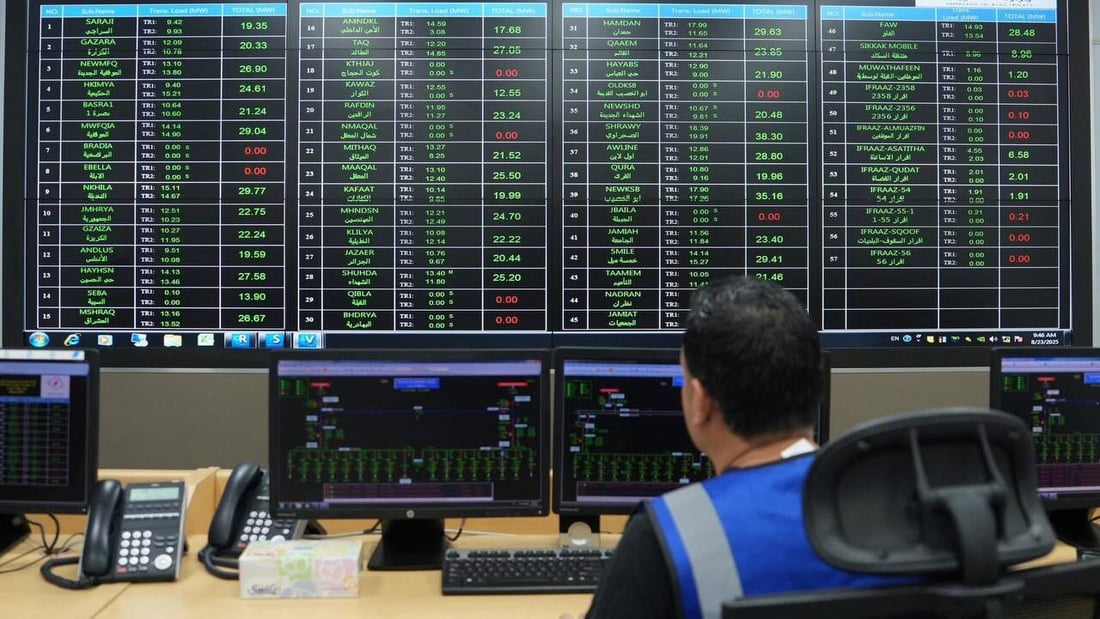
FILES: An operator monitors electricity distribution and transmission data at a control center
Iraq’s power generation at 22,000 MW as ministry details governorate allocations
BAGHDAD — Iraq’s Electricity Ministry said Saturday that generation currently stands at about 22,000 MW and outlined how power is allocated among governorates, with Basra receiving its approved share first before the remainder is distributed nationwide.
The ministry said allocations are calculated through a “precise and transparent” process based on net generation after accounting for exemptions and operational requirements including government hospitals, water treatment stations, system losses, loads and auxiliary equipment, with governorate shares set by percentages approved by the Higher Coordination Commission between Governorates.
The approved percentages for governorates other than Basra total 100% and are allocated as follows: Baghdad 27.07%, Dhi Qar 9.02%, Nineveh 8.47%, Babil 5.94%, Karbala 5.77%, Najaf 5.64%, Anbar 5.49%, Kirkuk 5.21%, Salah al-Din 5.12%, Diyala 5.04%, Maysan 5.02%, Wasit 4.99%, Diwaniyah 4.00% and Muthanna 3.24%.
The announcement comes as Iraq enters peak summer demand, when temperatures regularly exceed 50°C in parts of the country and consumption surges. Officials have previously estimated summer needs exceed 50,000 MW, leaving a large gap between available supply and peak demand.
Power shortages have repeatedly triggered protests, particularly in the south. In recent weeks, residents in Basra’s al-Madina district and the Shuaiba area have demonstrated against recurring outages and warned of further action if conditions do not improve. Similar demonstrations have taken place in previous summers in Dhi Qar and other governorates, where residents have called for larger allocations and better local infrastructure.