
Gulf states, Jordan back Iraq’s September disarmament deadline
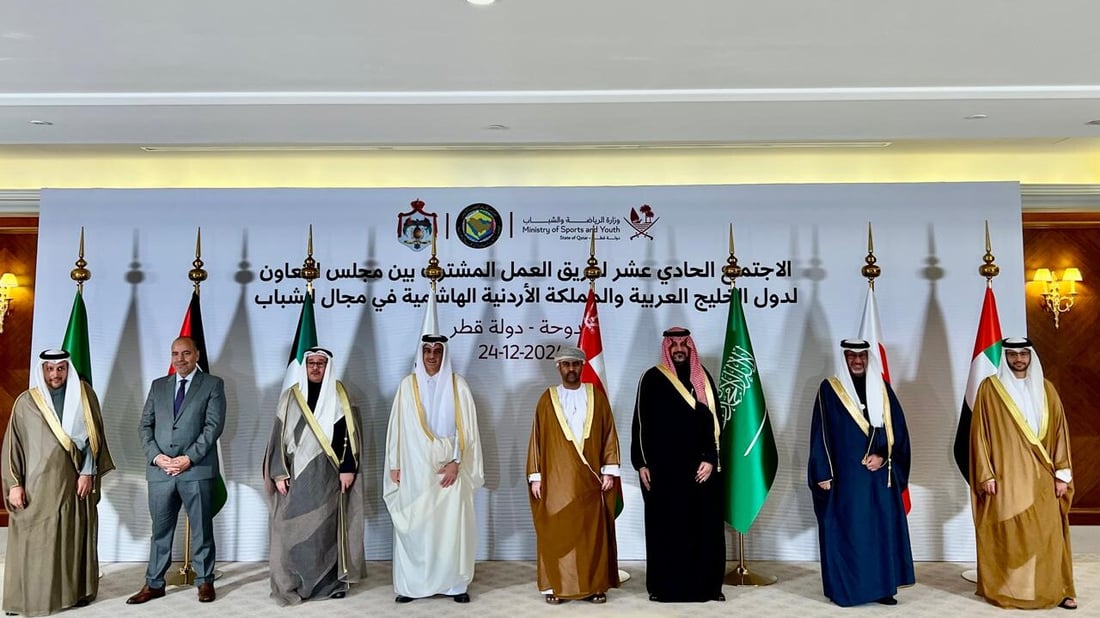
BAGHDAD — Jordan and the six Gulf Cooperation Council member states welcomed Iraqi Prime Minister Ali al-Zaidi’s decision to place all weapons under state control before Sept. 30, expressing support for Baghdad’s efforts to halt attacks carried out by Iran-aligned armed groups against countries in the region.
In a joint statement issued Thursday, the seven countries reaffirmed what they described as a unified position condemning “the continued Iranian attacks” on their territories, saying the strikes had targeted energy facilities, desalination plants, ports, airports and other civilian infrastructure, particularly in Bahrain, Kuwait and Jordan.
The statement said the attacks had intensified since Feb. 28 and increased further after the United States and Iran signed a memorandum of understanding on June 17. It described the attacks as violations of the U.N. Charter, international law and U.N. Security Council Resolution 2817 of 2026, as well as inconsistent with commitments contained in the memorandum of understanding.
The seven countries reaffirmed their right to self-defense, individually or collectively, under Article 51 of the U.N. Charter, and said they would take legal measures necessary to protect their sovereignty, security, citizens and infrastructure.
They also welcomed Zaidi’s decision to restrict weapons to the state before Sept. 30, expressing support for Iraqi government measures aimed at preventing “the continuation of hostile operations carried out by Iran-aligned factions and armed groups against countries in the region.”
The statement called on the U.N. Security Council to adopt an urgent resolution demanding an end to the attacks, recognize the right of affected countries to defend themselves and consider additional measures if the attacks continue.
The countries also reaffirmed their commitment to freedom of navigation through the Strait of Hormuz and the Bab al-Mandab Strait, saying they would continue working with regional countries and the International Maritime Organization to preserve regional security and stability. They renewed their solidarity with Saudi Arabia and praised Saudi and Omani efforts to reach a comprehensive political settlement to the conflict in Yemen.
Iraq’s disarmament initiative gained momentum in June after Saraya al-Salam, led by cleric Muqtada al-Sadr, became the first major armed faction to announce it would come under state authority. Asaib Ahl al-Haq later formed a committee to inventory its personnel and weapons as part of the process, while the Imam Ali Battalions also joined the initiative. Iraqi officials have said other factions agreed to participate without publicly announcing their involvement.
The government plans to complete the process before the U.S.-led international coalition’s mission concludes on Sept. 30. The initiative includes registering fighters, documenting weapons and transferring heavy arms, including tanks, artillery, missiles and drones, to state-controlled storage before their eventual redistribution to Iraq’s security forces.
Several powerful Iran-aligned factions, however, have rejected the plan. Kataib Hezbollah, Harakat al-Nujaba and Kataib Sayyid al-Shuhada have said they will not surrender their weapons while U.S. forces remain in Iraq, linking any future disarmament to the complete withdrawal of foreign troops.
Ahead of Zaidi’s visit to Tehran this week, government spokesperson Haider al-Aboudi said the issue “is a sovereign Iraqi matter that is not discussed in other capitals” and described limiting arms to the state as “a national decision and one of the priorities of the prime minister’s government program.”