
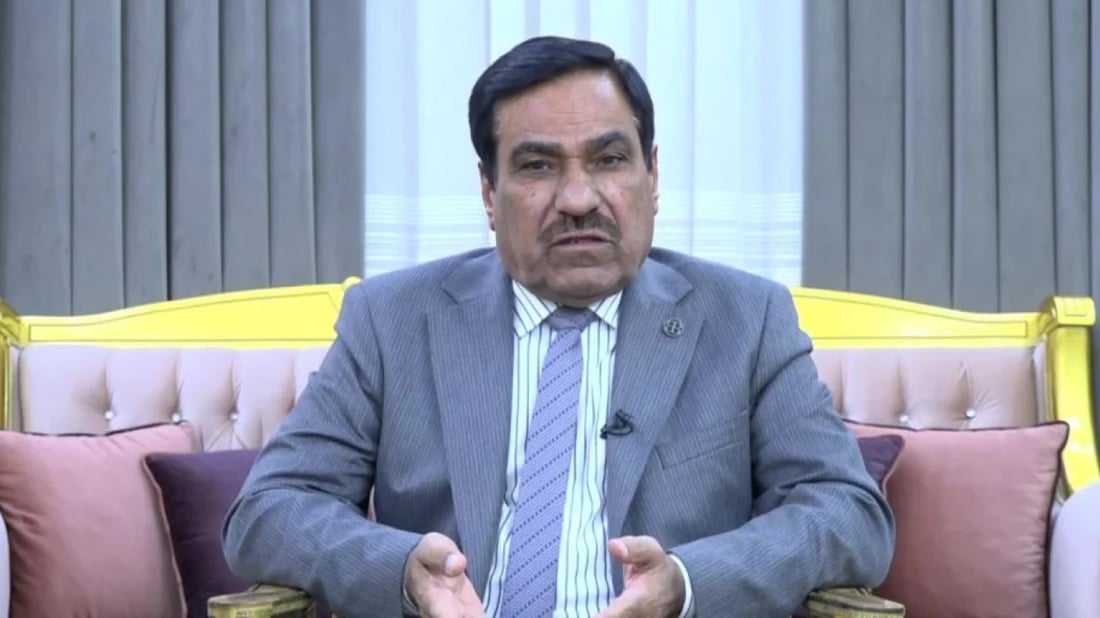
Economic expert Nabil al-Marsoumi
Economist questions feasibility of PM-designate Zaidi’s proposed ‘Generations Fund’
BAGHDAD — Iraqi economist Nabil al-Marsoumi said Friday that Prime Minister-designate Ali al-Zaidi’s government program includes a proposal to establish a “Generations Fund” to preserve a share of Iraq’s oil and mineral wealth for future use, but questioned whether Iraq’s fiscal conditions would allow it to be funded.
“In the economic section of Mr. al-Zaidi’s government program there is a paragraph stipulating the establishment of a Generations Fund to preserve the share of future generations from oil and mineral wealth, and this is a very important issue that Iraq lacks compared to other oil-producing countries,” Marsoumi said.
The proposed fund is effectively a sovereign wealth fund — a state-owned investment vehicle of the kind operated by Gulf states such as Kuwait and the UAE to save and invest oil revenues for long-term national benefit. Iraq has long been identified as a country that should establish such a mechanism but never has, despite being one of the world’s major oil producers.
“Establishing this fund requires allocating a certain share of oil revenues to the fund’s capital, which means there must be achieved financial surpluses that will be transferred to the fund,” Marsoumi said. “It is still unclear, in light of the current difficult financial and economic conditions, whether Iraq can achieve these surpluses during Mr. al-Zaidi’s term.”
The structural obstacles are significant. Iraq’s public spending is heavily concentrated on wages, salaries and pensions for a state workforce of nearly 4 million employees, with oil revenues accounting for around 90% of government income. The IMF warned in its 2025 Article IV consultation that the oil price required to balance Iraq’s budget had risen to around $84 per barrel in 2024, up from $54 in 2020, reflecting years of fiscal expansion driven by public hiring and subsidies. With little revenue generated outside the oil sector, any sustained drop in oil prices or export volumes quickly produces a deficit rather than a surplus available for saving.
Those conditions have deteriorated further following the regional conflict. Production collapsed from around 4.3 million barrels per day before the war to as low as 800,000 to 1.3 million bpd as the effective closure of the Strait of Hormuz cut off Iraq’s main southern export route, sharply reducing the revenues any incoming government will have to work with.
Zaidi submitted his government program to Parliament Speaker Haibat al-Halbousi on Thursday as part of the process leading to a confidence vote. He faces a constitutional deadline at the end of May to present his cabinet to parliament.