
Media Monitor
Iranian envoy urges Iraq to listen to concerns of factions resisting disarmament
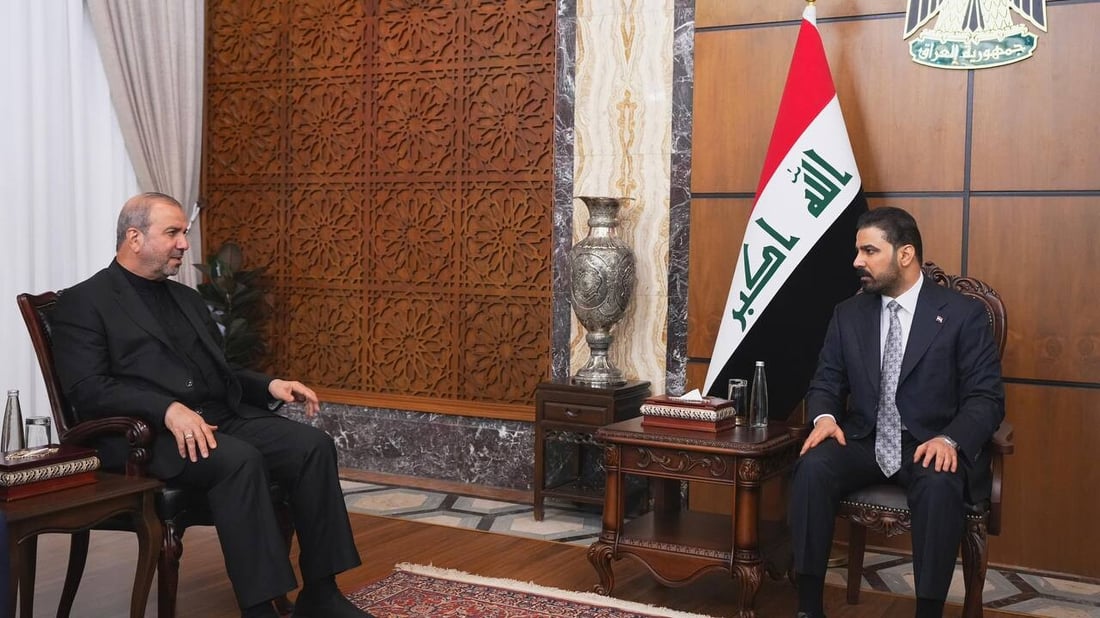
BAGHDAD — Iran’s ambassador to Iraq, Mohammad Kazem Al-e Sadegh, called on the Iraqi government to listen to the concerns of armed factions opposing efforts to place all weapons under state control, while saying Tehran regards the issue as an internal Iraqi matter and will respect Baghdad’s decision.
In an interview with the Iraqi News Agency, Al-e Sadegh said Iran supports dialogue with the groups over the disarmament initiative, which has gained momentum amid U.S. pressure on Baghdad. “This is an internal Iraqi matter and any decision taken by the Iraqi government in this regard, we respect,” he said. Authorities, he added, should weigh “the reasons that drive armed factions in Iraq to want to retain their weapons” and ensure “their concerns and fears” are heard.
Al-e Sadegh tied Iraq’s security to the continued presence of U.S. forces, saying it leaves the country “vulnerable to being affected by regional conflicts.” He also rejected allegations that attacks on Gulf states were launched from Iraqi territory under Iranian direction, saying the claims “need more investigation and study” and noting that Baghdad has opened its own inquiries and submitted documents to the United Nations on violations of Iraqi airspace. Drone and missile attacks on Saudi Arabia, the UAE and other Gulf states earlier this year were widely attributed to Iran-aligned Iraqi factions, which Baghdad has neither confirmed nor disproven through those investigations.
Addressing the factions directly, Al-e Sadegh described the “resistance” as a response to terrorism and foreign occupation, arguing that accusing such groups of subordination to outside influence “is a kind of insult to the very logic of resistance and its legitimate reasons”, a characterization that sits awkwardly alongside his insistence that the weapons question is a purely internal Iraqi matter.
The initiative gained momentum in early June after the Coordination Framework endorsed a plan to restrict weapons to state control and authorized al-Zaidi to implement it. A government committee including the Defense Ministry, Interior Ministry, Joint Operations Command and the PMF was formed to oversee the handover of weapons, equipment and military sites. Asaib Ahl al-Haq announced a committee to separate its forces from the PMF, Saraya al-Salam transferred security responsibilities in Samarra to state forces, and the Imam Ali Battalions said they would place their weapons under government control. Officials have said heavy weapons, including tanks, artillery, missiles and drones, will be transferred to state storage before redistribution to the armed forces.
Kataib Hezbollah, Harakat al-Nujaba and Kataib Sayyid al-Shuhada have rejected disarmament, arguing their weapons remain necessary as long as U.S. forces are in Iraq.