
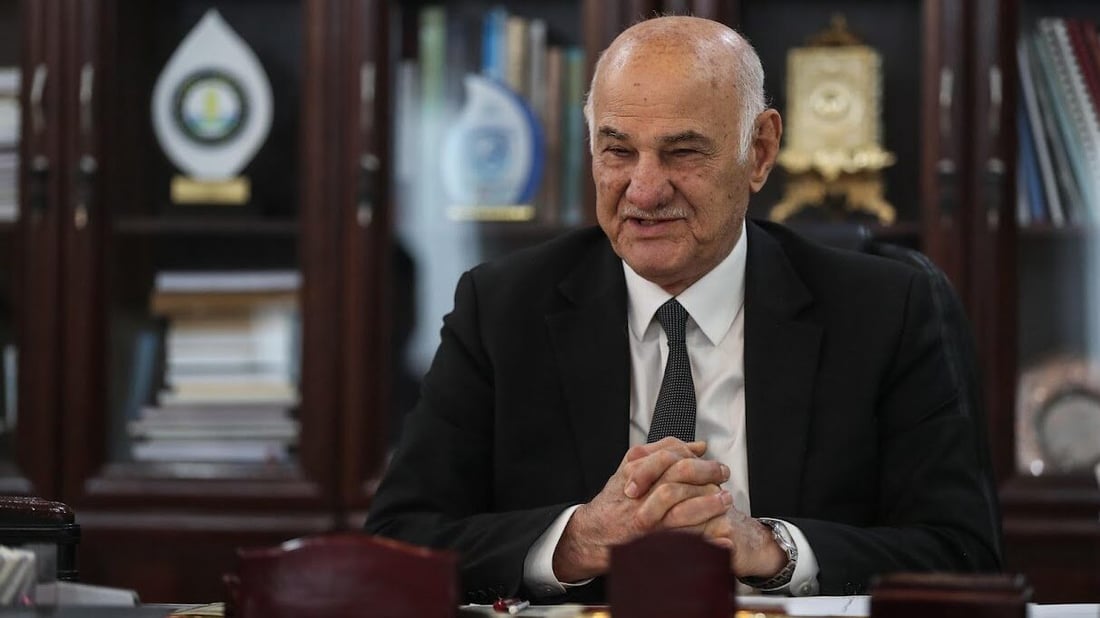
FILES: Water Resources Minister Aoun Diab speaks during a meeting in Baghdad
Water minister urges conservation as Iraq’s reserves remain in recovery despite heavy rains
BAGHDAD — Water Resources Minister Aoun Diab on Wednesday called for preserving Iraq’s strategic water reserves, warning that the country is still recovering from years of severe scarcity despite this year’s increased rainfall.
“Every drop of water” must be protected as a national responsibility, Diab said during a meeting to discuss the agricultural water plan for the 2026 summer season. He said Iraq had experienced “severe water scarcity seasons not seen in years” and that storage “is still in the recovery stage,” requiring increased efforts to secure supplies for drinking and other needs. He also stressed the importance of maintaining water flows to the southern marshes to preserve environmental balance and biodiversity, and called for groundwater to be protected as “a resource for future generations.”
The meeting reviewed the current water situation and last year’s agricultural plan, and called for further coordination between relevant ministries and agricultural associations to finalize the summer plan.
Recent storms have boosted strategic reserves by around 6 billion cubic meters and raised storage levels in dams and reservoirs across the country — a significant turnaround after reserves dropped to their lowest levels in roughly 80 years in 2025 due to prolonged drought and reduced upstream flows from Turkey and Iran. Iraq’s southern marshes have also seen a revival in natural resources following increased water releases, with improvements reported in biodiversity and local livelihoods.
Diab had previously called for maximizing the use of recent rainfall to strengthen Iraq’s water reserves, during a meeting at the Fallujah Dam in Anbar with senior officials from irrigation, dam management, river dredging and engineering departments. The meeting was part of a broader recovery in Iraq’s water situation. Recent storms boosted strategic reserves by around 6 billion cubic meters and raised storage levels in dams and reservoirs across the country — a significant turnaround after authorities said reserves had dropped to their lowest levels in roughly 80 years in 2025 due to prolonged drought and reduced upstream flows from Turkey and Iran.