
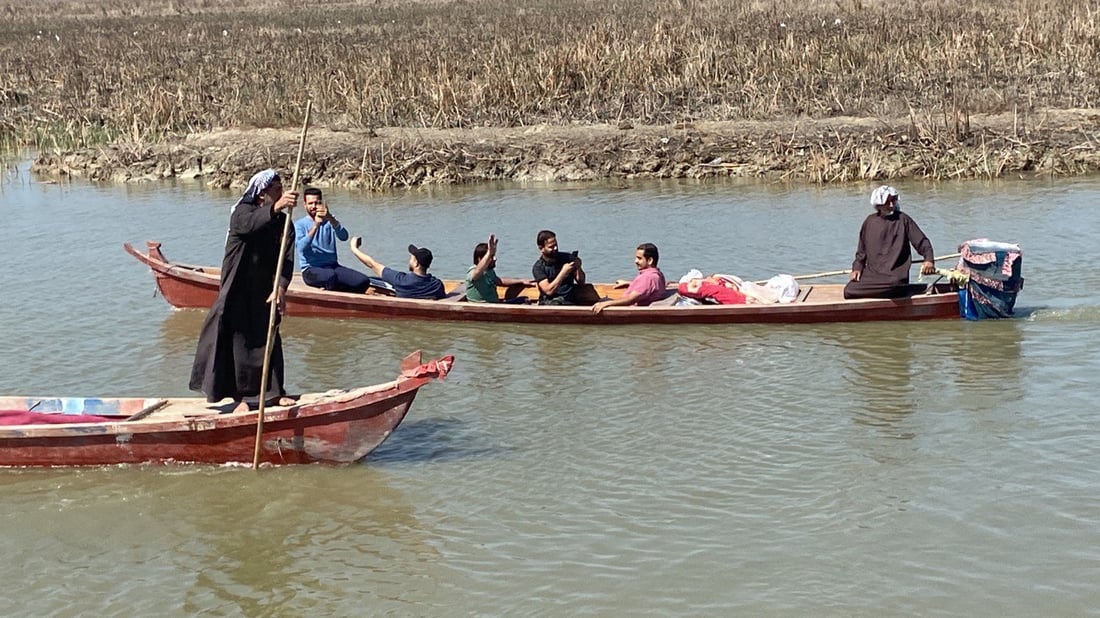
Men travel by traditional wooden boats through the marshes in southern Iraq. (Photo: 964media)
Water releases revive Iraq’s southern marshes, officials say
MAYSAN — Iraq’s southern marshes have seen a revival in natural resources following increased water releases, a local official said Thursday, noting improvements in biodiversity and livelihoods after years of drought.
Raed Saad Faleh, director of the Marshes and Border Rivers Department in Maysan governorate, said, “Water has filled the deep ponds in the marshes, including Black Pond, Umm al-Naaj Pond, Al-Doub Pond and Al-Adheem Pond,” adding that it also flooded large areas of the Hawizeh Marsh depression and the central marshes through main feeders.
He said, “The current flooding levels have clearly contributed to the return of biodiversity to the marshes, through an increase in buffalo herds and the return of different bird species, in addition to restoring ecological balance and reviving the ecosystem in the region.”
Faleh added that water releases are expected to continue and increase under a plan set by the Water Resources Ministry, which will help expand flooded areas through feeders of the Kahlai River and its branches, as well as flood outlets via the Teeb and Dweirij rivers.
Residents of the marshes expressed “great joy at the return of water” and hope that releases will continue to preserve the environment and livestock and fish resources, and prevent future drought crises.
They said that rising water levels “brought life back after difficult years,” noting environmental improvements that also boosted tourism activity in the marshes and increased household income.
Resident Rasool Noor Ali said, “Good has returned after great suffering since 2021 and 2022,” adding that “the return of water opened new sources of income through river transport and organizing trips in the marshes, as well as the return of natural grasses, which are an important resource for raising buffalo.”
He said “birds and wildlife have returned again,” adding that residents hope water releases will continue so that “the tragedy of drought that forced some families to migrate to cities does not recur,” stressing his attachment to marsh life as part of his identity and livelihood.
Another resident, Ahmed Hameed Noor, said, “Grasses and fish have returned to the marshes, and families and visitors have started coming back again,” noting that “the marsh is beginning to regain its natural and beautiful form as it was in the past.”
Saad Subaih Ouda described the water as “a great blessing because the previous drought caused the loss and destruction of a large part of livestock and fish resources, before the situation returned to normal with rising water levels.”