
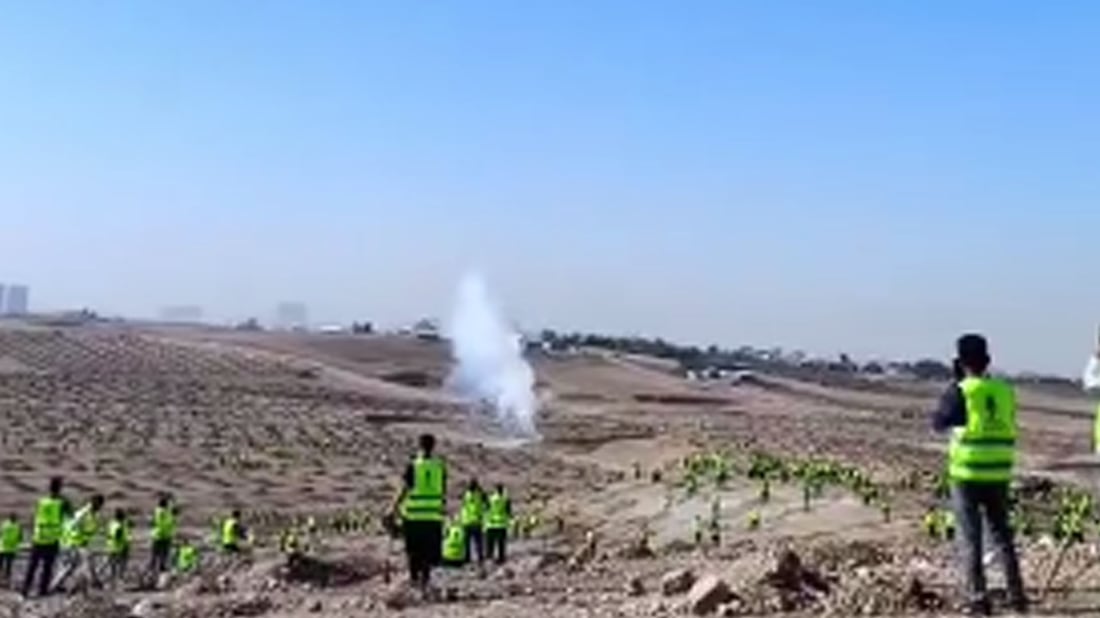
Workers plant saplings during the Erbil Green Belt Project as smoke rises in the background on the outskirts of the city.
Erbil’s Green Belt Project nears end of first phase with 500,000 saplings planted
ERBIL — The first phase of Erbil’s Green Belt Project is nearing completion after more than 500,000 olive saplings were planted, with authorities preparing to launch a second phase that will introduce pistachio trees to the initiative.
The Erbil Governorate said the project is divided into eight main phases. The olive trees planted in the first phase were classified into two types — one for daily consumption and one dedicated to oil production. The second phase will diversify planting to include pistachios, with officials aiming to position Erbil among the region’s key pistachio-producing areas.
The project is designed to extend nearly 78 kilometers around Erbil with a width of about two kilometers and include millions of trees. According to the Kurdistan Regional Government, it could reduce between 140,000 and 210,000 tons of carbon dioxide annually.
Kurdistan Region Prime Minister Masrour Barzani previously said the project “will have a very strong impact on Erbil’s climate,” adding that it will absorb carbon dioxide and return oxygen to the city, providing “a healthier environment, cleaner air, and a better life for citizens.” He also called on the private sector to participate, saying “the door is open” for broader involvement.
Local officials say the initiative is part of Erbil’s long-term plan to address climate change, dust storms and desertification while increasing green coverage across the governorate.