
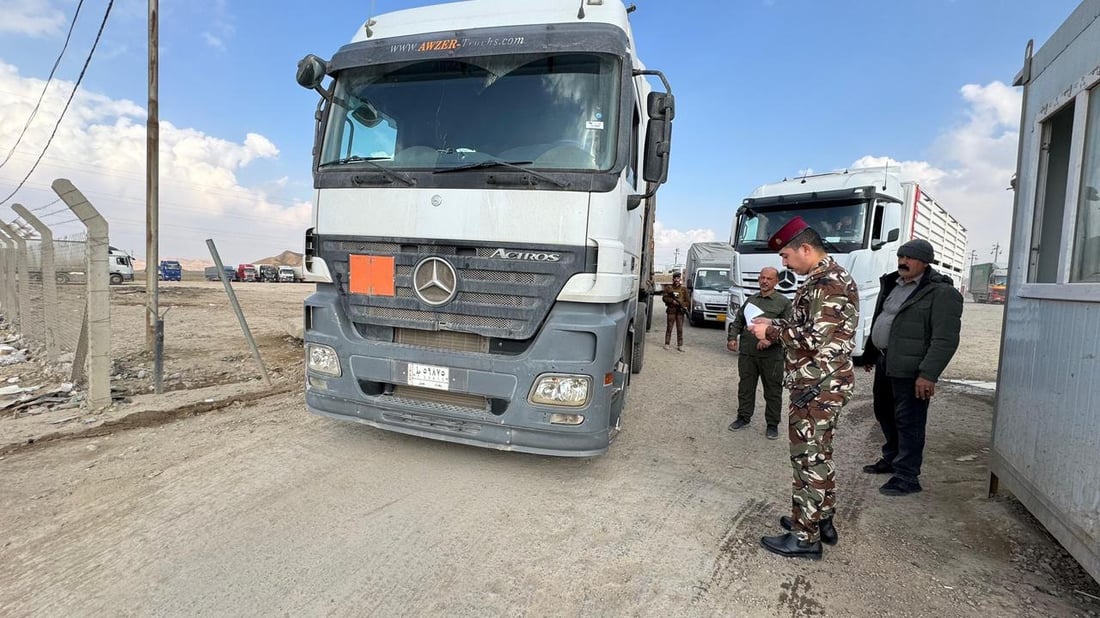
A security officer checks documents from a truck driver at a federal checkpoint near the Kurdistan Region boundary.
511 vehicles returned
Border authority foils smuggling attempts at federal checkpoints
BAGHDAD — Iraq’s Border Ports Authority said Saturday it had foiled multiple smuggling attempts at four federal checkpoints adjacent to the Kurdistan Region and returned 511 vehicles, as authorities continue tightening customs enforcement.
The authority said it continues “monitoring and auditing the work of checkpoints adjacent to the region to ensure the integrity and unification of procedures in terms of fees and bans and to protect the local product.”
Federal checkpoints have been established along the boundary with the Kurdistan Region due to differences in customs procedures and tariff application. Federal authorities say the region’s crossings have not fully implemented the automated ASYCUDA system or unified tariff rates, prompting Baghdad to set up oversight points to collect duty differences and verify documentation.
Inspections at the Darman, Jemen, Baweh Mahmoud and Sadd checkpoints resulted in seizures and the return of hundreds of vehicles.
At Darman, a vehicle loaded with hay was found concealing 7,200 cans of alcoholic beverages. “A joint seizure report was organized in accordance with the law to take the necessary legal measures,” the authority said. Another 99 vehicles were returned for lacking documents or carrying banned imports.
At Jemen, Thai-origin rice labeled “Premium” was referred after failing inspection. The rice contained insects and was “unfit for human consumption,” authorities said. Another 183 vehicles were returned for carrying prohibited goods, lacking documentation or refusing to pay fees.
At Baweh Mahmoud, a vehicle carrying vinegar and dairy products was referred after vinegar was concealed behind dairy goods “with the aim of smuggling.” A truck loaded with dried apricots and sumac of Tajik origin without documentation was also referred. More than 200 vehicles carrying agricultural crops banned under the agricultural calendar were returned.
At Sadd, 29 vehicles were returned for failing to meet entry conditions.
The enforcement follows the opening this week of four customs offices along the same boundary to “audit the papers and documents,” “ensure the tariff applied at the federal crossings” and “collect the tariff difference,” according to Director General Thamer Qassim.
On Wednesday, Qassim said the Kurdistan Region had begun responding to efforts to unify tariffs with federal crossings following meetings in Baghdad.