
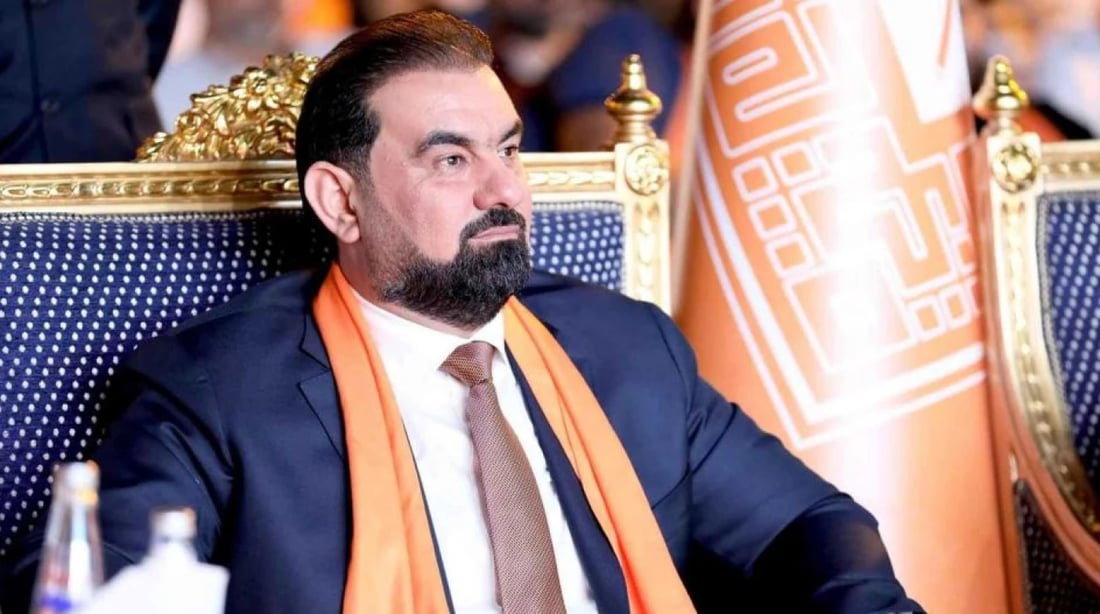
Newly elected Speaker of Parliament Haibat Al-Halbousi
Al-Samarrai withdraws
Al-Halbousi elected Iraq parliament speaker as new term opens
BAGHDAD — Iraq’s Council of Representatives opened its new legislative term on Monday and elected Haibat al-Halbousi as speaker of parliament, with two other candidates also competing for the post.
Al-Halbousi, a senior figure in the Taqaddum Alliance, won the vote with 208 ballots. Salim al-Issawi received 66 votes and Amer Abduljabbar won 9, while 26 votes were declared invalid, according to the results announced in the chamber.
The National Political Council, a Sunni political umbrella, nominated al-Halbousi on Sunday for the speakership. Al-Issawi and Abduljabbar also submitted their candidacies.
Al-Halbousi, born in 1980, is a leader within the Taqaddum Party headed by Mohammed al-Halbousi. He previously chaired the Oil and Energy Committee in parliament during the fourth and fifth terms.
Azm Alliance leader Muthanna al-Samarrai, who had said he would run for speaker outside the Sunni framework, withdrew his candidacy ahead of Monday’s session.
His withdrawal came after the National Political Council failed to reach consensus on a single nominee in meetings over recent days. Before withdrawing, al-Samarrai argued that al-Halbousi’s nomination did not reflect the will of the council, saying the council’s internal rules require consensus rather than majority voting. “He is nominated by some parties within the council, which is a natural right granted by the democratic process supported by the alliance,” al-Samarrai said, while reiterating his candidacy at the time.
Major Sunni parties announced the formation of the National Political Council in November, describing it as a unified Sunni platform meant to coordinate positions during the sixth parliamentary term and serve as a counterpart to the Shiite Coordination Framework, which led the formation of the outgoing government under Prime Minister Mohammed Shia al-Sudani.
The council includes Taqaddum, Azm, Al-Siyada, the National Hasm Alliance and the Jamaheer Party. In the Nov. 11 parliamentary elections, the five parties won a combined 59 seats: 27 for Taqaddum, 15 for Azm, 9 for Al-Siyada, 5 for Hasm and 3 for Jamaheer.