
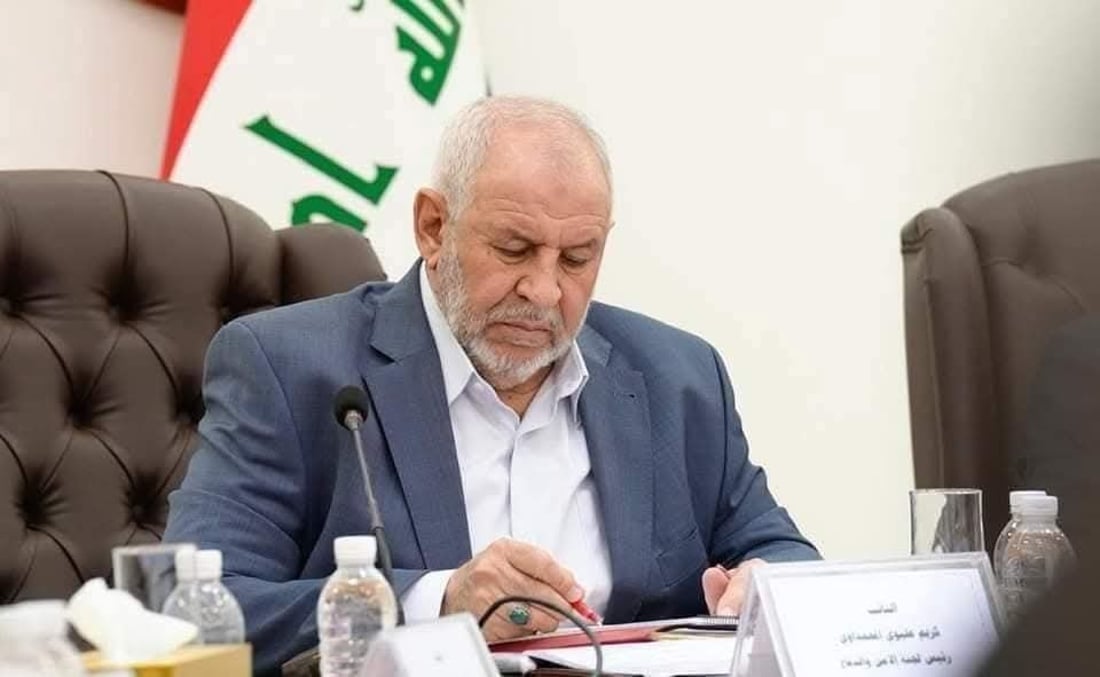
Badr Organization MP Karim Aliwi al-Muhammadawi is seen during a meeting in Baghdad
Badr lawmaker accuses US envoy of ‘unacceptable interference’ in Iraq’s affairs
BAGHDAD — A Badr Organization lawmaker on Monday accused U.S. Special Envoy to Iraq Mark Savaya of overstepping diplomatic bounds, saying his recent remarks on disarming non-state actors amount to interference in Iraq’s internal affairs.
Karim Aliwi al-Muhammadawi said Savaya’s comments were “a violation of diplomatic norms and a provocation to Iraq’s sovereignty,” arguing that they clash with the kind of relationship Baghdad expects from Washington.
He said the envoy’s statements were “blatant and unacceptable interference in Iraq’s internal affairs,” and that “this language, which diminishes the state’s sovereignty, does not align with the nature of relations that should be based on mutual respect and non-intervention.”
Savaya had said Iraq faces a “historic opportunity” to remove weapons from politics and consolidate state institutions, warning that armed groups outside government control threaten stability and economic growth. He added that “Iraq now has a historic opportunity to close this chapter and reinforce its image as a state built on the rule of law, not the power of weapons.”
Muhammadawi pushed back, saying Iraq has demonstrated through its constitutional institutions and security forces “its full ability to manage security and organize its defense policies without any guardianship or external dictates,” and described attempts to portray the country as needing outside management as “a narrow and unrealistic reading.”
Citing the Nov. 11 general election, he said the vote showed political maturity and broad participation, producing “a political map that represents the true popular will.” He also said the Popular Mobilization Forces are “an integral part of the Iraqi security system” operating under the command of the prime minister.
Muhammadawi called on the Foreign Ministry to summon the U.S. ambassador to lodge a formal objection, saying Iraq “does not accept any guardianship or interference” and is capable of handling its internal affairs “away from any external pressure.” The United States currently has no ambassador in Baghdad and is represented by a charge d’affaires.
Savaya’s comments came after the latest attack on the Khor Mor gas field in Sulaymaniyah governorate, one of several attacks since 2022 that have repeatedly disrupted gas supplies and triggered power outages across parts of the Kurdistan Region. He has warned that Iraq’s progress “will remain at risk” unless all armed forces operate fully under government authority.