
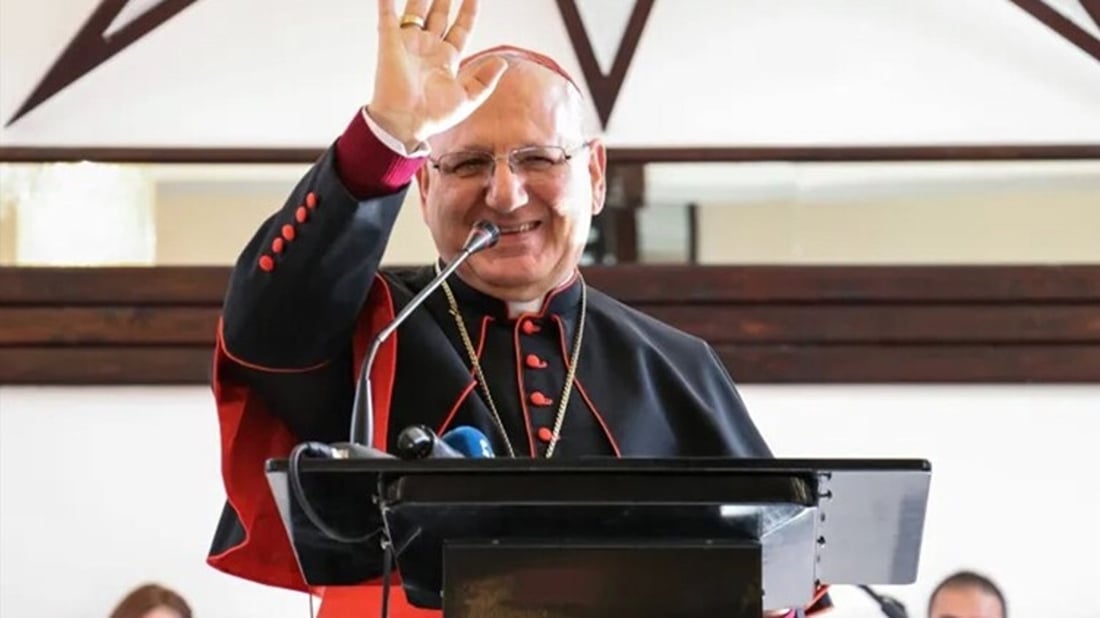
FILES: Cardinal Sako, the Patriarch of the Chaldeans in Iraq and the world
'In full freedom'
Cardinal Louis Sako resigns as head of the Chaldean Church
BAGHDAD — Cardinal Louis Raphael Sako announced Tuesday that he has submitted his resignation as patriarch of the Chaldean Catholic Church to Pope Leo XIV, ending 13 years leading one of Iraq’s most prominent Christian institutions through an extraordinarily turbulent period.
“Yesterday morning, March 9, 2026, in full freedom, I decided to submit my resignation to His Holiness Pope Leo XIV so that I may quietly dedicate myself to prayer, writing and simple service. He accepted it,” Sako wrote. “To put an end to any speculation, I affirm that no one asked me to do this; rather, I requested the resignation of my own will.”
Sako said he had been contemplating the decision since turning 75 two years ago and had previously raised it with the late Pope Francis, who encouraged him to stay.
In a personal reflection accompanying the announcement, Sako offered an unusually candid accounting of his finances — saying he owns approximately 40 million Iraqi dinars, $5,000 and €5,000 accumulated over 52 years of priestly service, along with a share from the sale of his family home in Mosul. “I do not own a house or a car, but my true wealth is my dedicated service and the 45 books I have published,” he wrote.
He called for his successor to be “a patriarch who possesses thoughtfulness, solid theological culture, courage and wisdom, who believes in renewal, openness and dialogue, and who also has a sense of humor,” adding that he would respect whoever is chosen and “never interfere in his work.”
Sako’s latter tenure was defined almost as much by political battles as pastoral ones. In July 2023, Iraqi President Abdul Latif Rashid revoked a 2013 presidential decree recognizing Sako as head of the Chaldean Church, prompting him to relocate from Baghdad to Erbil in protest. The Federal Supreme Court upheld the decision in November 2023, angering Iraqi Christians and the Vatican. The Chaldean Patriarchate canceled Easter celebrations in 2024 in protest.
Prime Minister Mohammed Shia’ al-Sudani reinstated Sako in June 2024, ending months of tension.
In December 2025, Sako drew renewed controversy after using the word “al-tatbi'” — a term in Arabic political discourse commonly associated with normalization of ties with Israel — during Christmas Mass. The Patriarchate later clarified he was referring to normalizing the world’s relations with Iraq, not Iraq normalizing ties with Israel.
The resignation drew immediate reactions from Iraqi and Kurdish political figures. Ano Jawhar Abdoka, secretary general of the Christian Alliance and KRG minister of transportation and communications, said he received the news “with deep interest and profound appreciation,” praising Sako’s “dedicated service and sacrifice” and his “tireless efforts to safeguard the presence, dignity and rights of Christians.” Abdoka called on the Chaldean synod to choose a successor guided by “wisdom and grace,” and reaffirmed his commitment to “defending the historical presence and legitimate rights” of Iraq’s indigenous Christian community.
Rayan al-Kildani, head of the Babylon Movement, said that “our doors will remain open” to Sako following his resignation, expressing “appreciation and respect” for his years of service and acknowledging past “disagreements” and “accusations” while saying the role of church leaders remains part of the institution’s history. The conciliatory tone marks a notable shift. The 2023 dispute that forced Sako out of Baghdad was driven in large part by his conflict with Kildani, whose Christian-affiliated militia and political party have long competed with the church hierarchy for influence over Iraq’s Christian community. Sako accused Kildani of orchestrating the presidential decree revocation in order to seize church offices, assets and properties in the Nineveh plains — accusations Kildani denied. Kildani in turn accused Sako of selling off church properties, allegations the patriarch also rejected.
This article has been amended to include comments by Kildani