
Ongoing campaign
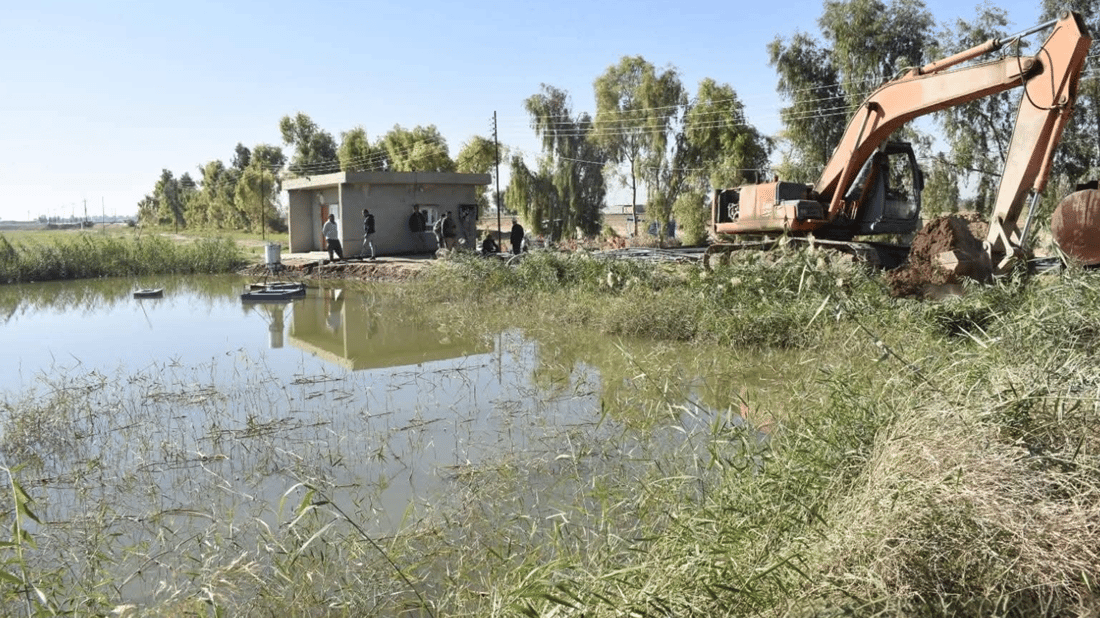
Authorities launch operation to dismantle unlicensed fish ponds in Tuz Khurmatu
TUZ KHURMATU— Local water resource officials and Salah Al-Din security forces launched a joint operation in the Tuz Khurmatu district targeting illegal fish ponds, with pond owners now facing court proceedings in addition to demolition.
Ahmed Khairullah, head of the Tuz Khurmatu Water Resources Department, told 964media, “This campaign is different from the previous ones. In the past, we demolished unlicensed fish ponds and imposed fines on their owners. However, many of them rebuilt the ponds. This time, in addition to demolishing the ponds, security forces are pursuing the owners to bring them to court.”
He said the campaign extends beyond Tuz Khurmatu to include areas in Amerli, Suleiman Beg, and around Daquq. Despite repeated warnings, some owners have continued to rebuild the ponds.
Previously, there were around 100 fish ponds in Tuz Khurmatu, with only about 10 having official permits. The others were built illegally. Although earlier operations had cleared the ponds, many have since been reconstructed.
The move is part of a growing national campaign to shut down unauthorized fish ponds, which officials say are straining Iraq’s already fragile water resources. Many ponds were built without government approval and draw large quantities of water from the Tigris and Euphrates as drought conditions worsen.
The Iraq’s Ministry of Water Resources recently said it has dismantled 12,000 unauthorized fish farms as part of an ongoing campaign to remove violations on rivers and protect water distribution.
The ministry previously said that water violations are among the most serious challenges facing its work because of their impact on water allocation, agricultural planning and the continuity of drinking water supplies. It said the violations included establishing fish-breeding lakes without legal authorization, installing pumps directly on riverbanks and encroaching on citizens’ water shares, and in some cases on the rights of one governorate at the expense of another.