
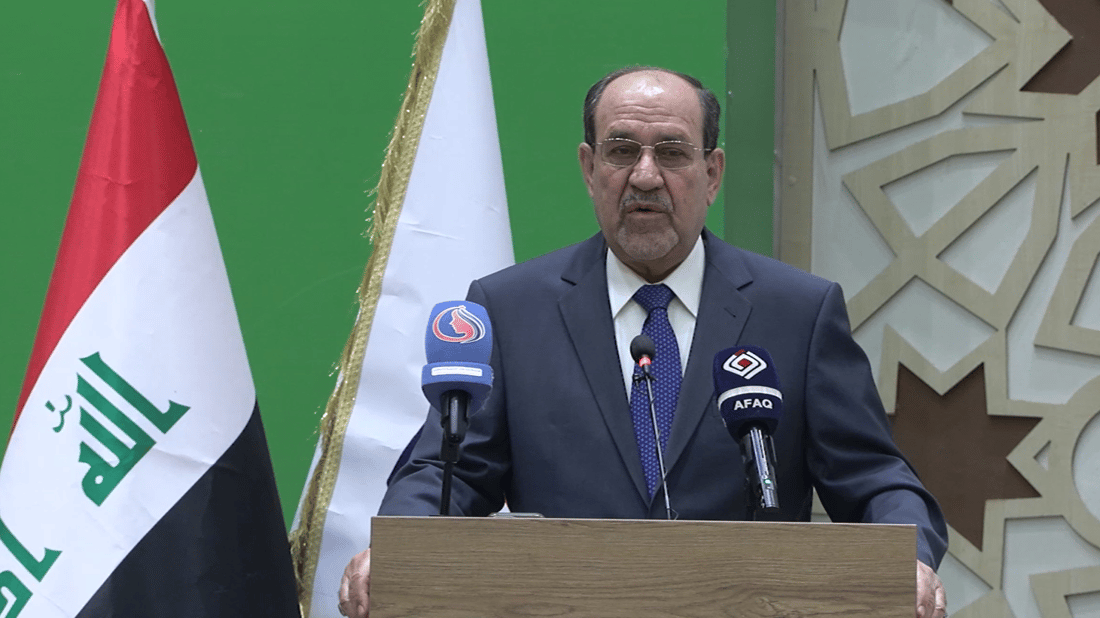
Former PM Nouri Al-Maliki, head of the State of Law Coalition
Monitor
State of Law advisor rejects rejects election boycott, urges ‘timely’ vote
BAGHDAD — Abbas Al-Moussawi, advisor to State of Law Coalition leader Nouri Al-Maliki, said there is no alternative to holding parliamentary elections on time, which are set for Nov. 11, warning that any delay would undermine Iraq’s political legitimacy.
“We have no option but to hold elections, as delaying them means entering a government without legitimacy. There is no parliament, and we begin to form a new dictatorship and lose legitimacy,” Al-Moussawi said in an interview with Zagros TV.
He criticized the performance of current lawmakers, stating, “More than 200 current parliament members are participating in the upcoming elections. We have not heard of them, not seen them, and have not seen any action from them in parliament.”
Al-Moussawi said boycotting the election is not a solution. “Boycott is not an option, and we want things to proceed calmly until the elections are held,” he said.
Al-Moussawi described the Sadrist Movement as essential to the political structure. “Its presence in parliament, even if not in government, will provide internal oversight and parliamentary opposition that threatens the corrupt or those who undermine state funds.” Al-Sadr has reiterated his call to boycott the upcoming parliamentary elections, scheduled for Nov. 11.
Excerpts from Abbas Al-Moussawi’s interview with Zagros TV:
We have no option but to hold elections, as delaying them means entering a government without legitimacy. There is no parliament, and we begin to form a new dictatorship and lose legitimacy.
More than 200 current parliament members are participating in the upcoming elections. We have not heard of them, not seen them, and have not seen any action from them in parliament.
Our bet is on voter participation and punishing the blocs that nominate people who were not honest with their audience.
Boycott is not an option, and we want things to proceed calmly until the elections are held. After the elections, we demand that the judiciary have direct oversight over the integrity of the government, the parliament, and the political process.
Voter trust in participating in the elections can only be restored by holding the corrupt accountable.
If there had been real parliamentary work, we would have seen accountability for those responsible for wasting Iraqi funds.
The relationship between Baghdad and Kurdistan, and the statements of political blocs today, differ from previous years. This is evidence of political maturity.
The Sadrist Movement is a fundamental part of the political process. Its presence in parliament, even if not in government, will provide internal oversight and parliamentary opposition that threatens the corrupt or those who undermine state funds.
We hope to find a solution in the coming days, even though the constitutional deadlines are binding upon us, and even Sayyid A-Sadr will not agree to delaying the elections.
When Al-Sadr wanted it, or when information was sent indicating there was an intention, the position of Maliki and Amiri within the Framework was clear on the necessity of reopening candidacy.
The Sadrist Movement shed blood and participated in the liberation of cities. It is a fundamental part, not an outsider to the political process, and its presence supports it in Iraq.
The religious edict is respected and supports the political system in Iraq. The fatwa changed the balance in the region when ISIS entered.
The citizen may need a religious opinion for guidance, not a religious edict. The Marja‘ does not issue a fatwa requiring participation, but may express it through questions directed to his representatives. The matter is intellectual, not jurisprudential, except in the main issues in the political process, such as voting on the constitution or fighting terrorism, where opinions were clear. In other matters, I do not think the Marja‘ intervenes or issues a fatwa on this subject.
There are those who want to fish in troubled waters and increase tensions between State of Law and the Sadrist Movement.
Sayyid Muqtada Al-Sadr, in a tweet, laid out clear foundations that he is boycotting. This is his right, but he does not allow roads to be blocked, protests to be held, or people to be prevented from participating in the elections. This is a positive message from His Eminence.
All political blocs acknowledge the role of the Sadrist Movement and the stature of Sayyid Muqtada Al-Sadr, whether inside or outside parliament.
After the elections, there will be communication, consultation, and opinion exchange between the brothers in the Framework and the Sadrist Movement and His Eminence Sayyid Muqtada Al-Sadr. We want to build a cohesive political process and not a weak government.