
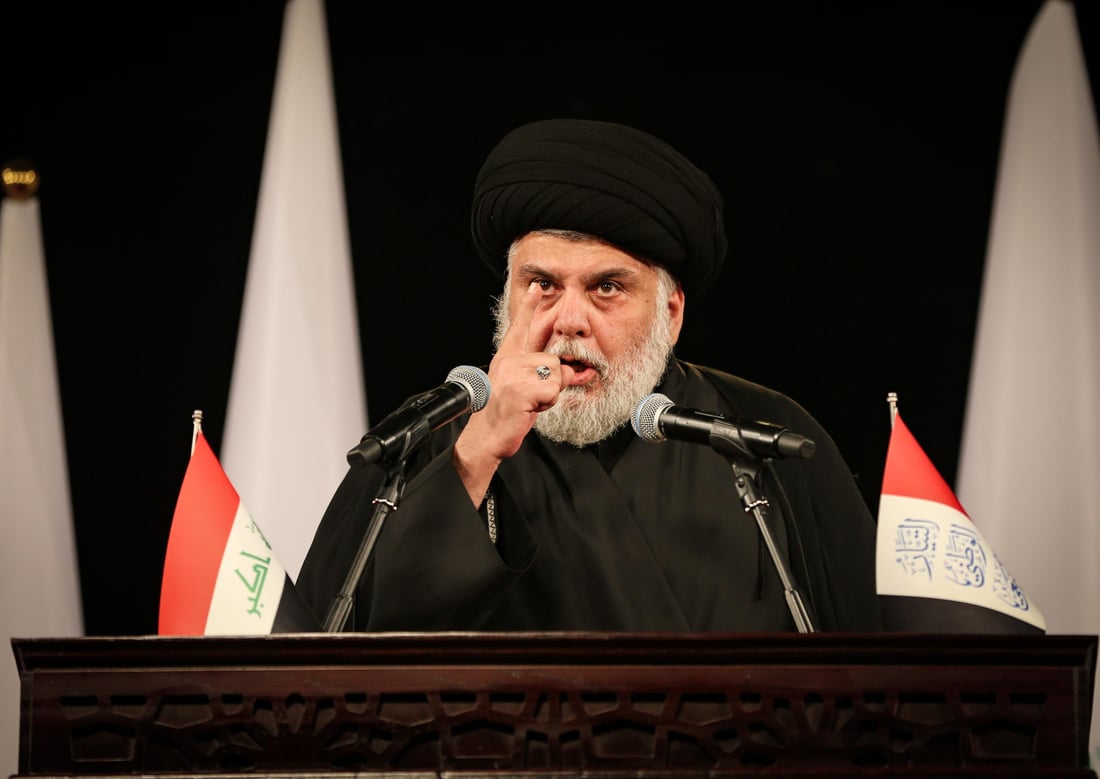
Shiite National Movement leader Muqtada Al-Sadr
'Overwhelming'
Sadr reaffirms election boycott, cites failed reform efforts and religious duty
NAJAF — Shiite National Movement leader Muqtada al-Sadr on Wednesday reaffirmed his decision to boycott Iraq’s upcoming parliamentary elections, citing both religious and political reasons in a lengthy post published on his personal X account.
In a statement titled Shaqshaqa — a reference to a sermon attributed to Ali ibn Abi Talib, the first Imam in Shia Islam — Sadr said his previous involvement in politics had been in response to calls for leadership and reform. However, he said these efforts had proven futile in the face of entrenched corruption.
“The corruption current is overwhelming,” Sadr wrote, adding that political figures who “disregard” religious principles and public demands are incapable of combating corruption or curbing militia activity. He accused them of showing disrespect toward Iraq’s religious authority and failing to uphold the national interest.
“We tried repeatedly, but it was futile,” he stated. “Separation was more appropriate.”
Sadr said he withdrew from politics after close allies “turned against him” and suggested that participating in the elections would compromise his religious obligations. He concluded the statement by calling for the dissolution or integration of armed factions, without explicitly naming any groups. “There is prosperity in their resolution and integration,” he wrote.
Sadr himself leads the Saraya al-Salam militia.
His reaffirmation comes amid persistent speculation that the influential cleric might reenter the political arena ahead of the Nov. 11 parliamentary vote.
Sadr’s movement won 73 of 329 seats in Iraq’s last election in October 2021, making it the largest bloc in Parliament at the time. After pushing for a majority government that would exclude Iran-aligned rivals, Sadr failed to build the necessary alliances and ultimately ordered his lawmakers to resign en masse in protest. The resignations led to a prolonged political deadlock, eventually resolved through the formation of a consensus government dominated by Sadr’s Shia rivals.