
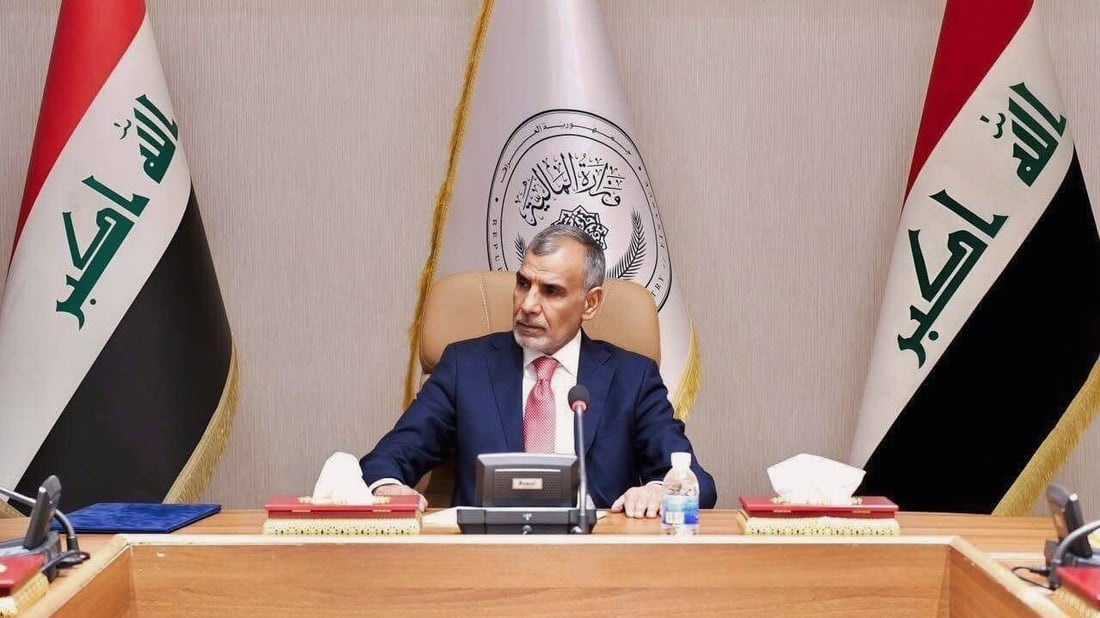
Iraq’s Parliament Speaker Haibat al-Halbousi chairs a meeting in Baghdad
Iraqi finance minister asks to brief parliament on country’s financial crisis
BAGHDAD — Finance Minister Faleh Sari has asked parliament to hear him at its earliest session on Iraq’s financial situation and the measures being taken to meet the state’s core obligations, the Finance Ministry said Monday.
Sari submitted the request to the parliament presidency to explain “the financial and economic reality the country is going through” and the main pressures on public finances from current regional developments, the ministry said. He said appearing reflected “the ministry’s commitment to providing the people’s representatives with an accurate picture of the financial and economic situation and the measures the ministry is taking to ensure the fulfillment of the state’s basic obligations.”
July salaries were paid late. The ministry began funding them on July 28 and released payments in stages, starting with security personnel and Popular Mobilization Forces members before extending to civilian ministries. Some permanent Education Ministry staff in Basra did not begin receiving payments until early August. Reports in Iraqi media attributed the delay to liquidity shortages, lower revenue and administrative procedures.
The government confirmed last week that Iraq is in a financial crisis and that salary payments will no longer follow their previous schedule, spokesperson Haider al-Aboudi said. Oil Ministry figures show Iraq earned about $2.34 billion from 32.1 million barrels of crude and condensates in May and June, roughly $1.17 billion a month, after shipping through the Strait of Hormuz was disrupted. Oil normally provides more than 90% of federal revenue.
Officials and analysts have given widely different accounts of what the state owes each month. Health Minister Abdul Hussein al-Mousawi put the salary bill at 10.8 trillion dinars, Jamal Kocher of parliament’s Finance Committee at 7.8 trillion and analyst Mustafa Hantoush at 7.5 trillion to 8 trillion, while Finance Ministry accounts for the first four months of the year show civil servant wages running at about 5 trillion dinars a month.
They have also proposed different remedies. Kocher has called for the Central Bank to create more money. Hantoush has said the government may need a 10 trillion dinar borrowing law. Mudher Mohammed Saleh, the prime minister’s financial adviser, has argued for spending controls and stronger non-oil revenue collection, warning that borrowing should complement rather than replace structural reform.
Mousawi also said the state drug importer Kimadia received barely 15% of its allocated funding in June, prompting suppliers to halt medicine deliveries.