
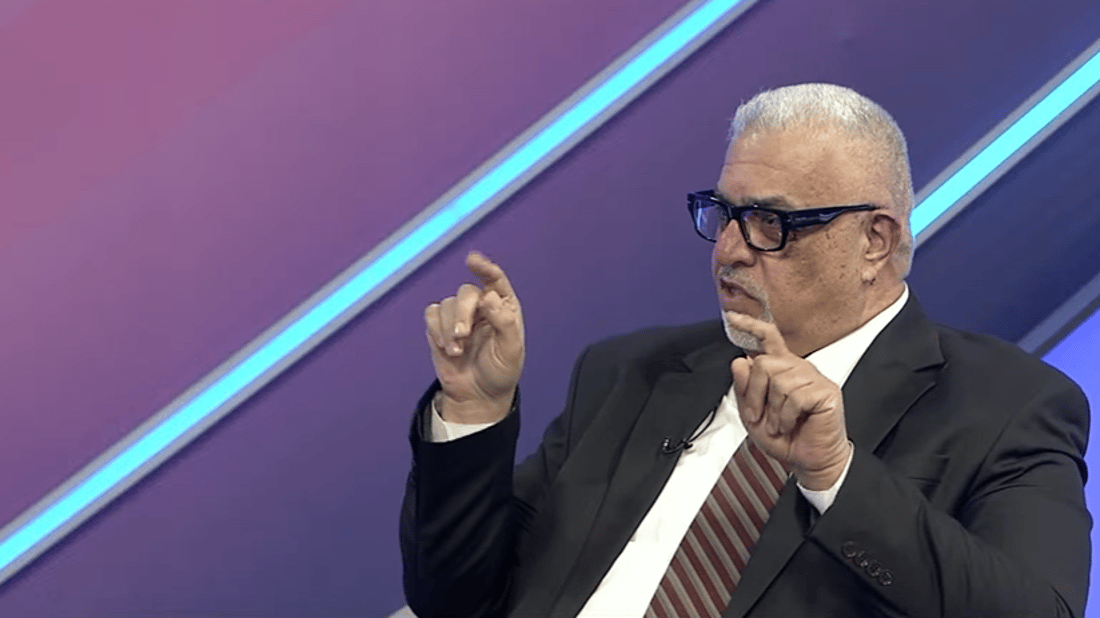
The head of the Ayin Election Monitoring Network, Sa’ad Al-Battat
Media Monitor
Election watchdog warns of rising hate speech, early campaigning violations
BAGHDAD — Sa’ad Al-Battat, head of the Ayin Election Monitoring Network, warned Monday of a “blatant rise in hate speech and sectarianism” in the lead-up to Iraq’s parliamentary elections scheduled for Nov. 11, citing campaign violations, lack of enforcement, and concerns over election oversight.
“We recorded statements from bloc leaders that can be described, at the very least, as very dangerous due to their attacks on certain components and insults to people,” Al-Battat said in an interview with Iraqiya TV.
He criticized early campaigning and noncompliance with regulations set by the Independent High Electoral Commission and local authorities. “There was no adherence to the commission’s and municipal departments’ instructions regarding campaign locations and sizes,” he said. “Now, our streets, which billions of dinars were spent on, have completely disappeared amid strange visual distortion.”
Excerpts from Sa’ad Al-Battat interview with Iraqiya TV:
What we observed was a blatant rise in hate speech and sectarianism before the elections. We recorded statements from bloc leaders that can be described, at the very least, as very dangerous due to their attacks on certain components and insults to people. In addition, there were violations of campaign timing, with campaigns starting very early, and there was no adherence to the commission’s and municipal departments’ instructions regarding campaign locations and sizes, as is the case around the world. Now, our streets, which billions of dinars were spent on, have completely disappeared amid strange visual distortion.
We monitor candidates’ rhetoric on satellite channels and social media platforms. What concerns us is only the candidate’s speech, as it relates to the electoral matter. The speech of non-candidates does not concern us. We are in contact with the Electoral Commission, and the head of its media team is present with us in most communication groups, and penalties may soon be issued against some violators.
Regarding campaigning, some candidates are using their parties’ channels to appear, and this is their right. However, official channels must distribute promotional appearances fairly among all candidates. More importantly, the Integrity Commission must monitor the very wealthy campaign activities and track their funding sources. We are now seeing giant trucks carrying candidates’ pictures roaming the streets, and we have not yet seen the Integrity Commission. But it has announced that it will act as an oversight body in this election for the first time.
In other countries, there are specific instructions, including monitoring campaign advertisements through the official banking system and central bank to verify funding sources and spending amounts.
Inside election centers, there is an entity observer and an observer from civil society organizations. In the previous elections, our brothers in the commission said that civil society organization observers numbered 500,000. However, we counted no more than 8,000 observers. In this election, the number of civil observers will exceed one million because parties and candidates have started buying organizations and registering their members as civil observers. But in reality, these people will simply be entity observers and vote agents for the side that bought them.