Maysan environmental activist Ahmed Saleh Neama
'The Marshlands Guardian'
Environmental activist from Maysan featured in Iraq’s school curriculum
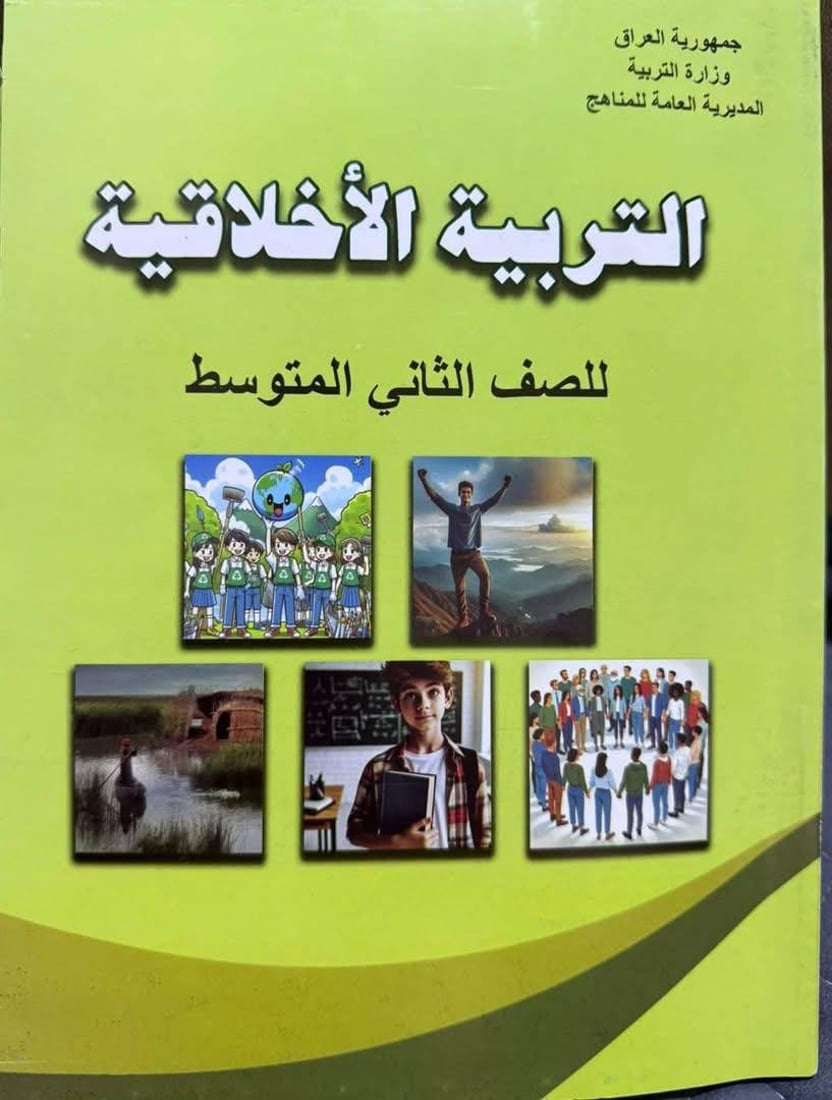
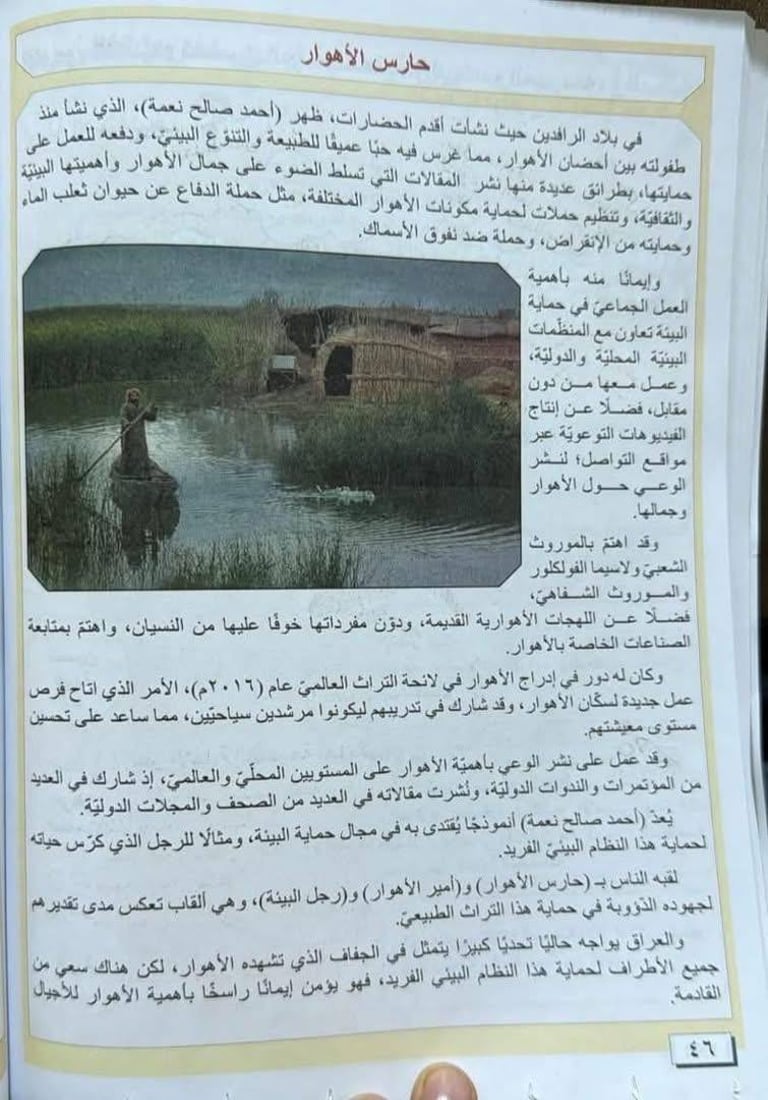
MAYSAN — The Iraq’s Ministry of Education has included the story and environmental work of Maysan activist Ahmed Saleh Neama in this year’s Grade 8 ethics textbook under the title “The Marshlands Guardian.”
The lesson highlights Neama’s efforts to protect Iraq’s southern marshes, his environmental campaigns, and his role in supporting the inclusion of the marshes as international nature reserves.
Neama told 964media that he learned about the inclusion by coincidence when friends sent him a photo of the textbook page. “I had no prior knowledge of this step, and there was no coordination between me and the Ministry of Education,” he said.
He added, “I must thank everyone who contributed to including my work in the national curriculum. This honor is also a responsibility that drives me to continue my efforts.”
According to the Maysan Directorate of Education, the inclusion was made by a central committee within the Ministry of Education, and local directorates were not informed beforehand.
The textbook entry describes Neama as an environmental advocate who grew up in the marshlands and developed a deep connection to nature. It details his environmental campaigns, address fish die-offs, and promote awareness through articles, social media videos, and cooperation with local and international organizations. The text also notes his contributions to documenting the cultural and linguistic heritage of the marshes.
Neama’s dedication has earned him several titles among locals, including “Marshlands Guardian,” “Prince of the Marshes,” and “Man of the Environment.”
The Iraqi Marshes, also known as Al-Ahwar, stretch across southern Iraq between the Tigris and Euphrates rivers. Celebrated for their cultural and biological importance, the marshes were designated a UNESCO World Heritage Site in 2016. However, reports indicate that drying conditions have led to a substantial reduction in their size and a decline in wildlife diversity, adversely affecting local communities and reducing income for many fishermen.