
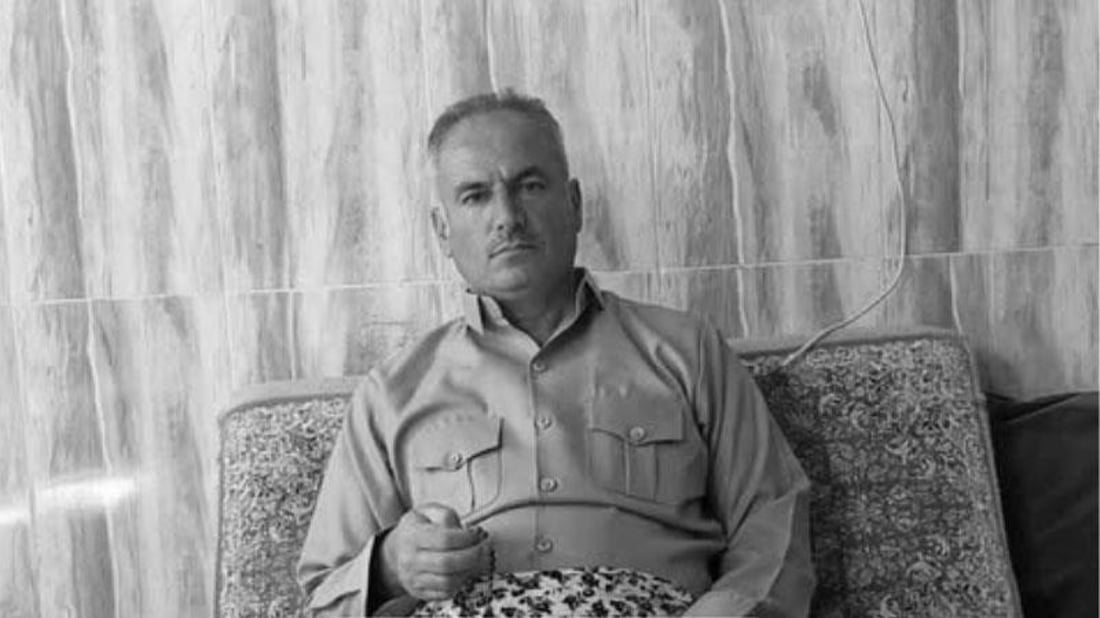
Hasan Rahman, the protester killed Sunday night during a demonstration over electricity shortages in Warte, is seen in this undated photo. He was a father of several children and head of two households.
Erbil
Man killed in Rawanduz electricity protest
ERBIL — A protest over prolonged electricity outages in the Soran administration turned deadly Sunday night when a demonstrator was killed during a confrontation with security forces in Rawanduz district.
The protest began in the Warte subdistrict, where residents blocked the Hamilton Road to express anger over repeated blackouts. Tensions escalated when security personnel attempted to disperse the crowd. A video widely circulated online appears to show an officer attempting to strike a young protester with the butt of a Kalashnikov rifle, which then discharges. The bullet appears to hit another demonstrator, who collapses.
Additional footage showed security forces firing several rounds into the air to clear the area.
A 964media correspondent at Soran Hospital confirmed the death with a medical worker and a friend of the victim, who was identified as Hasan Rahman. “Unfortunately, the security forces opened fire and the first bullet hit him. We rushed him to the hospital ourselves,” the friend said. Rahman was described as a father of seven.
Later the same night, residents in Balisan subdistrict in Shaqlawa and nearby villages blocked the road linking Soran and Raperin, demanding improvements to power service. “This summer we have neither water nor electricity. Yesterday we had only two hours of power in 24 hours,” said Rebin Balisani, a local resident. Another protester said, “I haven’t showered for a week. The electricity situation is terrible. Until they give us a clear promise to fix it, we won’t open the road and we’ll sleep right here.”
Earlier Sunday, protests broke out in at least eight villages in the Kawrgosk subdistrict near Erbil, where residents burned tires and blocked roads. Demonstrators in Shiwarash, Gainj, Ifraz, and other areas shut down the main Erbil–Kawrgosk road for four hours.
“We’ve had electricity problems for a week. We get about three hours a day,” said Rami Qadir from Ifraz village. “Today, the Khabat district office promised a fix. But if the problem comes back, so will the protests.”
Haji Barzan, operations director of Khabat district, said authorities are working to resolve the issue. “We promise it won’t happen again,” he said.
The Kurdistan Regional Government says its Runaki project is a major reform initiative aimed at replacing private diesel generators with uninterrupted national grid power. The project has reportedly brought 24-hour electricity to more than 2 million residents in parts of Erbil, Sulaymaniyah, and Duhok, with plans to expand to other urban centers by the end of 2025 and a full national rollout by the end of next year. However, many rural areas continue to face daily blackouts, fueling anger and protests.