
Kirkuk
Iraq’s oil minister vows no leniency on oil exported outside the law
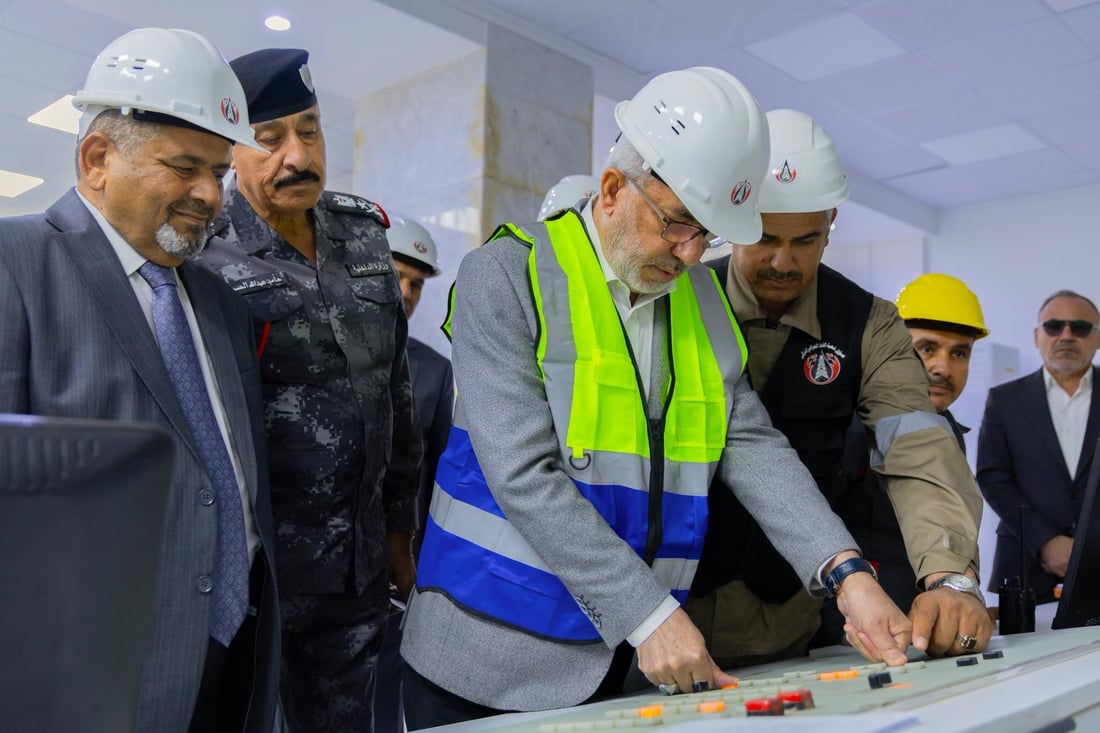
BAGHDAD — Oil Minister Basim al-Abadi said in Kirkuk on Friday that the ministry would not tolerate a single drop of oil exported outside legal channels, days after an inquiry into suspected smuggling at the state-owned North Oil Company. He was in the city to open a pumping station on the federal pipeline to Turkey.
The ministry would wait for the judiciary’s findings, Abadi told a press conference attended by a reporter from the state-run Iraqi News Agency, but it would show no leniency to “anyone, whoever they may be, who tampers with public money under any pretext.”
“Our presence here today is to review the metering equipment and work procedures and to reconsider some of those in charge,” he said. “If someone was negligent, they will be held to account, and if they did wrong, they will be referred to the judiciary.”
Prime Minister Ali al-Zaidi suspended North Oil’s director general and his deputies on Tuesday and sent the inquiry’s findings to the judiciary. His orders also put every border crossing in the Kurdistan Region under federal control and barred the Kurdistan Regional Government from approving oil exports without the federal Oil Ministry’s approval. The KRG rejected them as unconstitutional.
Abadi said the ministry was in contact with the Region on managing oil. “The fields of the Region, Basra, the center and the western areas belong to all Iraqis, and as long as they are under the umbrella of the Iraqi flag, this wealth must be preserved and invested in the best way,” he said. The ministry would work with the Region as one team to raise production and export capacity, he said.
The government’s goal of raising production capacity above 8 million barrels a day could be met only by developing every field and exploration block, “whether within the Oil Ministry or within the Region’s area,” Abadi said.
He spoke after opening the IT1 pumping station, which the ministry said restarted the old Iraq-Turkey pipeline, the federal government’s own line from Kirkuk, after 12 years out of service. “The rehabilitated pipeline can currently pump up to 300,000 barrels, and in the coming days the rehabilitation work will be completed to raise the capacity to more than 500,000 barrels,” he said.
The ministry’s statement on the opening said capacity would rise to 500,000 barrels a day once a second pumping station had been rehabilitated, without naming the station. On Nov. 17, Abadi said pumping resumed at an initial 120,000 barrels a day through the same line. Neither he nor the ministry said on Friday how much crude the line now carries.
The line runs from Kirkuk to Fishkhabur, on the Turkish border in Duhok governorate, where it joins the Turkish network to the Mediterranean port of Ceyhan. It had not carried exports since 2014, after repeated attacks during the Islamic State group’s occupation of parts of northern Iraq. Since March 18, Kirkuk crude has also gone to Ceyhan through the Kurdistan Region’s pipeline under a deal between Baghdad and the KRG.
Abadi said the ministry was negotiating with Opec to lift Iraq’s production ceiling, talks he said were “not based on courtesy.” As a founding member, Iraq had the right to defend its interests in the group and needed its circumstances taken into account, he said. He also said the ministry was negotiating with U.S. companies including Chevron, ExxonMobil, ConocoPhillips, Halliburton and SLB.
Output would rise in the coming days under a program with BP, Abadi said. A joint body with BP took over four Kirkuk fields in October. The ministry would sign a new contract for the Ajeel field, had started work on the Hamrin field contract signed with HKN in July and wanted to export oil from Qayyarah “by any means,” he said.
“Corruption is of two kinds,” Abadi said. “The first is the theft of public money, and the second is weak decision-making and failing to take the decisions that lead to contracts being signed quickly and energy being invested in the best way.”