
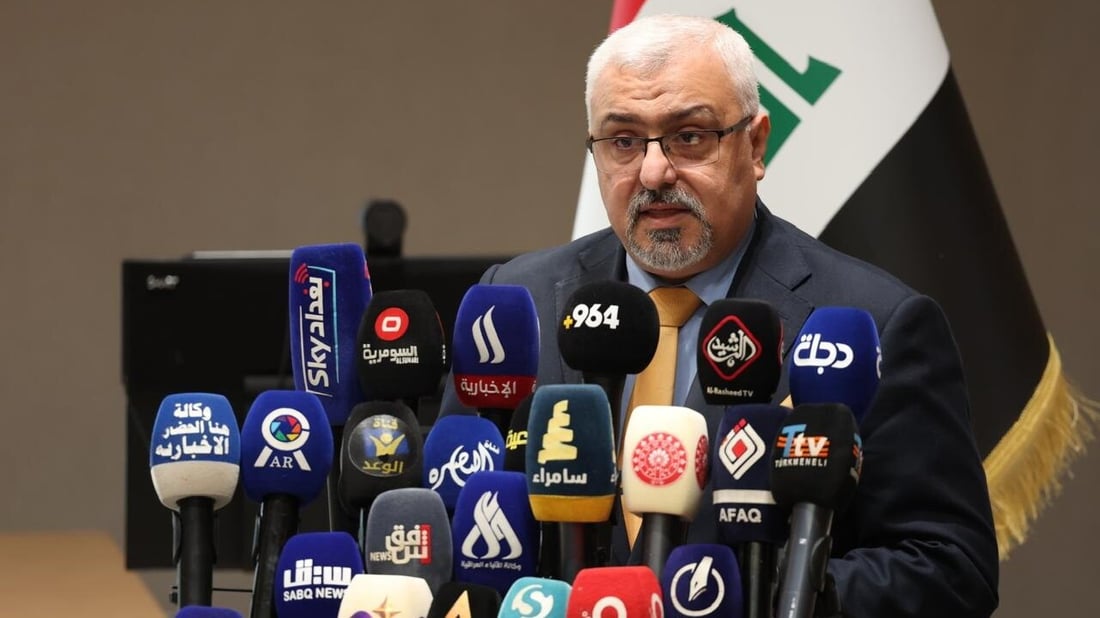
Iraqi Higher Education Minister Haider Bahaa al-Husseini announces university admission results for the 2026-2027 academic year at a press conference in Baghdad on Nov. 12, 2026.
Enrolment results
Iraq approves 505,873 university admissions as exam passes jump 48%
BAGHDAD — Iraq has approved 505,873 university admissions for the 2026-2027 academic year across public and private institutions, the Higher Education Ministry said Thursday, after the number of students passing the national school-leaving exams rose by almost half.
Higher Education Minister Haider Bahaa al-Hasani told a news conference announcing the unified admission results that 338,191 students passed the sixth preparatory exams, which end secondary school, in 2025-2026, up from 228,753 the year before.
Public universities accepted 273,024 students through central admission and other channels, including morning and evening programs, Hasani said. Private universities, colleges and institutes accepted 175,336.
Another 57,513 students from the two most recent graduating classes won places on the parallel track, the fee-paying places at state universities. Students can hold offers in more than one channel, so the total counts admissions, not individual students.
“These numbers represent a major academic and educational responsibility, as every seat is tied to a student’s ambition and a family’s hope,” said Hasani, whom parliament approved as minister on Oct. 15.
He said the jump in passes meant the government had to find more places, while still basing admissions on grades, students’ choices and how many students each institution can take. The ministry’s job did not end with the results, he said, but extended to better curricula, programs and research and to preparing graduates for the labor market.
Haider Abdul Dahad, the deputy minister for scientific research affairs, said students can check their results in the admission results and confirmation section of the ministry’s Qaddim admissions platform. They can confirm a place through central admission, the parallel track or a private university or college.
“Confirming admission in any of these channels constitutes final acceptance and results in the cancellation of admission in the other channels,” he said.
The ministry released central admission results for public universities on Oct. 15. It said placements followed the approved competitive criteria, with no exceptions to academic requirements. On Oct. 18 it opened appeals for three groups: students who received no place, students who had not applied and students placed in institutes, which award two-year diplomas, despite averages of at least 75%.
Applications for the parallel track and private universities were extended several times, to a final deadline of Nov. 1. The ministry also brought private admissions into a central digital system and warned that seats reserved outside Qaddim would have no legal or administrative standing.
Older graduates have pressed for state jobs all year: thousands marched toward the Green Zone on Aug. 17, and on Sept. 7 Prime Minister Ali al-Zaidi told the Finance Ministry to set aside posts for long-term graduates in the draft budget. On Nov. 5 the ministry barred public university teaching staff from lecturing at private colleges, saying the posts should go to unemployed holders of master’s and doctoral degrees.
Abdul Dahad said the ministry would later reopen applications for the remaining places on the parallel track and at private universities and colleges. Students who did not apply, got no place in the announced channels or did not complete their confirmation will be able to apply.
The ministry has not announced dates for the new application round.