
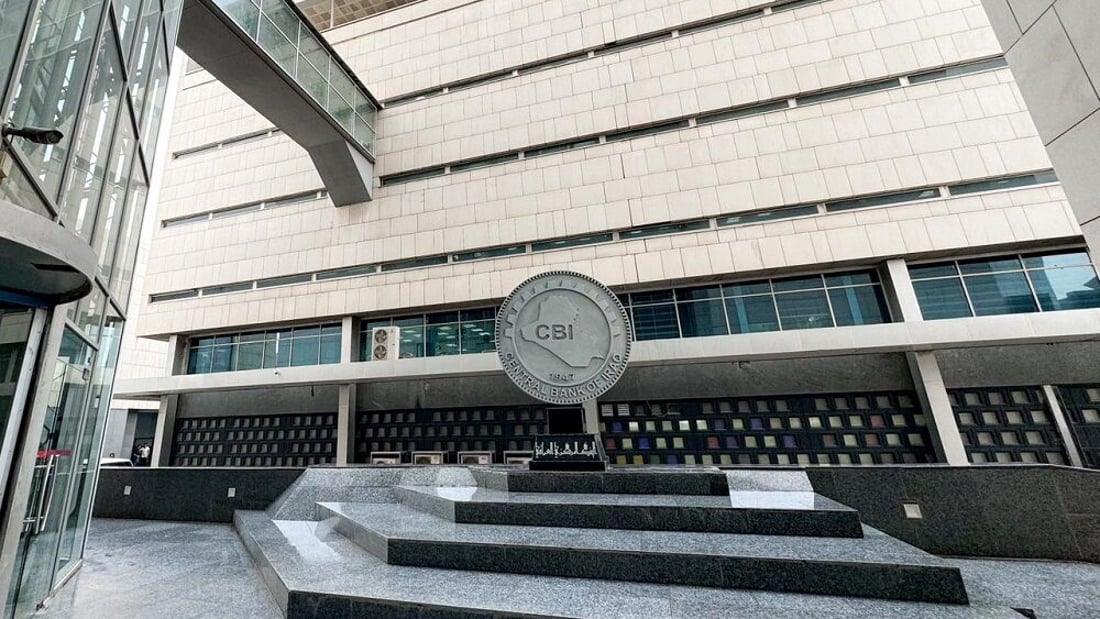
The Central Bank of Iraq (CBI) headquarters in Baghdad
Central Bank orders official 1,520 rate for card payments abroad
BAGHDAD — The Central Bank of Iraq on Sunday told banks and payment companies to apply the official rate of 1,520 dinars per dollar to card payments made abroad and to charge the lowest possible fees on them.
The instruction covers cards issued by banks and electronic payment service providers and used at point-of-sale terminals and through online payment gateways outside Iraq, the bank said in a statement. Issuers must also set out every commission on such transactions clearly for customers.
The bank said the measures were meant to encourage the use of electronic payments abroad, make charges more transparent and protect consumers, as part of its push to expand digital payments in financial and commercial transactions. Banks and payment companies said they were ready to comply, according to the statement.
At that rate, $100 spent by card abroad costs 152,000 dinars. Baghdad exchange shops sold $100 for 169,000 dinars on Sunday morning, according to 964media’s daily rate check, so the card is about 10% cheaper.
In September, before the devaluation, overseas card spending was settled at the official rate, and a card used abroad was the cheapest way for Iraqis to buy dollars. When the dinar was devalued on Oct. 7, the bank told banks, payment companies and exchange firms to stop using the old rates immediately. Sunday’s statement did not say what rate card issuers had applied since then.
Since Tuesday, travelers have been able to buy $3,000 in cash at the official rate, up from $2,000, once every two months and up to six times a year, under rules the bank announced Monday.
In July, the bank cut the monthly cash dollar allocation for travelers from $3,000 to $2,000 under rules it said were meant to improve foreign currency management and encourage the use of electronic payment cards. It described the changes as “purely regulatory.”
The official public rate has been 1,520 dinars per dollar since Oct. 7, up from 1,320, when the government devalued the dinar. It was the first major change since February 2023, when the government strengthened the dinar from 1,470 to 1,320 to stabilize prices and protect purchasing power, reversing part of a devaluation in late 2020.