
Iraq deputy PM ‘takes responsibility’ for promise of cheaper dollar
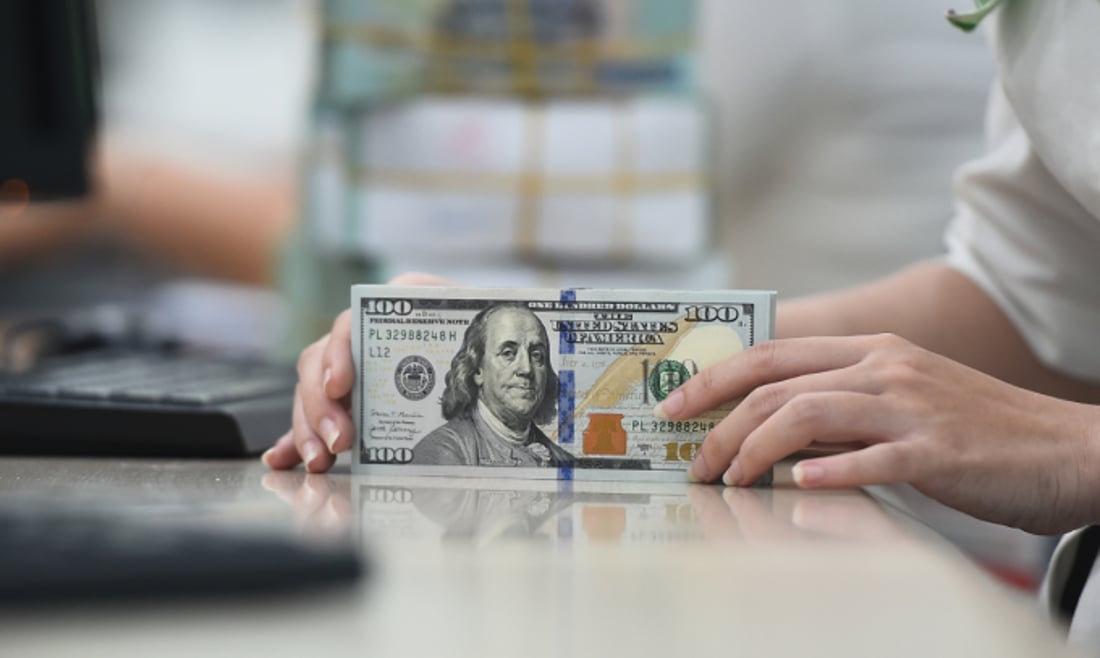
BAGHDAD — The dollar will fall to very close to the official rate on Iraq’s parallel market, Deputy Prime Minister Mohammed Ali Tamim said Sunday, crediting $3 billion in cash he said Washington had decided to send in two months.
“The parallel exchange rate will decline and come very close to the official exchange rate, and I take responsibility for these words,” said Tamim, who heads the Ministerial Council for Economy. “The reason is that this government’s relationship with the United States is an exceptional one, and the foundation of that relationship is trust.”
The first shipment arrived Thursday and another is due Monday, each carrying more than $500 million, Tamim said.
“In previous years, dollar cash supplies to Iraq declined to less than $3 billion annually, while over these two months, the U.S. government decided to send $3 billion,” he said. He did not say which years he meant.
The government will put the cash into the domestic market through measures supervised by the Central Bank of Iraq, Tamim said.
“Therefore, I am confident that the measures the government and the Central Bank will take, along with the dollars that will be supplied to the market, will lead to a decline in the exchange rate. The parallel exchange rate will come very close to the official exchange rate, if not equal to it, as is the case in some neighboring countries,” he said.
The dollar sold for 168,500 dinars per $100 in Baghdad on Sunday morning, about 11% above the official rate of 152,000, according to 964media’s daily rate check. The selling price was the same on Thursday morning.
Tamim’s timeline differs from the Central Bank’s. Mahmoud Dagher, an adviser to the Central Bank governor and the bank’s spokesperson, told the state-run Iraqi News Agency on Tuesday, two days before the arrival Tamim described, that Prime Minister Ali al-Zaidi was personally following the shipments, each carrying about $500 million. “Two aircraft loaded with dollars have arrived, and other shipments will follow in the coming days, according to the prime minister’s statements,” Dagher said.
Zaidi said on Oct. 23 that Washington would send $1 billion in cash and that the parallel rate would soon fall to 155,000 dinars per $100. He gave no delivery date.
Dagher told state television on Oct. 24 that Iraq pays for most imports through bank transfers and letters of credit. Cash makes up no more than 10% of transactions and goes to travelers, students abroad and a few other purposes, he said.
On Wednesday, economist Ziad al-Hashimi warned that the government’s public enthusiasm over the shipments could push Washington to cut them off again and renew pressure on the Central Bank’s reserves. The dollars belong to the Central Bank and are meant only for travelers, not for the government or the markets, Hashimi wrote on Facebook.
“The Iraqi government is ‘very enthusiastic’ as it begins receiving cash dollar shipments after their release by the Federal Reserve, as though these dollars were meant for it or it could do with them as it pleases,” he wrote.
The Central Bank on Sunday denied raising the amount of dollars each traveler can buy at the official rate to $3,500. Haider Ghazi, the bank’s media director, told Iraqi media that a document circulating on social media in the bank’s name was forged and that travelers can still buy $2,000.
Iraq’s oil revenue is held in an account at the Federal Reserve Bank of New York, from which the Central Bank receives periodic shipments of U.S. banknotes. The U.S. State Department said in April that dollar shipments to Iraq “were temporarily paused,” and government spokesperson Haider al-Aboudi said in July that deliveries had resumed.
Since Oct. 7, the Central Bank buys dollars from the Finance Ministry at 1,500 dinars, sells to banks at 1,510 and sets the public rate at 1,520, up from 1,300, 1,310 and 1,320.
Zaidi told the parliament speaker and committee chairs on Oct. 8 that devaluation was necessary to keep paying salaries without more borrowing, after the government had weighed compulsory savings deducted from salaries, paying public employees every 45 days and taking on more debt.