
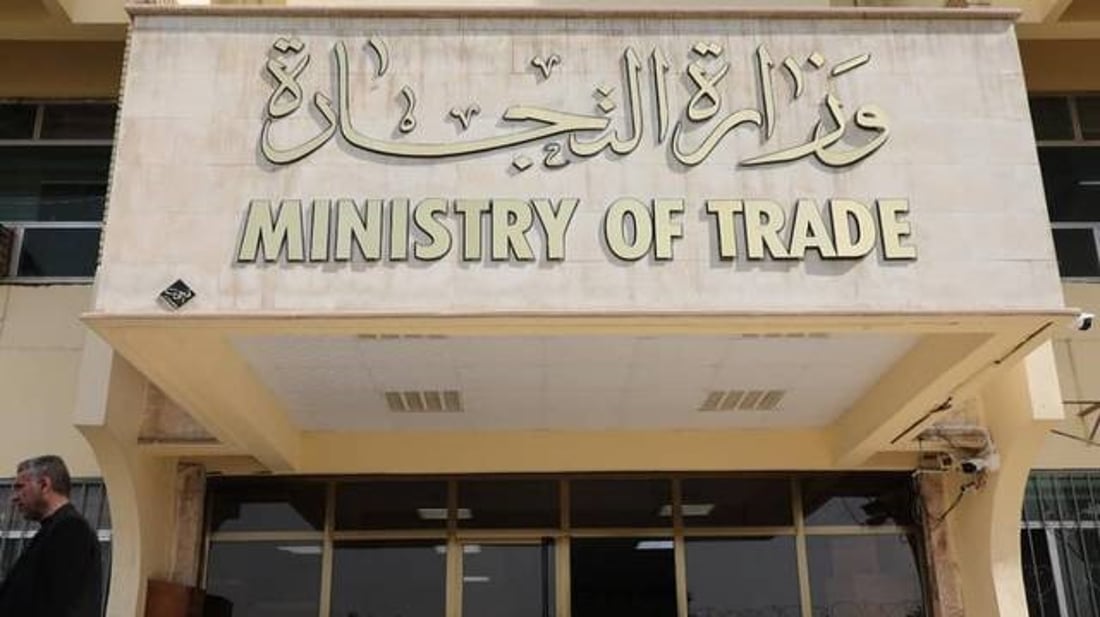
The Ministry of Trade building in Baghdad
Food imports rerouted overland as Hormuz disruption raises costs
BAGHDAD — Iraq’s Trade Ministry has switched some food imports to alternative routes, including through Turkey, because of the disruption in the Strait of Hormuz, but the new routes have sharply raised transport costs and delivery times, an official said Sunday.
“Alternative routes have been adopted to ensure the arrival of food supplies amid the continued closure of the Strait of Hormuz,” Lama al-Mousawi, director general of the state-owned General Company for Foodstuff Trading, told the Iraqi News Agency. Several ships due to pass through the strait had been redirected, including shipments moved through Turkey and the Rabia border crossing, she said, and deliveries on the new routes could take up to 90 days. The regional conflict and the changes to shipping routes had sharply increased freight, insurance and fuel costs as well as transit times, making it harder to secure food supplies and get them to Iraq, she said.
Iraq’s strategic food reserves are holding, with wheat stocks covering more than 18 months, Deputy Trade Minister Sattar al-Jabiri said in early September. Foreign Minister Fuad Hussein told his Italian counterpart this week that the war between the United States and Iran had cost Iraq an estimated $60 billion. Oil exports, which provide more than 90% of government revenue, fell from more than 99 million barrels in February to 18.6 million in March after shipping through the strait was disrupted, and recovered to about 2.6 million barrels a day in the first three weeks of September, against 3.3 million to 3.5 million before.