
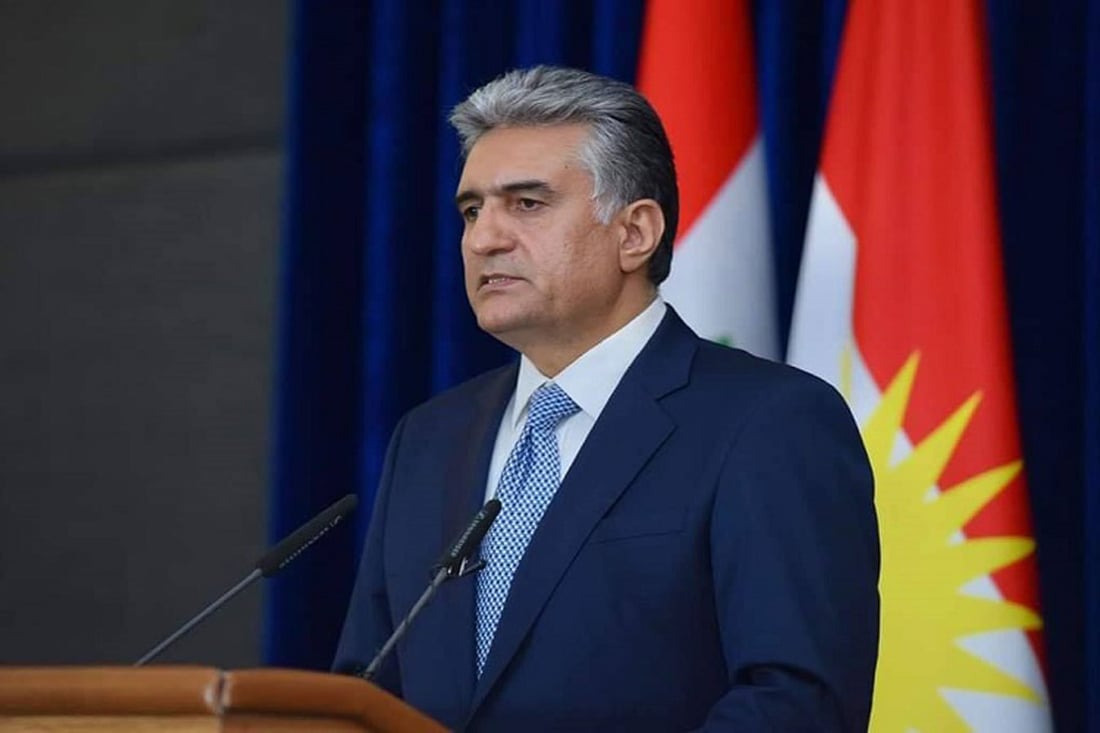
KRG Interior Minister Rebar Ahmed
KRG interior minister warns against a security vacuum after September 30 deadline
ERBIL — Coalition forces are being moved out of the Kurdistan Region daily and Iraq should avoid a security vacuum when they go, KRG Interior Minister Rebar Ahmed said, urging Baghdad to build bilateral security relationships with coalition countries to replace the mission.
“The departure of these forces is the result of the agreement and understandings previously reached with the Iraqi government,” Ahmed told a news conference, saying the withdrawal “has begun in earnest” and the forces would leave Iraq completely by the end of September. “Iraqi and Kurdistan Region security forces can be relied upon to fill that vacuum,” he said. “From now on, Iraq needs to establish bilateral relations with the countries that are part of the coalition.” Cooperation and coordination between Erbil and Baghdad should stay strong whether or not coalition forces remain, he said.
On oil, he said not all companies have resumed operations because they have not received the guarantees they want and their facilities have no anti-drone systems. Acting Natural Resources Minister Kamal Mohammed said in late August that production had recovered to between 200,000 and 250,000 barrels a day with all fields except Sarsang restarted.
Customs talks have not concluded. The KRG has proposed splitting revenue collected at border crossings equally between the federal government and the governorate where the crossing sits, Ahmed said, adding that every governorate with a crossing supports it. “Under our proposal… the revenue collected at border points should be divided, with half, 50%, going to the federal government and the other half, 50%, going to the governorate where the crossing is located.” Baghdad and Erbil signed an agreement in June to implement the ASYCUDA customs system in the Region and unify procedures and tariffs.
On the budget, Ahmed said the 2024 census puts the Region’s population at 14.1% of Iraq’s total, excluding Kurdish areas outside KRG administration, and that the negotiating delegation wants that figure written into the budget law as the Region’s share.
The two governments agreed a 17-point security arrangement this week covering border control, the closure of unofficial crossings and expanded coordination.