
Iraq election commission says legal amendment needed to replace biometric voter cards
BAGHDAD — Iraq’s Independent High Electoral Commission has said that election law must be amended before national ID cards can replace biometric voter cards in future elections, responding to Prime Minister Ali al-Zaidi’s directive to adopt the unified national card for voting.
IHEC spokesperson Jumana al-Ghalai told 964media that the commission is prepared to make the change but cannot proceed under the current version of Election Law No. 12 of 2018, which requires the use of biometric voter cards.
“The prime minister met with the Electoral Commission in the presence of the Ministry of Interior for the purpose of relying on the unified national card in upcoming electoral events,” al-Ghalai said. “The Electoral Commission expressed its readiness, but the biometric card is stipulated by law in the amended Election Law No. 12 of 2018, so the legal provision must be amended in order to adopt the unified national card.”
She said the meeting was an initial step and that further discussions would be held with the Interior Ministry over implementing the proposed change.
“The matter now depends on legislation to adopt the national card, given that the current law stipulates the use of the biometric card,” al-Ghalai said. “The commission is seeking to adopt the national card, as directed by the prime minister, and we are awaiting the legislation to begin work.”
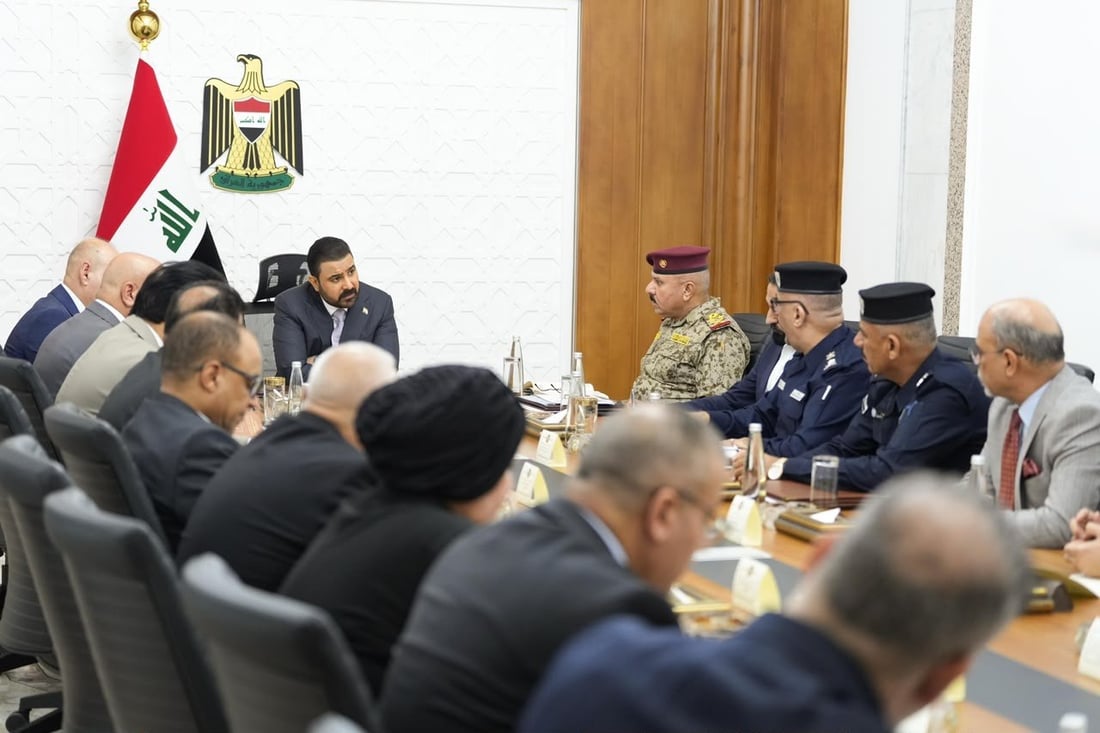
Zaidi issued the directive earlier Tuesday while chairing a joint meeting between the Interior Ministry and IHEC attended by senior election officials, Interior Ministry officials and the director of the Office of the Commander-in-Chief of the Armed Forces.
The prime minister’s office said Zaidi instructed the Interior Ministry to provide IHEC with the data and information required to prepare for the transition. The government says using the unified national card could simplify voting procedures and improve the accuracy of electoral data.
Officials at the meeting also discussed the technical and administrative requirements for adopting the national ID card and coordination between IHEC and the Interior Ministry to complete preparations within the required timetable.
IHEC has relied increasingly on biometric voter cards as an anti-fraud safeguard. Ahead of the November 2025 parliamentary election, the commission said the cards used a three-way verification process matching the card, the data stored on it and the voter’s biometric information, including fingerprints and photographs. A commission media official said the system made the cards effectively impossible to forge or exploit, with “almost zero margin for error or manipulation.” Once used at a polling center, a card was automatically disabled for 72 hours to prevent reuse.
The biometric system was considered secure enough that IHEC eliminated indelible ink for the 2025 vote, saying fingerprint matching, real-time biometric photographs and electronic verification were sufficient to prevent repeat voting. The commission also warned that buying or selling biometric cards remained an electoral crime, even though the card itself could not be used to cast a ballot without the registered voter.
Biometric registration remains active in 2026. In April, IHEC opened registration at 1,079 centers nationwide, requiring voters to provide 10 fingerprints and a personal photograph. The process also added citizens born in 2008 to the voter database for the first time.
The proposed change would replace IHEC’s biometric voter card with Iraq’s unified national identification card as the document used to verify voters at polling stations, but implementation cannot begin unless parliament first changes the existing electoral law.