
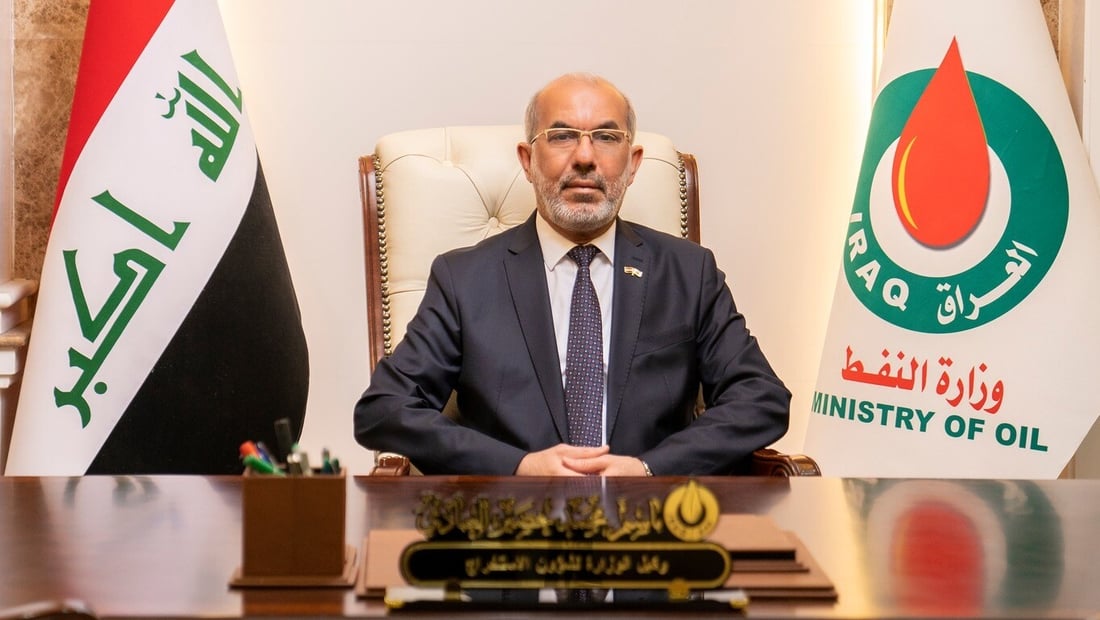
Iraqi Oil Minister Basim Mohammed Khudair al-Abadi at his office in Baghdad.
Oil minister tells workers pay is safe after protests over new pricing
BAGHDAD — Iraq’s oil minister said a new pricing model for crude supplied to state refineries will not touch workers’ salaries, incentives or profit-sharing, after protests at the Shuaiba refinery in Basra and among oil workers in Dhi Qar and elsewhere.
“I was saddened today by what I saw of gatherings at workplaces regarding the new economic model that regulates the relationship between the Ministry of Oil and the Ministry of Finance,” Basim Mohammed Khudair al-Abadi said in an audio message. Claims that entitlements would be cut were “completely untrue,” he said. “Under no circumstances can these entitlements be affected because they correspond to the major national role played by the employees of this sector.” The model runs to the end of the year and will then be assessed, he said, and will not harm the refining sector’s operating costs.
Prime Minister Ali al-Zaidi announced the change on Friday, saying the Oil Ministry had been receiving about a million barrels a day from the Finance Ministry at 5,000 dinars a barrel, an arrangement he said produced waste through maintenance spending and employee incentives and amounted to a form of corruption. Crude will now be supplied at a 30% discount to the global price. At recent prices that is roughly 67,000 dinars a barrel — more than thirteen times the old rate. Zaidi said consumer subsidies on crude, gas oil and gasoline would continue and the change would raise 17.8 trillion dinars a year.
The shift comes as oil provides more than 90% of federal revenue and the disruption to exports through the Strait of Hormuz has cut sales, with the government halving non-wage operating spending across ministries.