
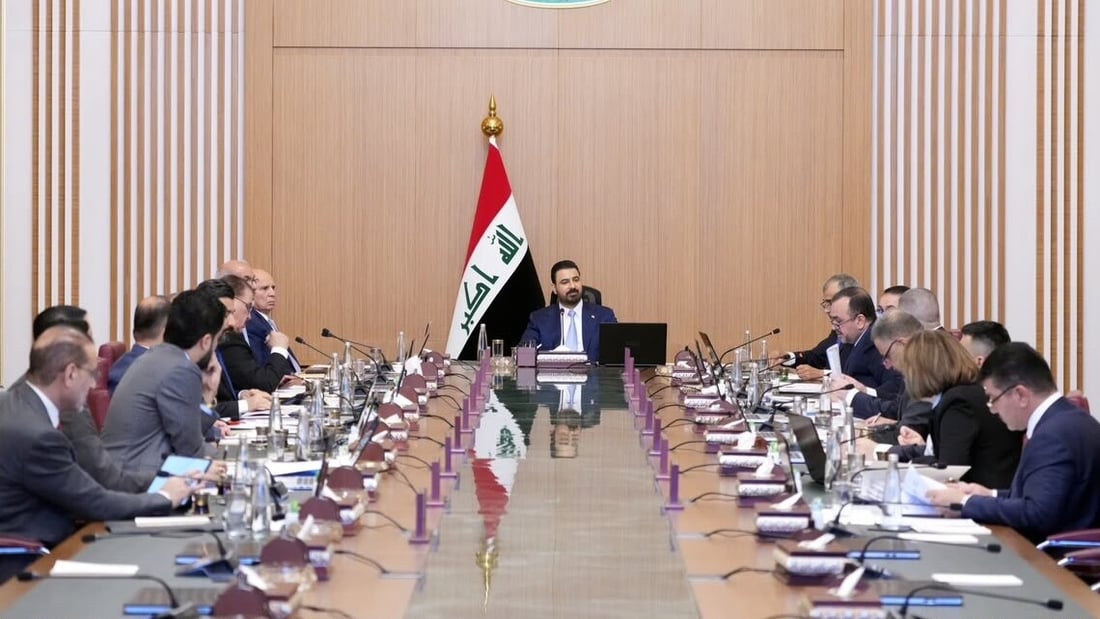
Prime Minister Ali al-Zaidi chairs a Cabinet meeting in Baghdad.
Media Monitor
Iraq confirms financial crisis as government warns of salary delays
BAGHDAD — Iraq is facing a financial crisis that will likely delay public-sector salary payments until sufficient funds are available, government spokesperson Haider al-Aboudi said Thursday, confirming recent warnings by the country’s health minister about mounting fiscal pressures.
Speaking to Alawla TV, al-Aboudi said the government was struggling to meet its monthly financial obligations as reduced state revenues continued to strain public finances.
“The crisis we are going through and what the health minister mentioned are true,” al-Aboudi said. “The monthly requirements of Iraq are very large and salaries are not as they were before.”
He said salary payments would no longer be disbursed on their previous schedule, explaining that “there will be a delay in salaries until the amounts are completed and distributed according to the mechanism managed by the Ministry of Finance.” Asked whether Iraq was in a financial crisis, he replied, “Yes, we are in a crisis.”
The comments reinforce warnings made earlier by Health Minister Abdul Hussein al-Mousawi, who said the government had prioritized securing public-sector salaries over other spending as revenues declined.
Al-Mousawi said the government needs about 10.8 trillion Iraqi dinars, or roughly $7.2 billion, each month to pay public employees, while oil export revenues had fallen sharply in recent months. He also warned that the financial crisis was disrupting the health sector, saying deteriorating hospital infrastructure and funding shortages at the state-run General Company for Marketing Drugs and Medical Appliances, known as Kimadia, had led pharmaceutical suppliers to suspend medicine deliveries under existing contracts.
According to the Iraqi Oil Ministry’s latest figures, Iraq exported 32.1 million barrels of crude oil and condensates during May and June, generating about $2.34 billion in revenue, or roughly $1.17 billion per month. The decline followed disruptions to Iraq’s oil exports after the closure of the Strait of Hormuz, which sharply reduced shipments from the country’s southern export terminals. Oil typically accounts for more than 90% of Iraq’s federal revenue, leaving the government’s finances highly dependent on crude exports.