
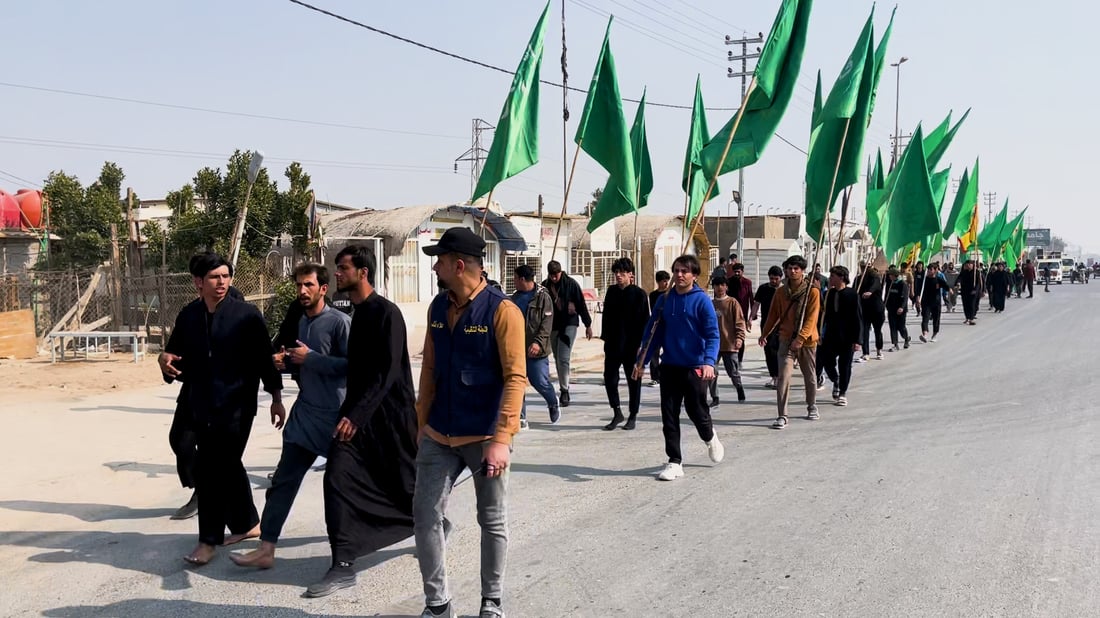
Pilgrims walk toward Karbala carrying green flags during the annual Arbaeen pilgrimage in Iraq
Health system prepares
WHO warns of heat risk to millions walking to Karbala for Arbaeen
BAGHDAD — Extreme heat could pose a serious risk to the millions of pilgrims walking to Karbala and Najaf for Arbaeen, the World Health Organization said, projecting daytime temperatures around 45°C and nights staying above 30°C along the main routes.
Prolonged walking, crowding and sustained exposure could sharply increase dehydration, heat exhaustion and heatstroke, and worsen cardiovascular, respiratory, kidney and other chronic illness, the agency said in a heat-health risk assessment. It classified 10 governorates as high risk this summer, among them Karbala, Najaf and Babil, and noted that parts of southern Iraq now see about 70 days a year above 45°C, with peaks above 50°C.
“Protecting the health of pilgrims is a shared responsibility,” said Jamela al-Raiby, the WHO representative in Iraq. “As this year’s Arbaeen is expected to coincide with exceptionally high temperatures, strengthening preparedness and adopting simple preventive measures will be essential to reducing heat-related illness.” She said access to safe drinking water, shaded rest areas, timely medical care and clear health information “can help protect lives and enable pilgrims to complete their journey safely.”
The agency urged pilgrims to drink water before feeling thirsty, rest often in shade or cooled areas, wear light loose clothing, keep taking prescribed medication, watch over older people and others at higher risk, and seek medical help immediately for dizziness, confusion or fainting.
It called on authorities and organizers to expand drinking-water stations and shaded rest areas, ensure facilities can provide cooling, rehydration and referrals, improve weather-based heat alerts, maintain reliable electricity and water for health facilities, and increase health messaging for pilgrims, volunteers and people with chronic conditions. Extreme heat also strains electricity, water and health services at the moment millions of people depend on them, it said.
Nearly 2.9 million foreign pilgrims have entered Iraq since the start of Muharram. Arbaeen falls on the 40th day after Ashura, marking the killing of Imam Hussein, grandson of the Prophet Muhammad, at the Battle of Karbala in 680, and culminates on 20 Safar, in early August. More than 22 million people took part last year, including more than 4.1 million from abroad.