
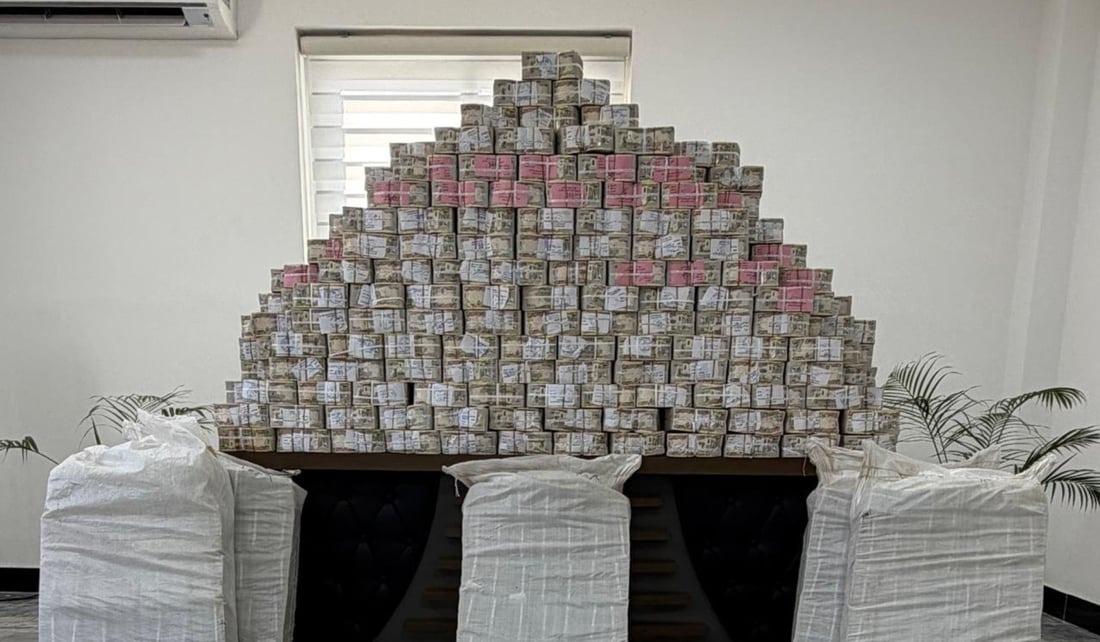
Bundles of seized cash displayed during an Iraqi corruption investigation.
UN cites Iraqi progress on corruption as Zaidi expands crackdown
BAGHDAD — Iraq has intensified efforts to trace and recover assets linked to corruption, U.N. Development Program officials said, as the government pursues arrests and seizures in several high-profile cases.
Yama Torabi, who manages the UNDP’s anti-corruption project in Iraq, told the state newspaper Al-Sabah that the government had stepped up asset-recovery work. He said Iraq could better align cases where financial harm has been established with the number of civil suits brought, and address procedural errors and weaknesses in the quality and continuity of legal representation. He said authorities should sustain momentum while accounting for cases where judgments are not yet final.
Abdallah al-Dardari, director of the UNDP’s Regional Bureau for Arab States, said the agency had worked with Iraqi institutions on corruption for a decade, helping develop the national integrity and anti-corruption strategy, draft legal reforms, equip the Iraqi Anti-Corruption Academy and run specialized training, and supporting agreements with other countries on mutual legal assistance, extradition and asset recovery. Dardari said the government wanted to continue that approach to improve public services, attract investment and use state resources more efficiently.
Both cited Iraq’s position on Transparency International’s Corruption Perceptions Index, published in February, which put Iraq 136th of 182 countries with a score of 28, up from 140th and 26 the previous year. The index measures perceived public sector corruption on a scale where 0 is highly corrupt and 100 very clean, and Iraq remains below the global average of 42. The 2025 edition covers the year before Prime Minister Ali al-Zaidi took office.
Zaidi’s government launched its campaign on June 28, when security forces sealed Baghdad’s Green Zone and raided homes and offices of current and former officials, lawmakers and business figures. Official accounts of the number detained ranged from 21 to 47. Zaidi called it the first phase of a continuing effort and warned ministers they could share responsibility for corruption by senior officials under their supervision.
The campaign started around one month after he was granted confidence by parliament. It grew out of the investigation into former Deputy Oil Minister for Refining Affairs Adnan al-Jumaili, arrested in late May over allegations involving commissions, refinery contracts, money laundering and misuse of public funds. Investigators have since recovered large sums in cash and gold and courts have seized properties, vehicles and businesses linked to Jumaili and other suspects.
Dardari said direct financial losses from corruption worldwide are estimated at nearly $3.6 trillion a year, close to the global financing gap for meeting the U.N. Sustainable Development Goals by 2030.